跳到主要内容

The Beijing Center

A Journey Found Upon a Thousand Memories

Share This Post

The Silk Road excursion is a trip that I would always cherish within my heart. I didn’t think it would be possible to learn a lot of information about different regions in China in such a short time. I remember packing my suitcase, thinking the other cities were going to be warm since Beijing at the time was still in the summer season. However, I did pack a sweater in hand just in case there was a city that was extremely cold (spoiler alert: there was). Even though it was a tightly compacted itinerary from seeing seven different cities in the span of ten days, I would love to do it all over again! The people, food, and beautiful cultural dances that I’ve witnessed around the silk road are a bundle of memories that will forever be engraved in my head.

Before arriving in China, I had only been on the Hello Kitty bullet train in Japan. I was eager to see how China’s overnight and bullet train functioned. I heard from many foreigners and Chinese locals that the trains are relatively clean and comfortable. I didn’t have to worry about sitting next to strangers for the first time since the TBC group were sitting relatively near each other. Before lining up for the overnight train, I came prepared. I created a strategy where I would put my suitcase under the bed and take my backpack filled with my toiletries up with me in the upper bunk bed. Especially since the train had a Chinese-style toilet, I wanted to make sure I had all of my essential items like toothbrush, toilet paper, and snacks of course, to take care of my hygiene. The beds were pretty comfortable to sleep in since I was able to be one of the lucky ones who had the small air conditioner on top of my bed. I also had an additional extra space to store my backpack!

When it was time to go on the bullet train from Xi’an to Lanzhou, I was able to fall asleep more comfortably since the train drives at such a smooth rate. Obviously, I prefer the bullet train over the overnight train since the seats are more comfortable and you get to your destination faster. In the United States, we don’t have high speed trains so seeing one in-person truly blew my mind. Sometimes when I would fall asleep on the train, I would wake up to us passing by beautiful greenery.

Xi’an

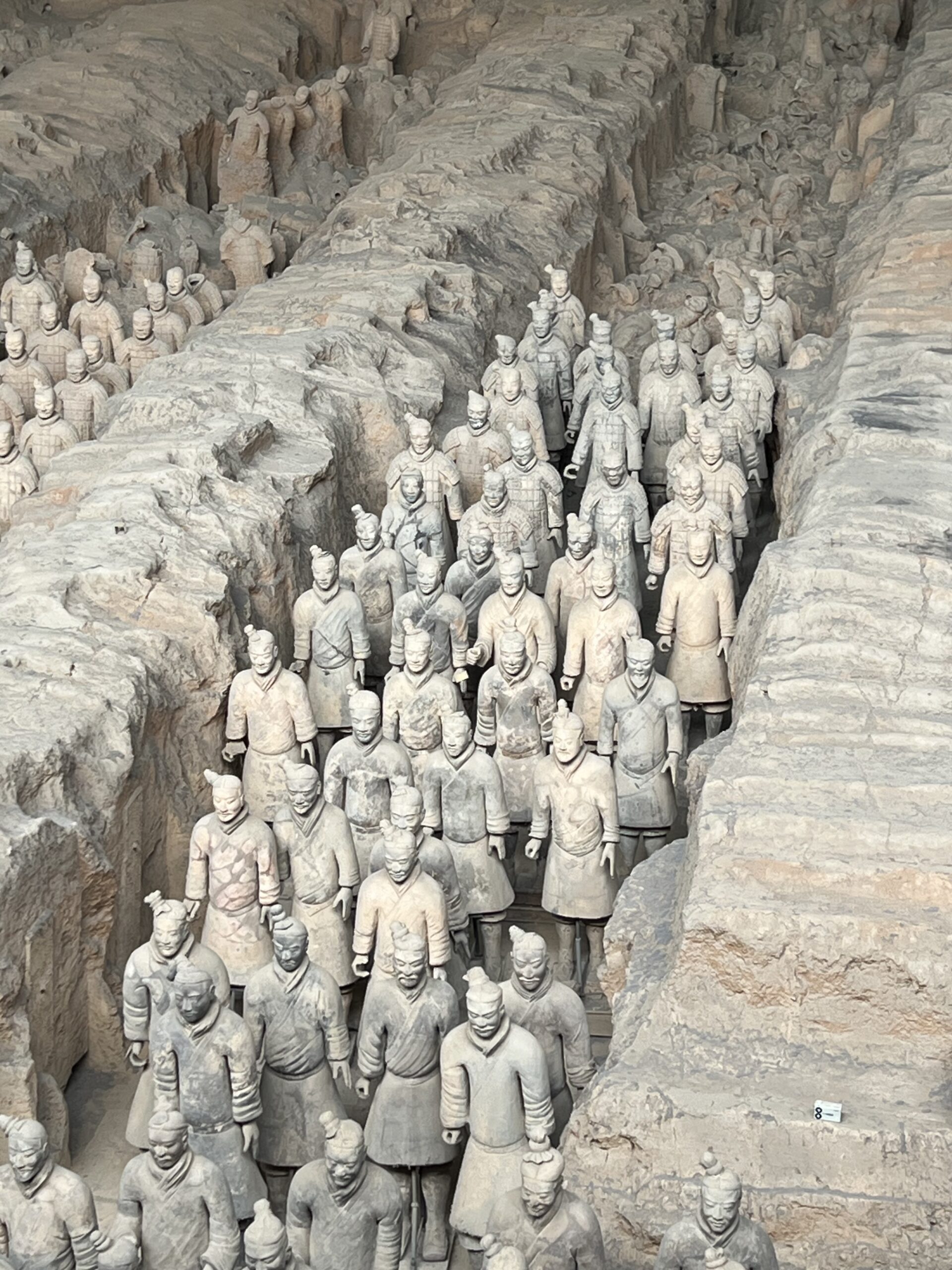
The Terracotta Museum is a MUST visit if you are traveling to Xi’an (西安)! I am still wondering to this day how much more of this territory is left to explore. The well-preserved pits filled with the warriors exceeded my expectations. I learned that you can tell the position of the warrior based on its feet. Those with higher pointy toes would typically have a higher rank within the army.

Before arriving in X’ian, I wasn’t expecting for the city to be a very touristy destination when we first got there. Actually, I felt like I saw more foreigners in Xi’an than in the Haidian District in Beijing. It was lovely to see a lot of tourists eating at the night market because it makes me feel that other areas in China are getting the attention they deserve. My absolute favorite food that I tried throughout the trip was from Xi’an, 𰻞𰻞面(biáng biáng miàn). Now that I’m back in Beijing, I consume 𰻝𰻝 noodles at least three times a week!

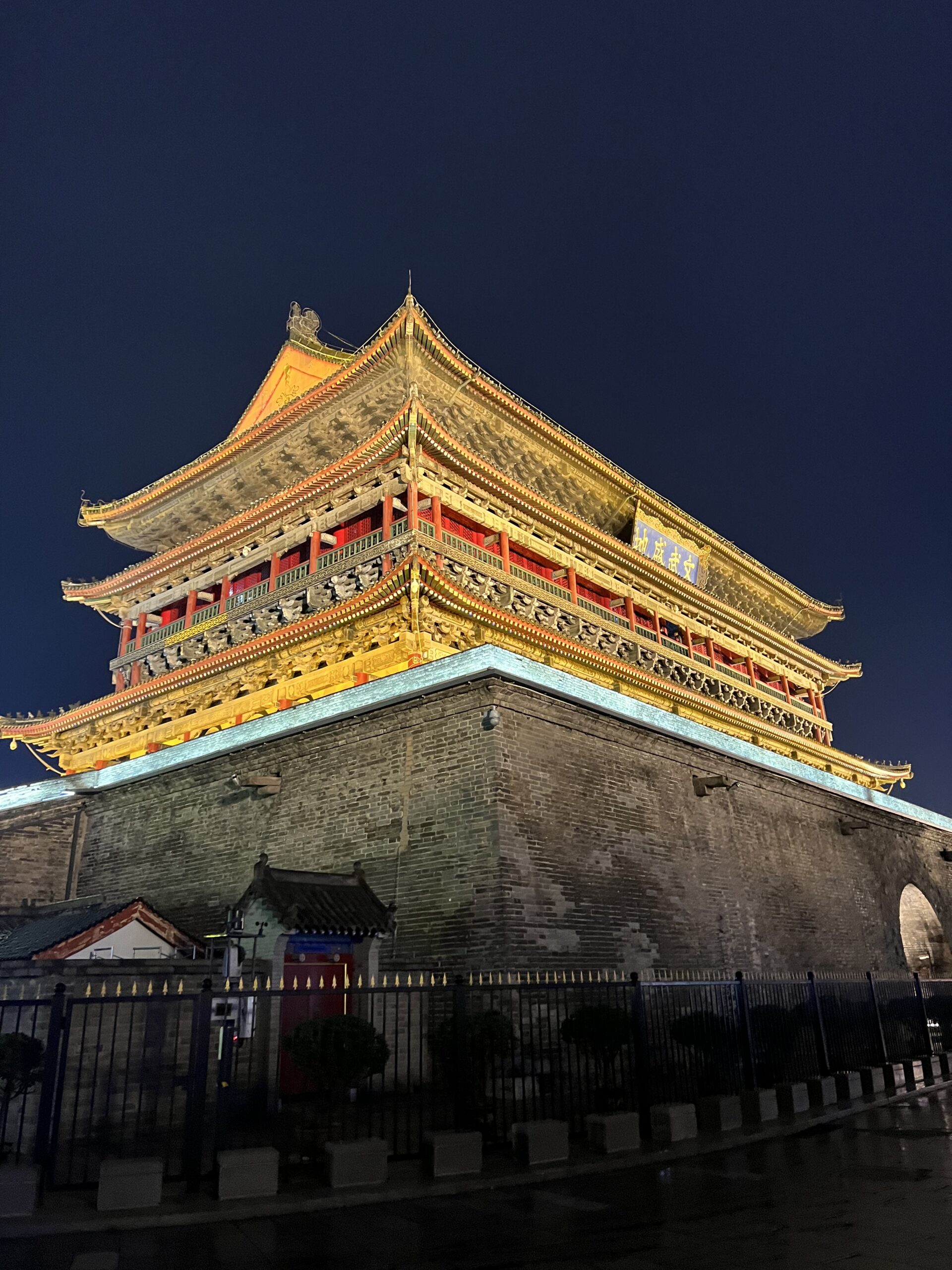
In my opinion, Xi’an looks much more beautiful and engaged in the nighttime. This is the time when a lot of tourists are taking photos of the ancient architecture as well as seeing fire emit to the sky from street vendors. I haven’t seen an emphasis on Islam in Beijing so it was fascinating to see how another populated city can be filled with many religious values.

Linxia

We spent a few hours in Linxia (临夏), so I haven’t gotten to experience much of the culture. However, a lot of the locals were curious to see foreigners. We strolled through the Muslim Market where I saw more women wearing hijabs and men wearing traditional hats. Little kids would come up to me with smiles, yelling “Hi!”. It always makes me smile when kids in China want to utilize their English skills with me because it shows that they are comfortable around me. This place reminds me of a small-ish town as there are minimal tourist attractions with a lot of locals who are excited to meet foreigners.

Xiahe

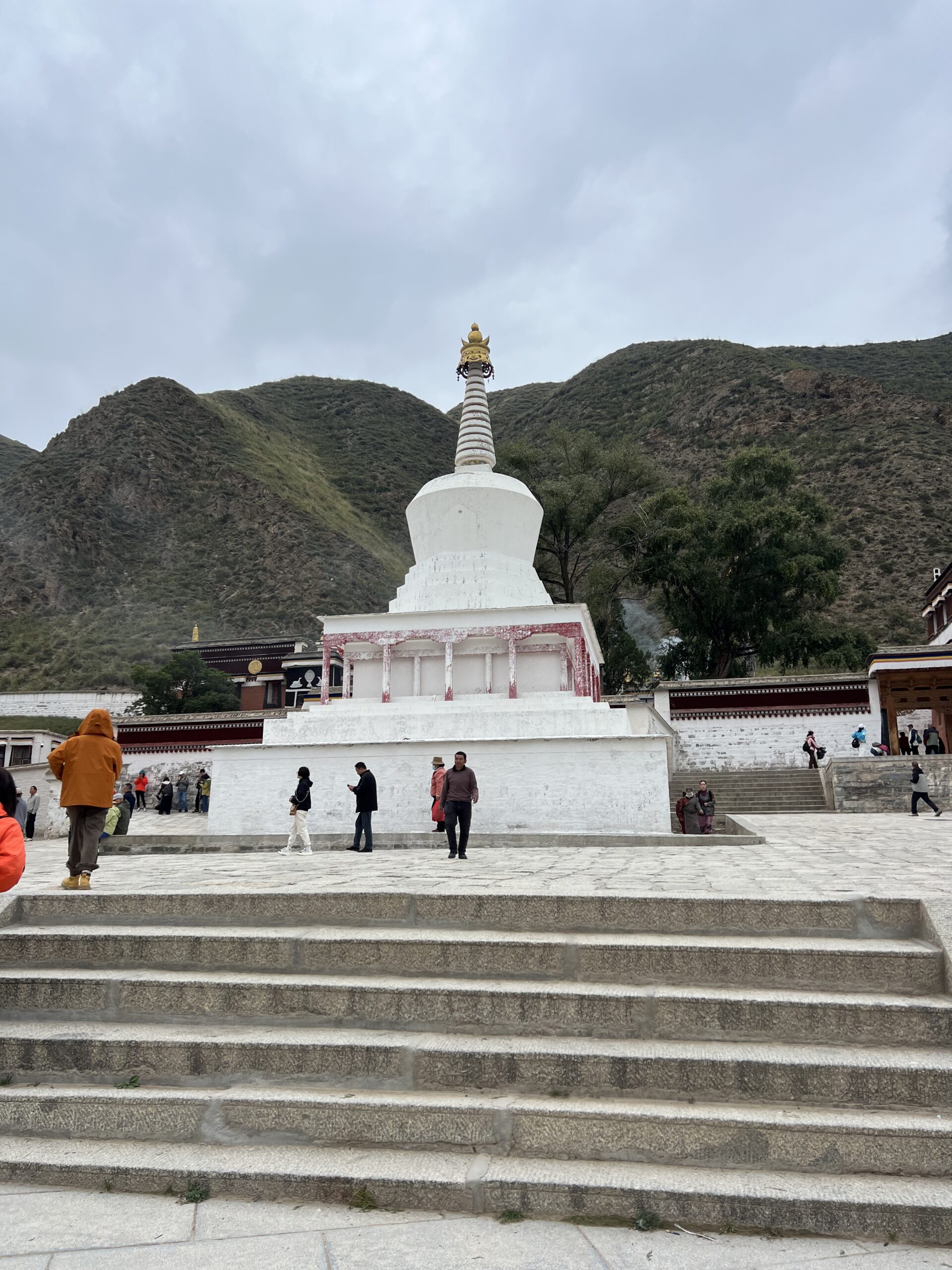
Xiahe (夏河) was the place that had the most greenery within the mountains throughout this trip. I breathed in the fresh, crispy air in the sky, something you won’t really get in Beijing. This area had the coldest temperature throughout the Silk Road trip, especially at night when the strong winds would blow my hair into my face. One of the TBC staff, Katherine, mentioned that we would try donkey meat, which was something I thought I was totally prepared for. I tried it. The texture felt very rough with a strong odor. I am personally not a fan of it but I’m glad I tried it! Moreover, I was incredibly shocked when I saw monks in Xiahe with more modern phones compared to my iPhone 13 Pro. Entering the monastery gave me an insight into Tibetan culture. The walls and floors were covered with pink rugs while the Buddhas would rest on top of the table. However, being up in the mountains, I did start to feel a bit lightheaded. My friend Olivia and I met a restaurateur while we were looking for something to eat. His restaurant has delicious pizza covered in truffle sauce and meats. A hearty meal that brings back nostalgia of eating a whole pizza pie back in the United States. Also, if you visit the monastery circuit, don’t forget to spin the prayer wheels clockwise!

Tibetan culture reminds me a lot of the term brotherhood. I would see a lot of Tibetan monks walking together towards the monastery. The monks are very highly educated, setting a reminder to me that I can pursue my dream of obtaining a doctorate. Education and philosophy are two values I’ve witnessed in Tibetan culture that I can resonate with from my own life.

Lanzhou

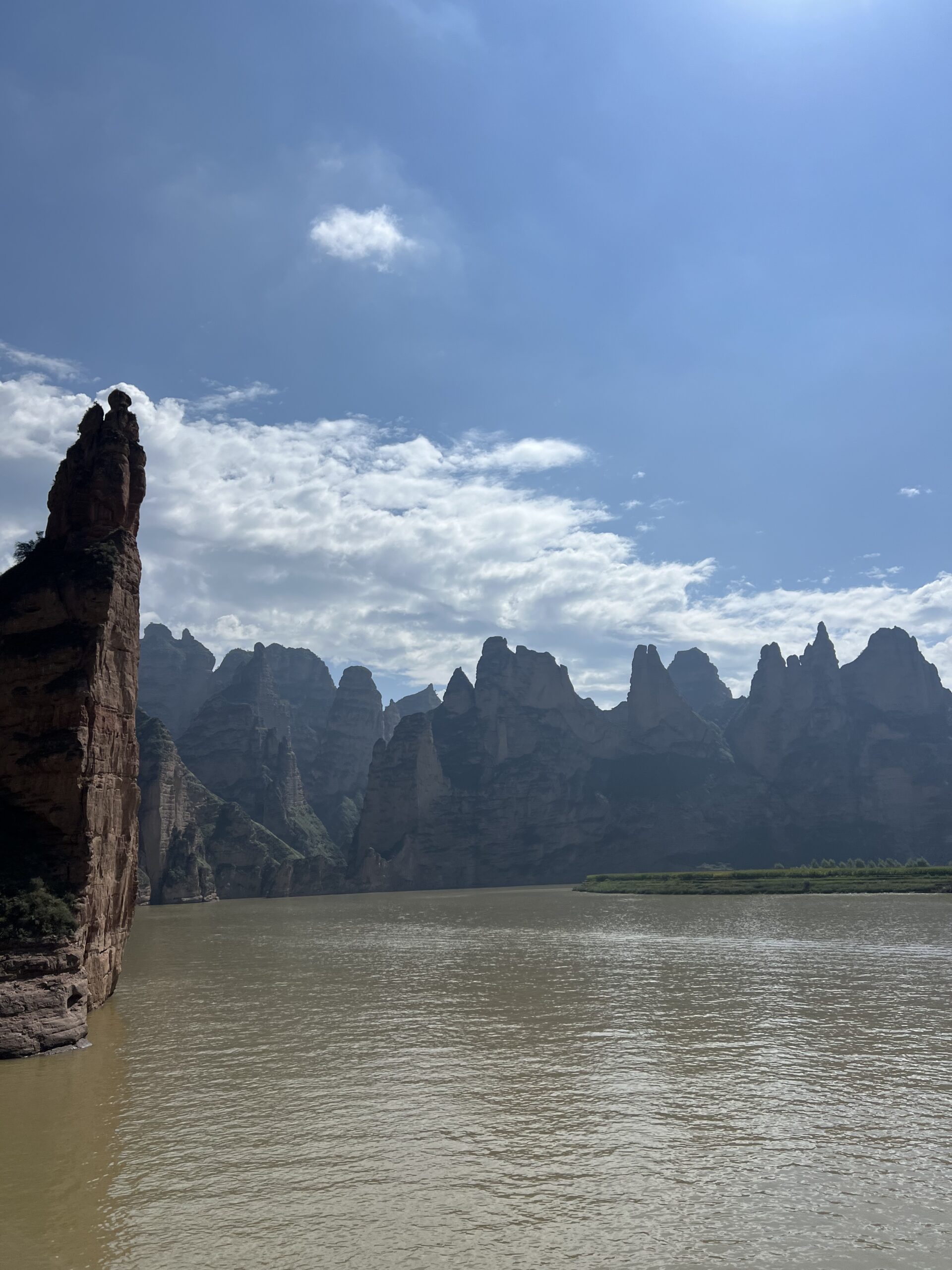
Lanzhou (兰州) is the place where if you want to stare at nature forever, you definitely can! I was awed by the enormous, widespread, mountain terrain. The symmetrical flooring made you feel like you were staring at one of Bob Ross’ paintings. One thing that stood out to me is that Sangye (our tour guide), said that one of the mountains represents a family: mother, father, and child. This is the reason why I admire the beauty of the Chinese language. Many of the hanzi characters symbolize nature, such as 山 (shan). I am still perplexed how people from ancient civilizations were able to carve large Buddha structures within these terrains, especially since they didn’t have the modern technology we do today. Yet, this shows us that people are willing to protect their cultural heritage by utilizing nature to mark their identities. Humans unfortunately pass away sooner than nature so this is a tactic I believe Chinese people used during these times to spread their heritage with the future generations.

Our tour guide, Sangye, was an incredible person. One quote from him that I will never forget is when he mentioned he is his own Buddha. At first I was perplexed by what he meant, then I realized that Sangye has been a tour guide for over 20 years so he really enjoys spreading the culture. Sangye inspired me that I should believe more in myself and to not be afraid to ask questions even if it’s not about Chinese language. Although my Chinese is nowhere near proficiency, I have made the effort on this trip to ask TBC staff how to say common objects and expressions in Chinese. My favorite phrase throughout the trip is “我很喜欢….” (wǒ hěn xǐhuān…). This phrase has helped me remember a lot of objects quickly as I would say it aloud for it to be stored within my memory.

Dunhuang

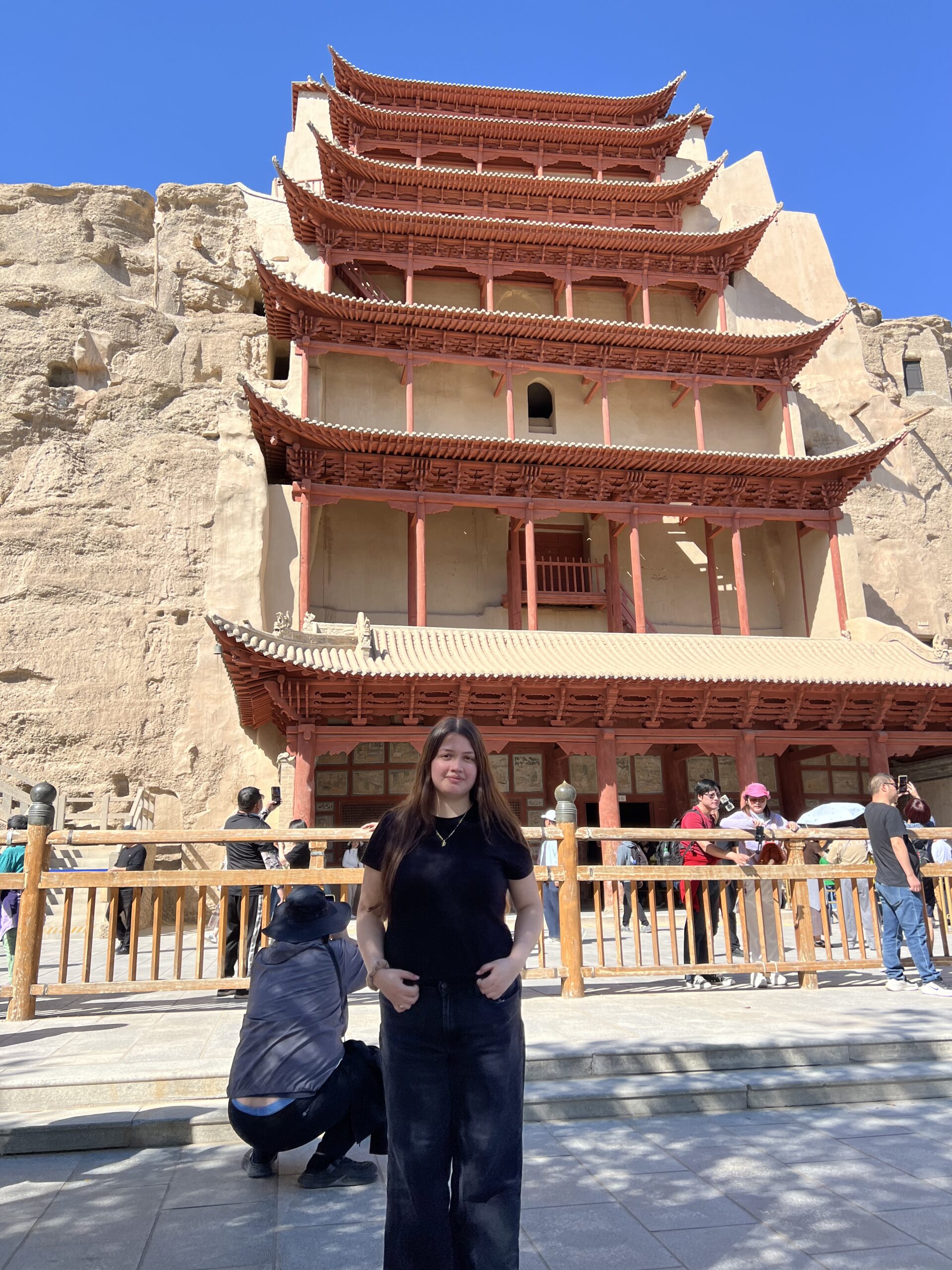
Finally, my favorite destination, Dunhuang City (敦煌). The Mogao Caves persevered so well. You are able to see the bright emerald color paint on the caves. I was stunned how carefully carved the buddhas were. Another interesting detail I noticed was that a lot of the buddhas were painted with bright colors, such as blue, green, and purple. Typically the buddhas I have seen across East Asia appear to have a neutral color to them like bronze. In Dunhuang, the Buddhas are designed so differently than the ones I’ve seen around Beijing so you’ll be in for a surprise to see how other people in ancient times have perceived the looks of a Buddha.

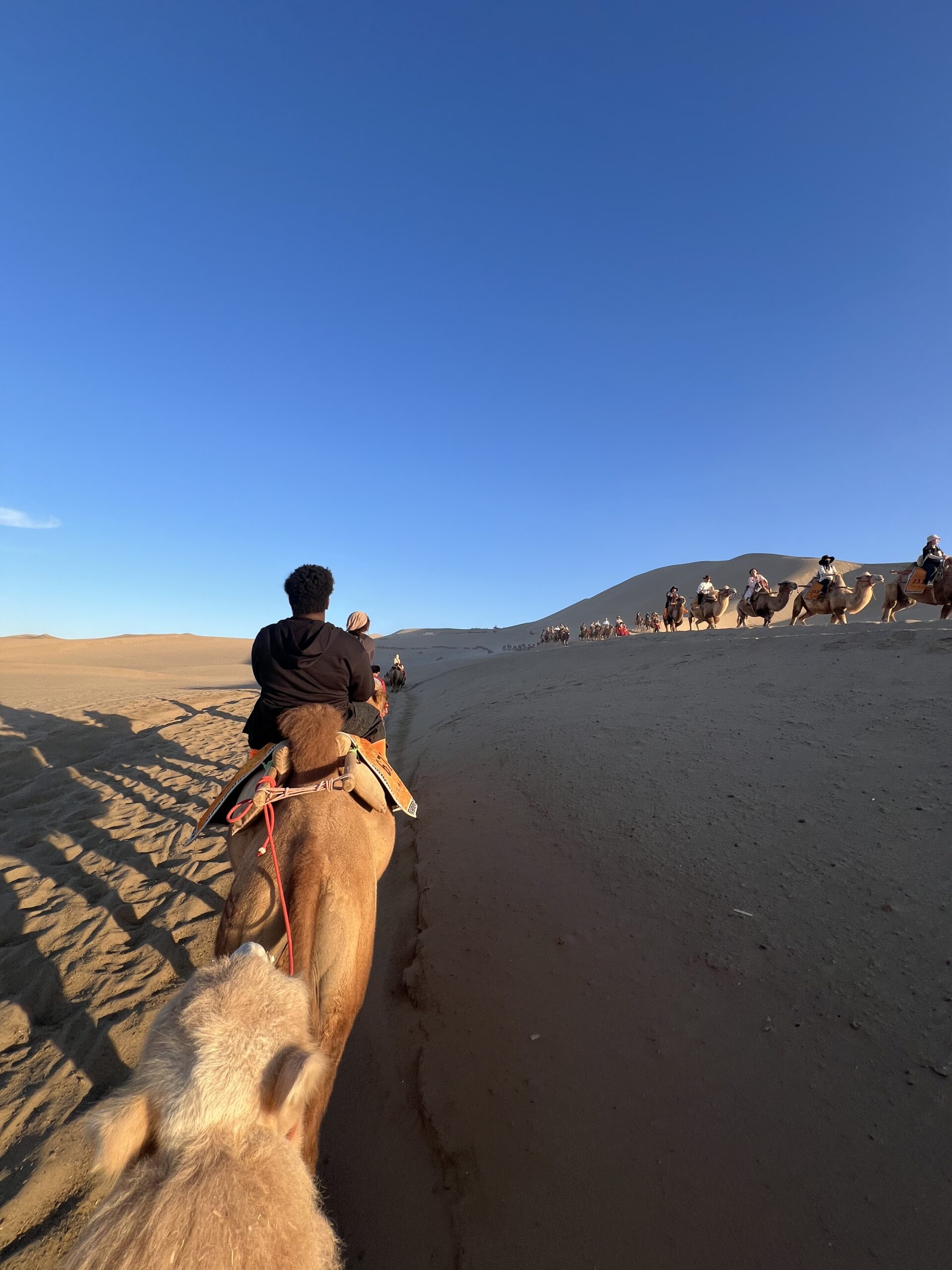
My favorite activity of the day was riding the camels across the singing sand dunes! The dramatic moment of walking across the desert on the top of the camel made me truly believe I was back in ancient times traveling to my destination. Then, I was faced with a challenge of climbing what felt like hundreds of steps to get on top of the sand dunes to view the beautiful moon crescent lake. It was hard the first 30 minutes of climbing the stairs, but my fear of heights made my adrenaline pump into my heart that I forgot I felt tired. We ended the day with a beautiful drone show. The drones replicated the shape of different animals to symbolize Dunhuang’s beautiful nature and even spelled their city name in hanzi characters.

Turpan

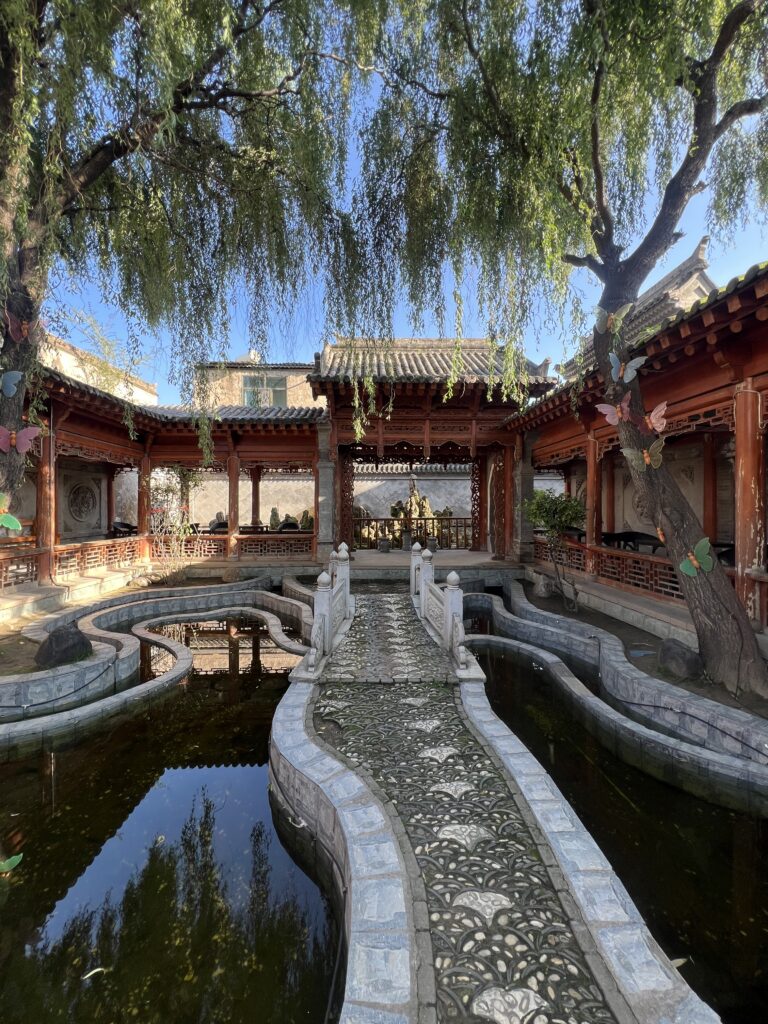
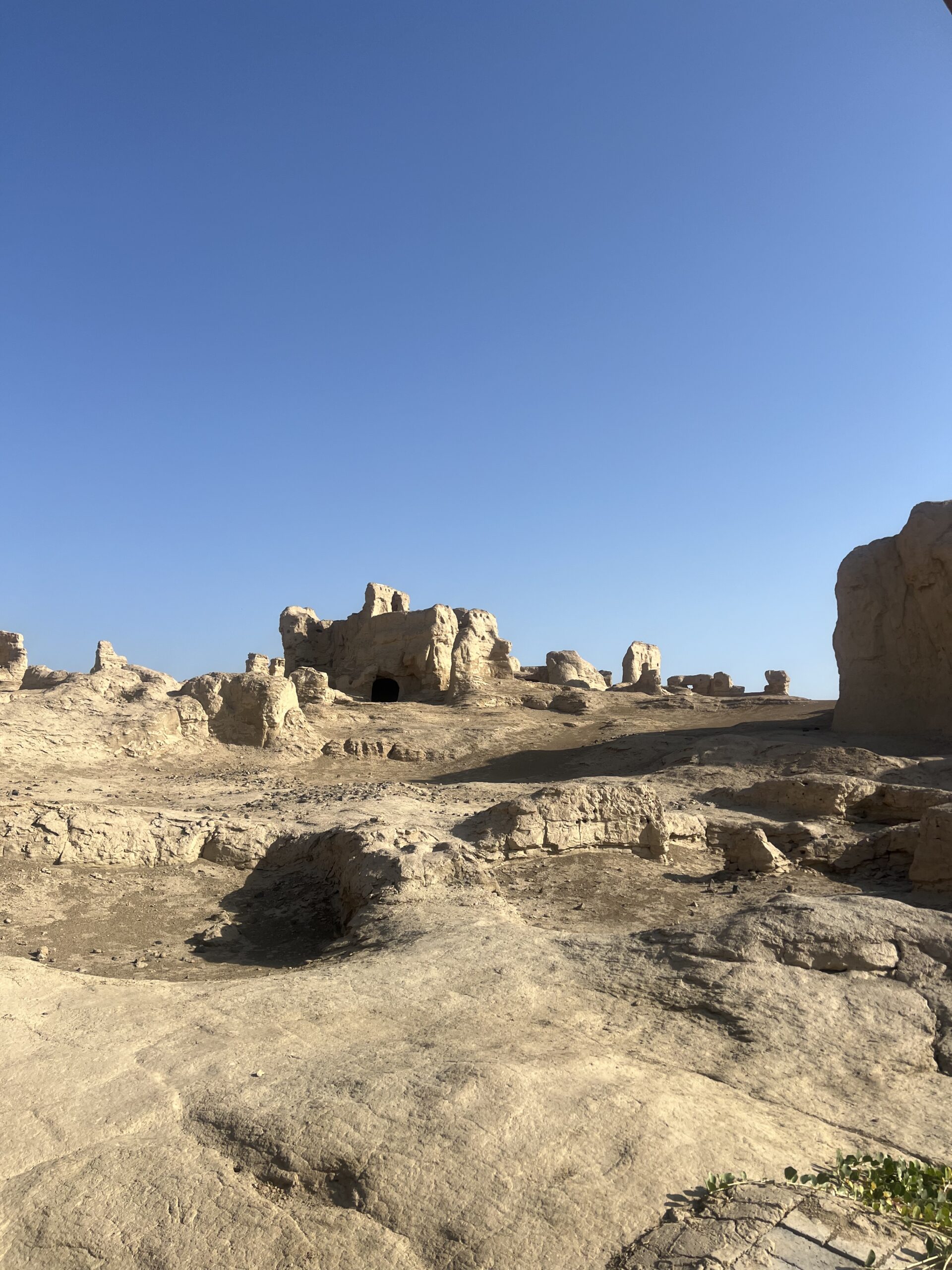
As we got off the train in Turpan (吐鲁番), I immediately felt the heat wave slap my face. I didn’t expect this area of China to be so warm. I took off my sweater once I started to realize that I was actually sweating for the first time within the trip. The environment here lacked shade so I made sure to apply sunscreen every two hours and protect my skin with my umbrella. The Jiaohe Ancient City sparked similarities to images I’ve seen of Ancient Greek architecture. Climbing up the hill to see the sculptures felt like I was going back in time when people utilized their strong calves to pursue these journeys within the Silk Road. I personally don’t enjoy places with hot weather that much so if you are someone who enjoys the sunshine, then Turpan is a place I would highly recommend for you to visit!

Kashgar

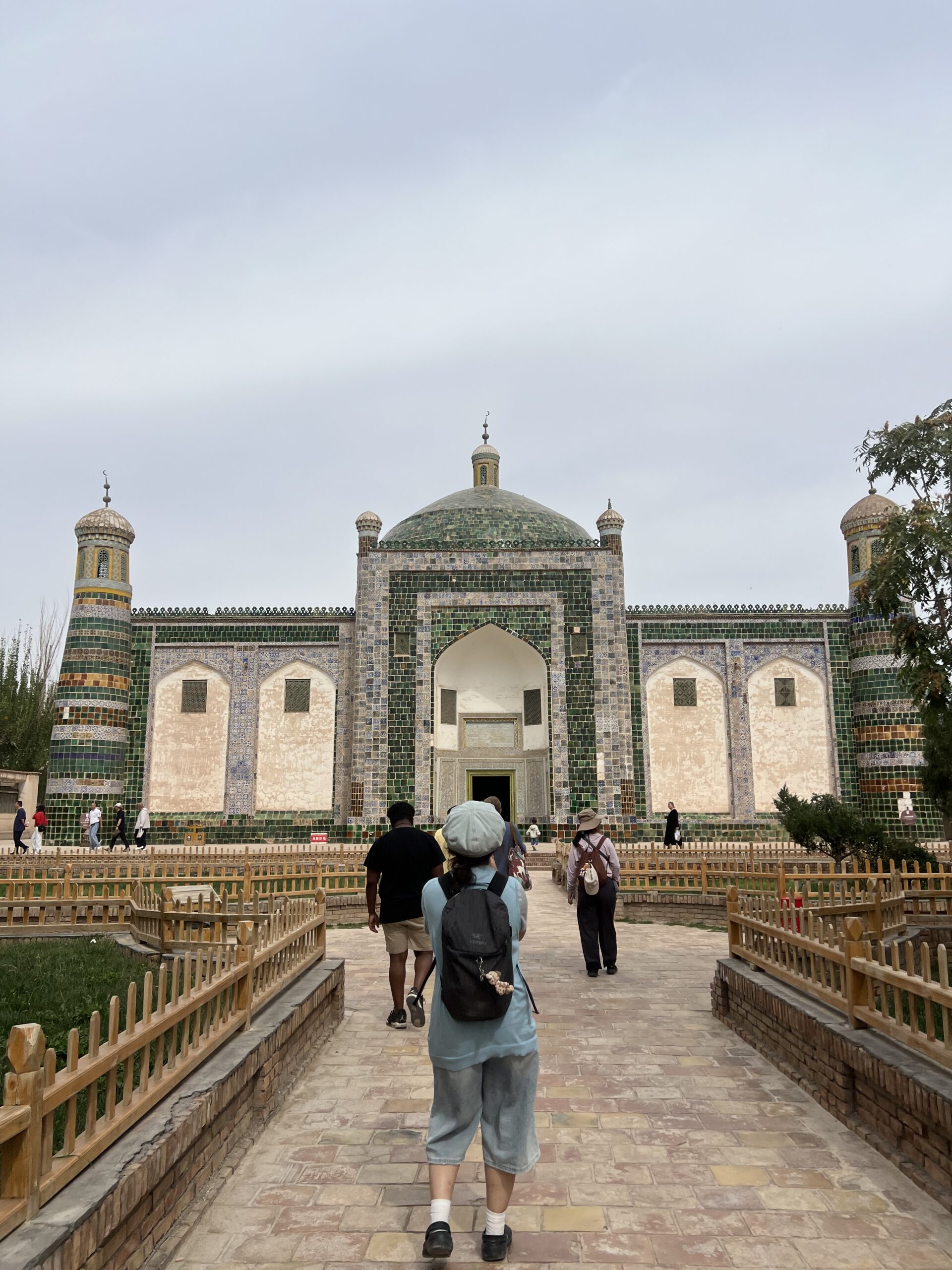
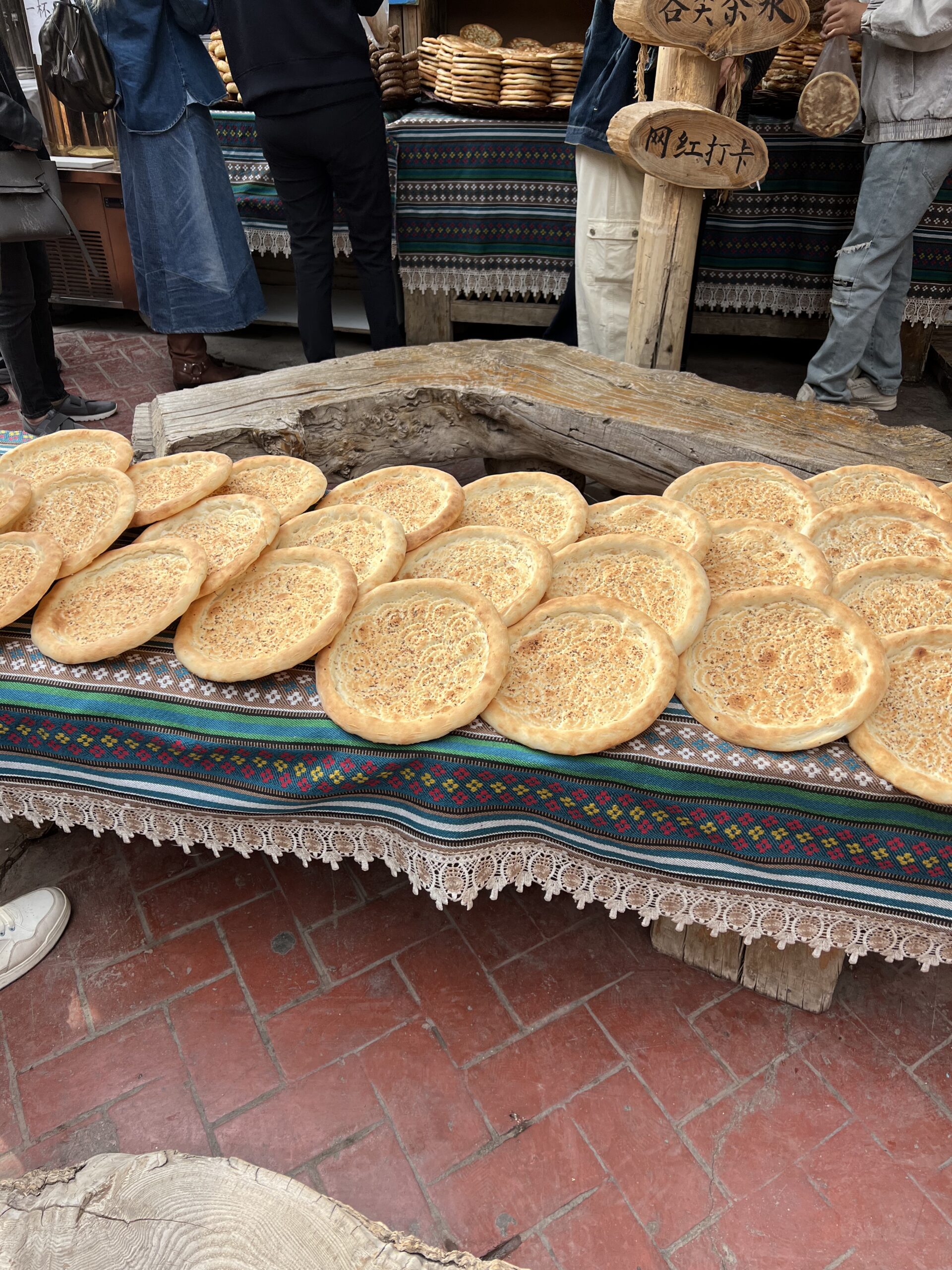
Kashgar (喀什) was the location that stunned me the most throughout the trip. A lot of the Uyghur people look very different from the Han people so it was nice to see how other Chinese people look. The Uyghur women are typically dressed in bright-colored dresses with long braided hair and wearing pink hats. While the men wore flowy neutral colored outfits and hats that complimented each other. We soon ventured to the Abakh Hoja Tomb. Its emerald-green colored tiles caught my attention. I jokingly called this the Taj Mahal of China. I find it very interesting that in many cultures I have connected with, we all share the same familial values of honoring your loved ones, especially when they pass away. My favorite snack I ate in Kashgar was náng (馕). It’s a very big bread (bigger than the size of my hand) with a circular shape that has a lot of delicious seasonings. I even bought a little key chain souvenir of the bread! To compliment with the bread, I drank the famous 百年老茶馆’s rose milk tea.

Overall, I am very grateful for participating in the Silk Road excursion. I felt like I learned more about Chinese culture that isn’t displayed in the media. From dancing with the locals in Xi’an to taking selfies with children in Kashgar makes me understand why a lot of Chinese people feel so proud about their culture. It’s full of diversity, food with delicious aroma, and the endless opportunities given to seek more knowledge. I feel extremely lucky that I was able to visit Xinjiang province, especially since many of the Uyghur people haven’t seen many foreigners. In this journey, I learned that I am able to adapt to changes very quickly and to always carry a bottle filled with water at all times. I hope in the future I will come back to China and visit the southern areas. Those regions also deserve the attention and curiosity from tourists.

By Samantha Peralta, Fall 2026

More To Explore

Cultural Dialogues

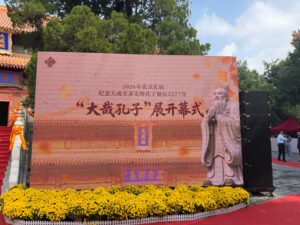
TBC’s Rare Books Featured at the Beijing Confucian Temple

TBC loaned three rare books to The Great Confucius exhibition at the Beijing Confucian Temple and Imperial College Museum, showcasing the spread of Confucian thought in Europe and centuries of cultural exchange.