跳到主要内容

The Beijing Center

A Fu Jen Catholic University Student’s Journey to Beijing

Share This Post

This summer, TBC invited Chen Jien Teng, a Malaysian Chinese graduate student at Fu Jen Catholic University, to visit Beijing. Exploring the city’s historic sites, she traced the legacy of early European scholars who came to China and reflected on the connections between history, culture, and her own identity. We invited her to share her experiences and reflections from the visit. Below, she shares her experiences and reflections from the visit.

The Beijing Center for Chinese Studies (TBC) offers students from around the world a place to learn about China and engage in cultural exchange and dialogue. Its mission is to promote mutual understanding between China and other cultures. Inspired by the long tradition of Jesuit education, TBC believes that genuine cultural exchange begins with friendship and fellowship. Through cultural activities, academic exchanges and visits, the centre helps students experience Chinese society, discover different cultures and histories, and deepen their understanding through dialogue and reflection.

During this visit, I also had the chance to explore TBC and learn more about its environment and daily activities. I was pleased to see its collection of books and learning resources, which students can use for reading, research and study. I also saw the spaces where international students study and take part in cultural and academic exchanges. For me, this was more than just a visit. It gave me a clearer picture of how TBC welcomes students from different cultural backgrounds and helps them learn about China through its resources and learning environment.

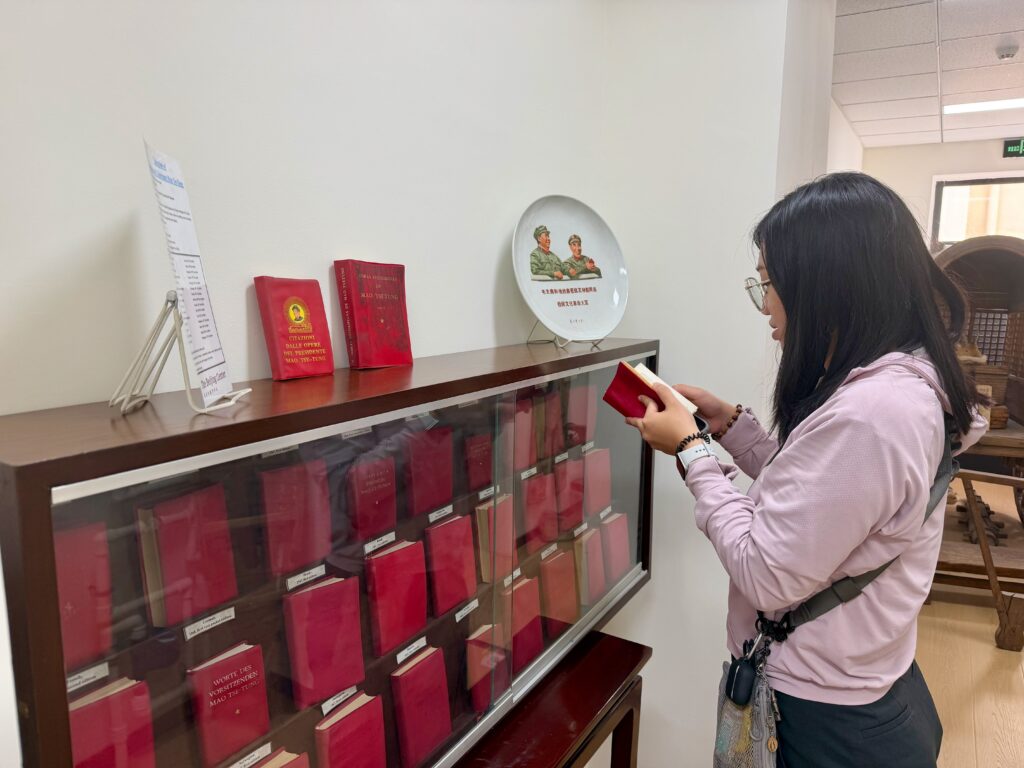
TBC’s special collection

I am grateful to TBC for inviting me to Beijing. The visit gave me the chance not only to learn more about the centre and experience Chinese culture and history, but also to follow in the footsteps of Jesuit missionaries who came to China hundreds of years ago and discover the traces of their lives and work.

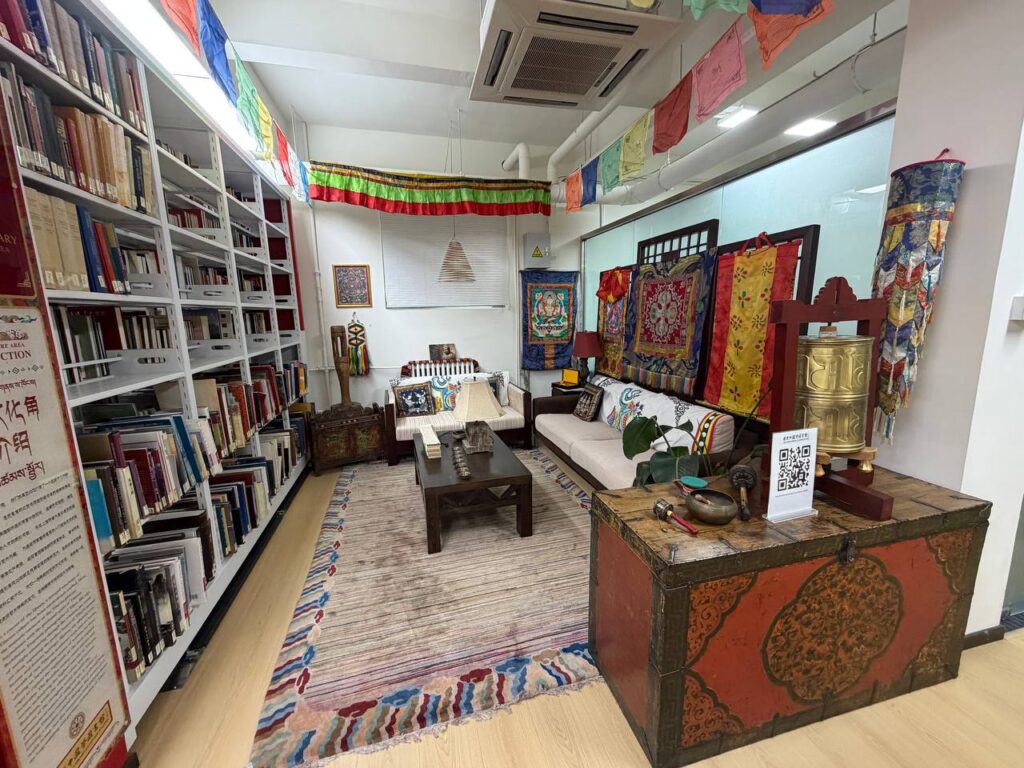
Tibetan Corner at The Anton Library

In the past, Beijing was a place I knew only through books, television programmes and Chinese period dramas. As a person of Chinese descent, I grew up with some knowledge of Chinese culture. After watching so many period dramas, I had always hoped that one day I would be able to visit Beijing myself, see the Forbidden City and the Temple of Heaven, and explore places I had previously seen only on screen.

As a theology student, I have only begun learning about the Jesuits who came to China as missionaries in recent years. Until then, I knew them mainly through books. I had learned that they preached the Gospel in China, studied Chinese culture, and took part in scientific and cultural exchanges. However, I had never imagined that I would one day visit the places where they had lived, worked and carried out their mission. I came to Beijing with excitement and an open heart, ready to experience the city for myself.

During the days in Beijing, I visited the Forbidden City, the Temple of Heaven and Jingshan Park. I also visited the few Churches, as well as the Ancient Observatory, Zhenjue Temple and Matteo Ricci’s tomb, all connected in different ways to the history of the Jesuits in China. The biggest change this trip brought me was starting to see these places through a different lens.

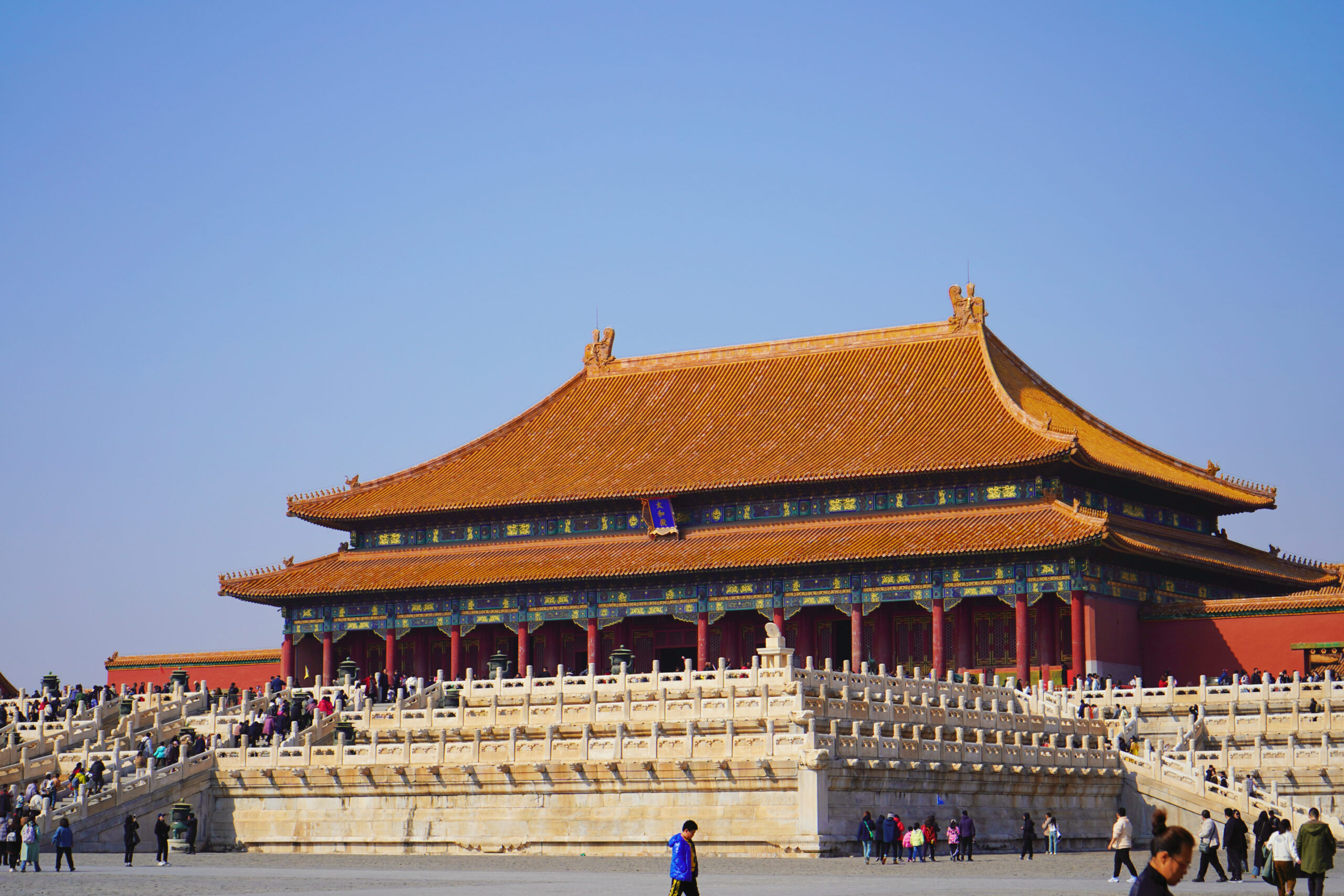
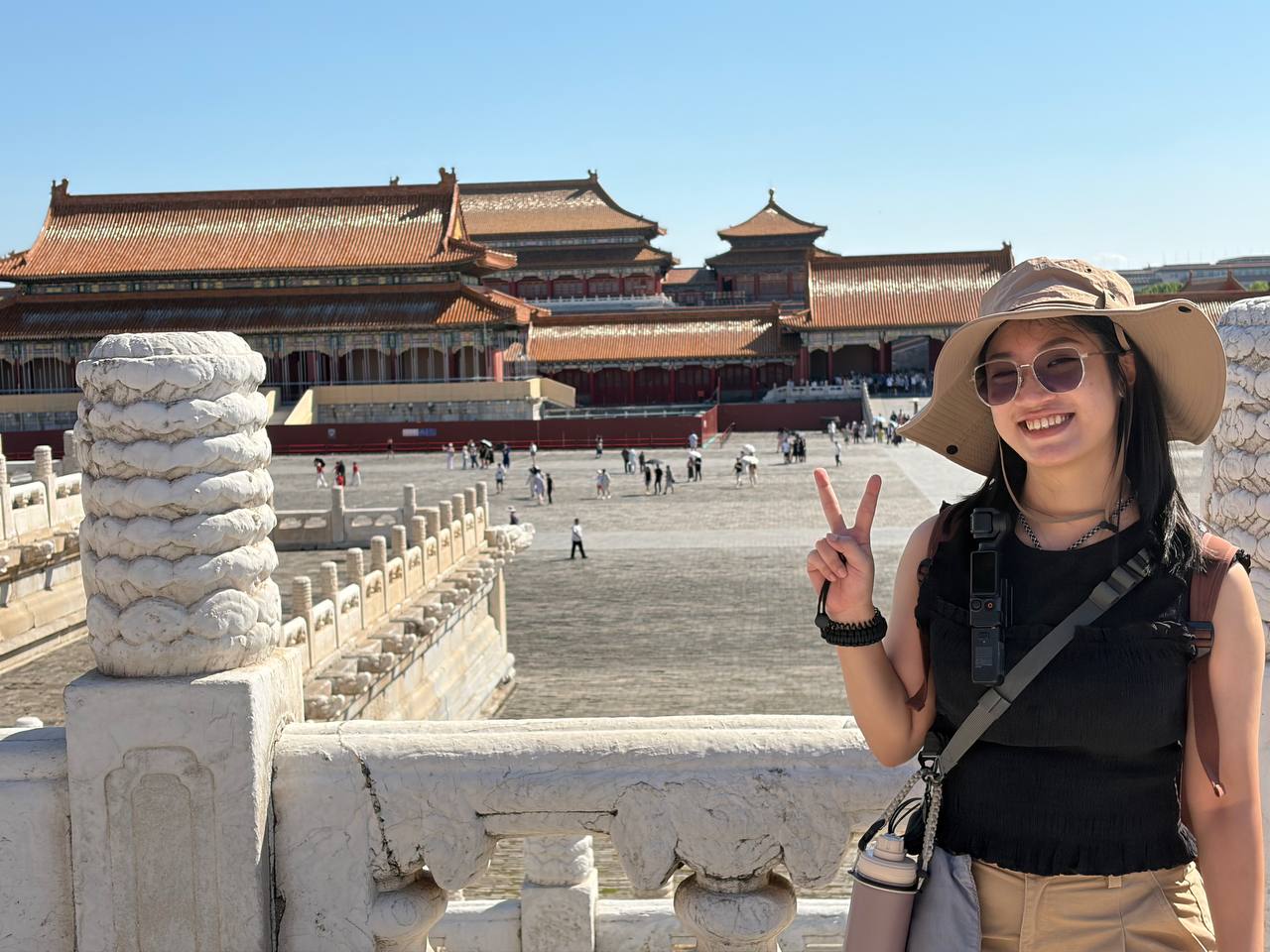
Visiting the Forbidden City

My Reflections on Visiting the Forbidden City

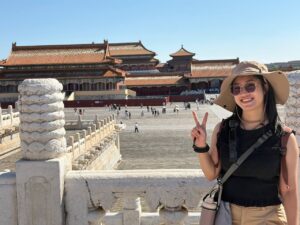
Visiting the Forbidden City in Beijing was a special experience for me, as I had already visited the National Palace Museum in Taiwan. Therefore, as I truly walked into the Forbidden City, I couldn’t help but connect the two visiting experiences.

Personally, I believe there is no need to rank these two places, as each offers a unique experience and holds its own precious value. Notably, both allow me to engage with history and understand Chinese culture from different perspectives. To me, Taiwan’s National Palace Museum allows me to examine historical artifacts up close, while the Forbidden City in Beijing lets me feel the space where history actually took place.

When visiting the National Palace Museum in Taiwan, I have the rare chance to admire a wide variety of artifacts closely and at length. Whether it’s historical data regarding everyday items, clothing, and hairstyles from the past, or tableware and other utensils, these tangible objects allow me to imagine the daily lives of people long ago. I can slow down, observe the fine details of the artifacts, and ponder what these items were used for in their society and how they reflect the lifestyle and aesthetics of that era. To me, this is a process of getting to know history gradually, starting from the artifacts themselves.

The Forbidden City in Beijing gave me a very different sense of wonder. Walking into the Forbidden City felt like stepping into the setting where history had taken place. As I entered the palace grounds and saw the grand halls, wide courtyards and buildings stretching into the distance, I felt deeply moved. I could not examine every object as closely as I had at the National Palace Museum in Taiwan, but simply walking through the vast palace complex and experiencing its scale and grandeur was remarkable. For a moment, I was standing in a real historical place, feeling both connected to that history and aware of the time that separates us from it.

This experience reminded me that visiting just one of these places does not mean we have fully understood the history of Chinese culture. What matters is taking time after each visit to reflect on what we have seen and felt, and to bring these experiences together for a fuller understanding.

When we explore the past through historical objects, buildings, ways of life and their wider historical context, we begin to see that history is never isolated. The objects displayed in museum cases and the palaces that still stand today may offer different experiences, yet each tells its own story of the past. I realised that visiting historical sites is not simply about seeing famous attractions but also an opportunity to look at history with fresh eyes and connect what we learn from one experience to another.

Rediscovering the Jesuits Through Historical Sites

As a theology student, I had not realised before that places such as the Forbidden City and the Old Summer Palace were also connected to the history of the Jesuits in China. In the past, I tended to understand these places mainly through their architecture, culture and history. But as I learned more about the Jesuits’ experiences in China, I began to wonder: Where had they been? What had their connection with these places been? And what was life like for them at that time?

One place that left a particularly deep impression on me was the Beijing Ancient Observatory.

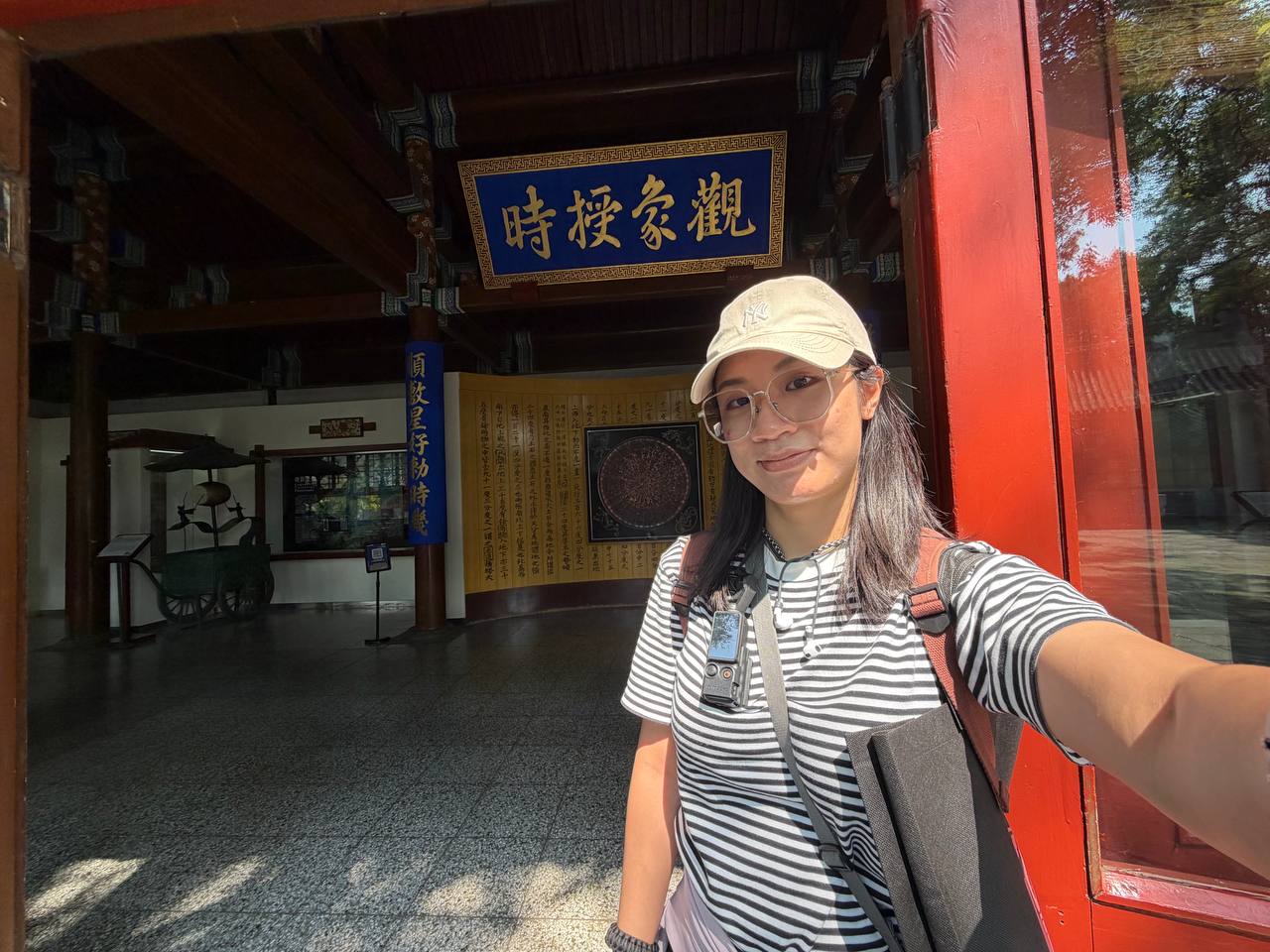
My selfie at the Ancient Observatory

There were not many visitors at the Beijing Ancient Observatory on the day I visit, I was able to walk and look around at my own pace, and carefully and learn about the astronomical work carried out by Johann Adam Schall von Bell, S.J. and Ferdinand Verbiest, S.J. during the Qing dynasty. Seeing those massive astronomical instruments filled me with a deep sense of awe. Reflecting back, these missionaries not only had to face language barriers, but they also had to study Chinese culture, understand the social environment of the time, and communicate and cooperate with the Chinese in their own fields of expertise. The scientific knowledge they brought became a way for them to build relationships with Chinese society. Standing where they once walked, I could truly imagine their courage and perseverance from back then.

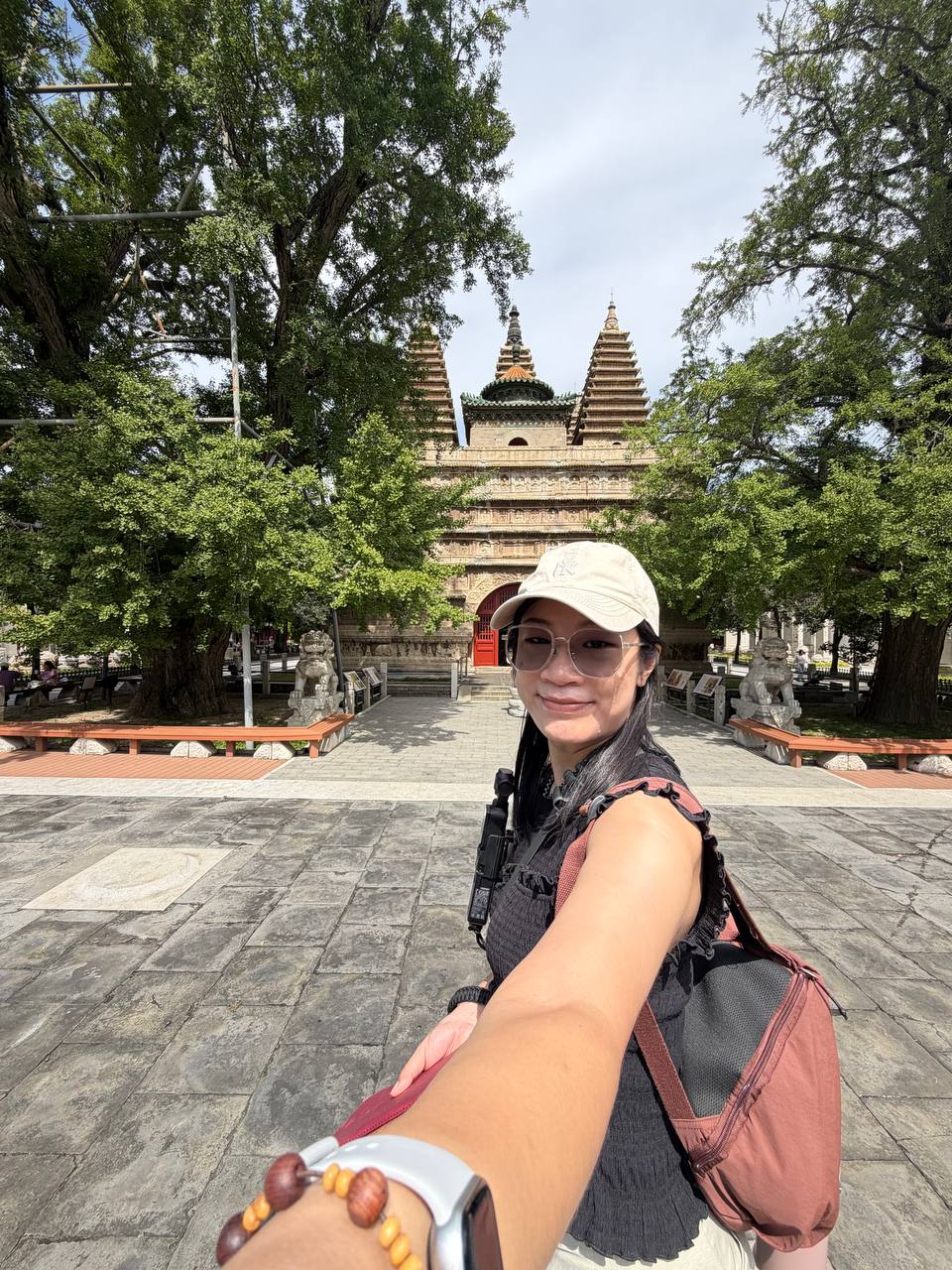
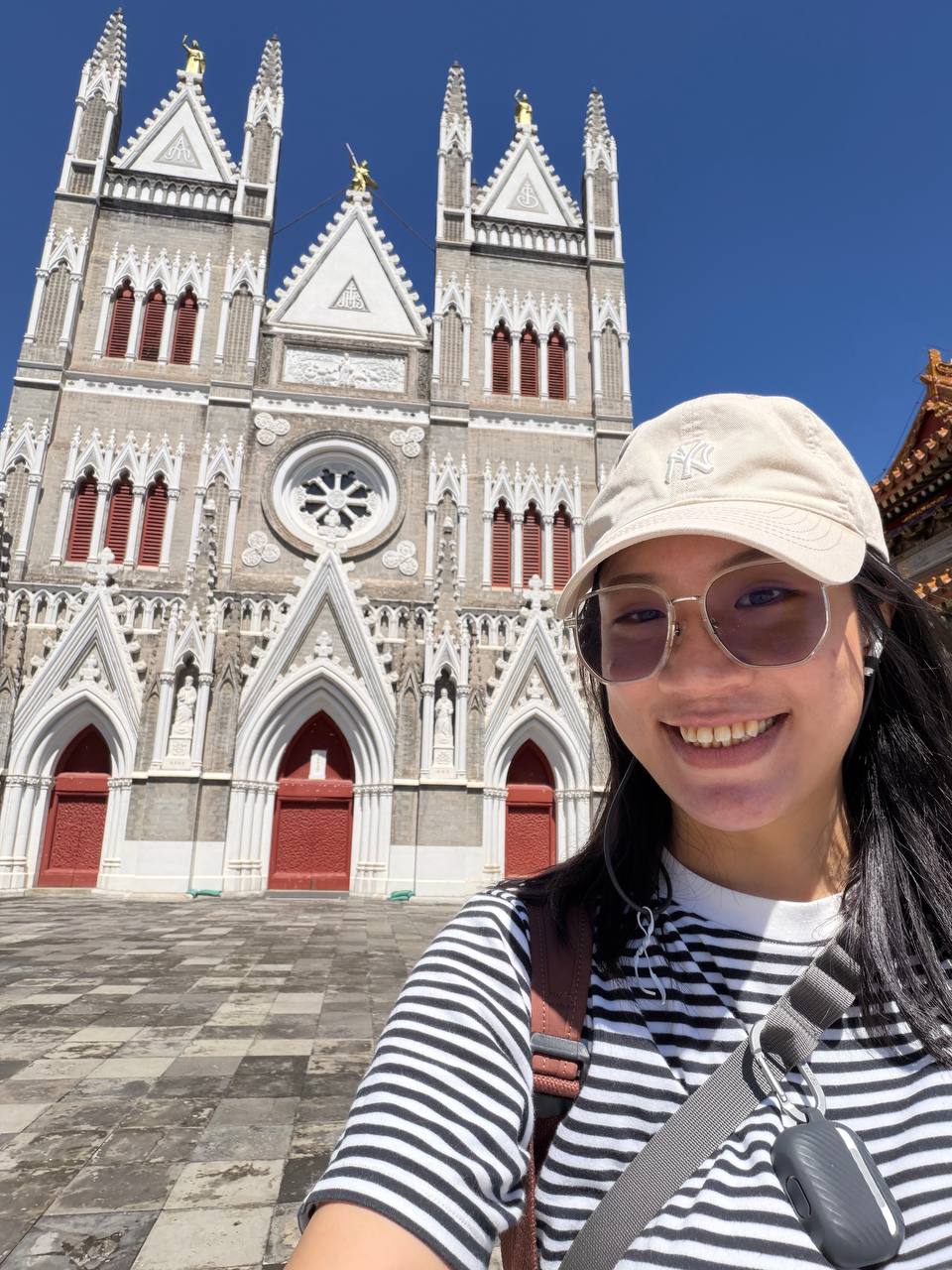
A selfie at Zhenjue Temple and the North Church

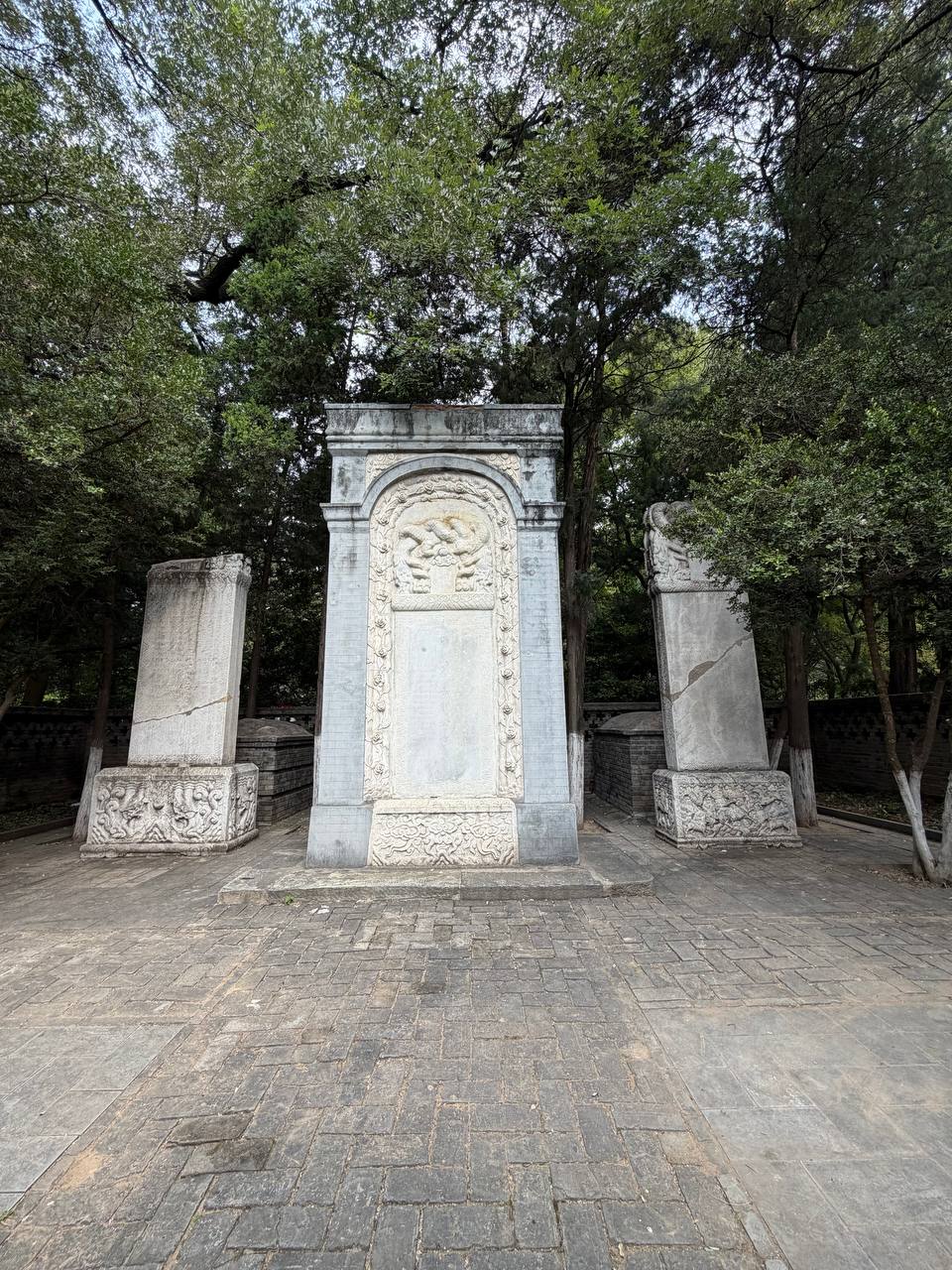
Another place that left a deep impression on me was Matteo Ricci’s tomb.

As I learned about the history of Matteo Ricci’s tomb, I discovered that it had passed through many changes over the years. The tombstone and other historical remains faced difficulties and uncertainty in the past. Hearing these stories, I couldn’t help but reflect on how, during those turbulent times, various individuals made profound efforts to protect these heritage sites. No matter what hardships they faced, their determination to hold onto a piece of history is deeply moving. It made me realize that the survival of historical relics to this day is never a given; it is almost always the result of the quiet, dedicated efforts of countless individuals behind the scenes.

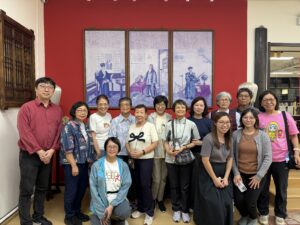
Since the Tomb of Matteo Ricci is normally closed to the public, this visit—arranged by the TBC along with peers of Holy Spirit Seminary College of Theology and Philosophy was an exceptionally precious opportunity for me. Standing in front of the tombstone, which the Emperor himself had granted to these Jesuits in recognition of their contributions to China, allowed me to connect more deeply with the profound legacy they left behind.

I was very fortunate to hear a professor share her insights about the Tomb of Matteo Ricci, and her explanation left a deep impression on me. The professor brought the history behind the tomb to life in such a vivid way, turning what could have been just tombstones and ruins into a story filled with warmth and vitality. Through her sharing, I not only learned about Matteo Ricci, S.J. but also felt a deeper appreciation for the importance of preserving history. I would like to express my special thanks to the professor for her dedicated guidance, as well as to The Beijing Center for arranging this rare and valuable visit.

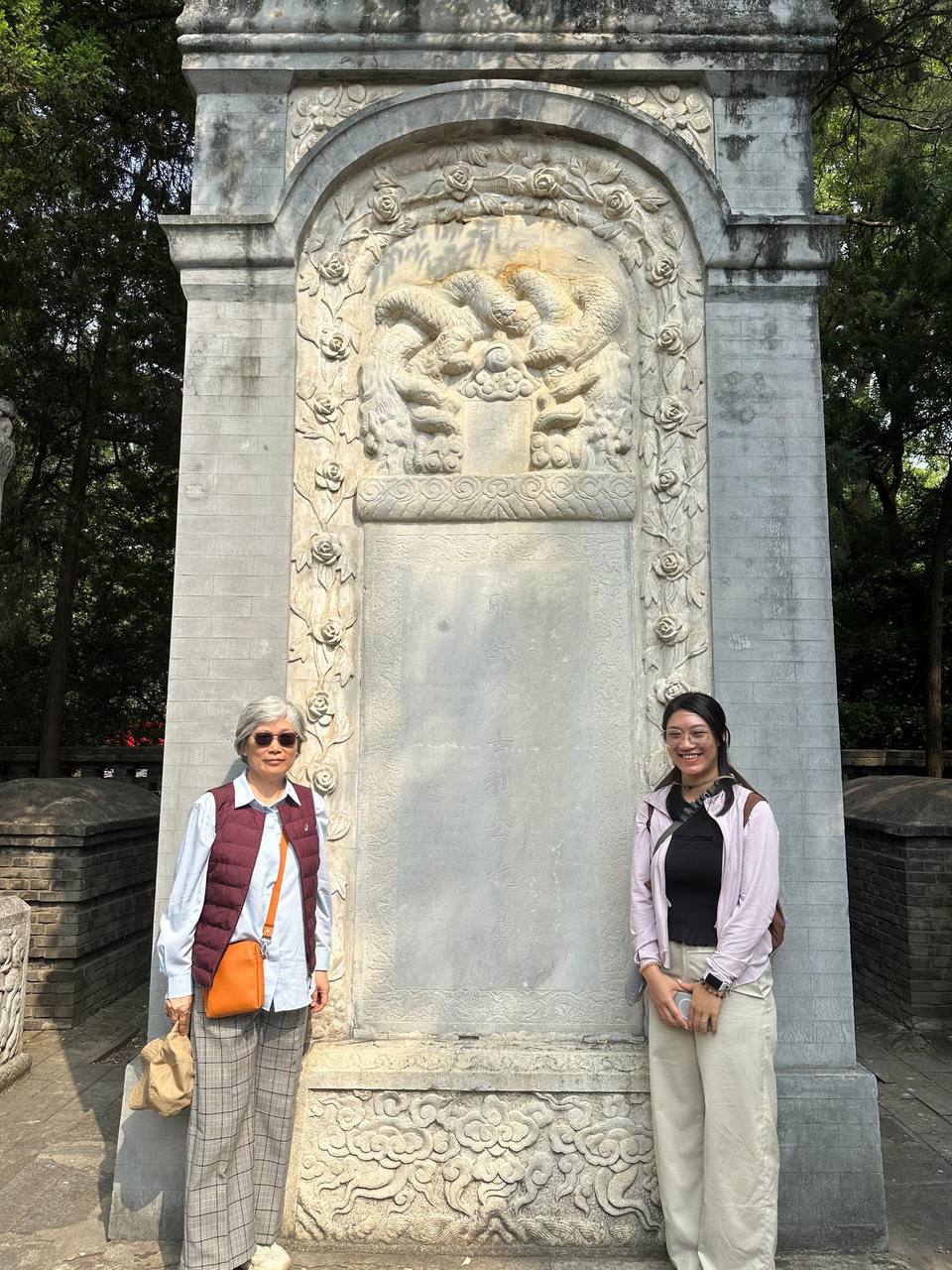
At Matteo Ricci’s tomb with Rose Chan, a fellow Catholic from the Holy Spirit Seminary College of Theology and Philosophy in Hong Kong

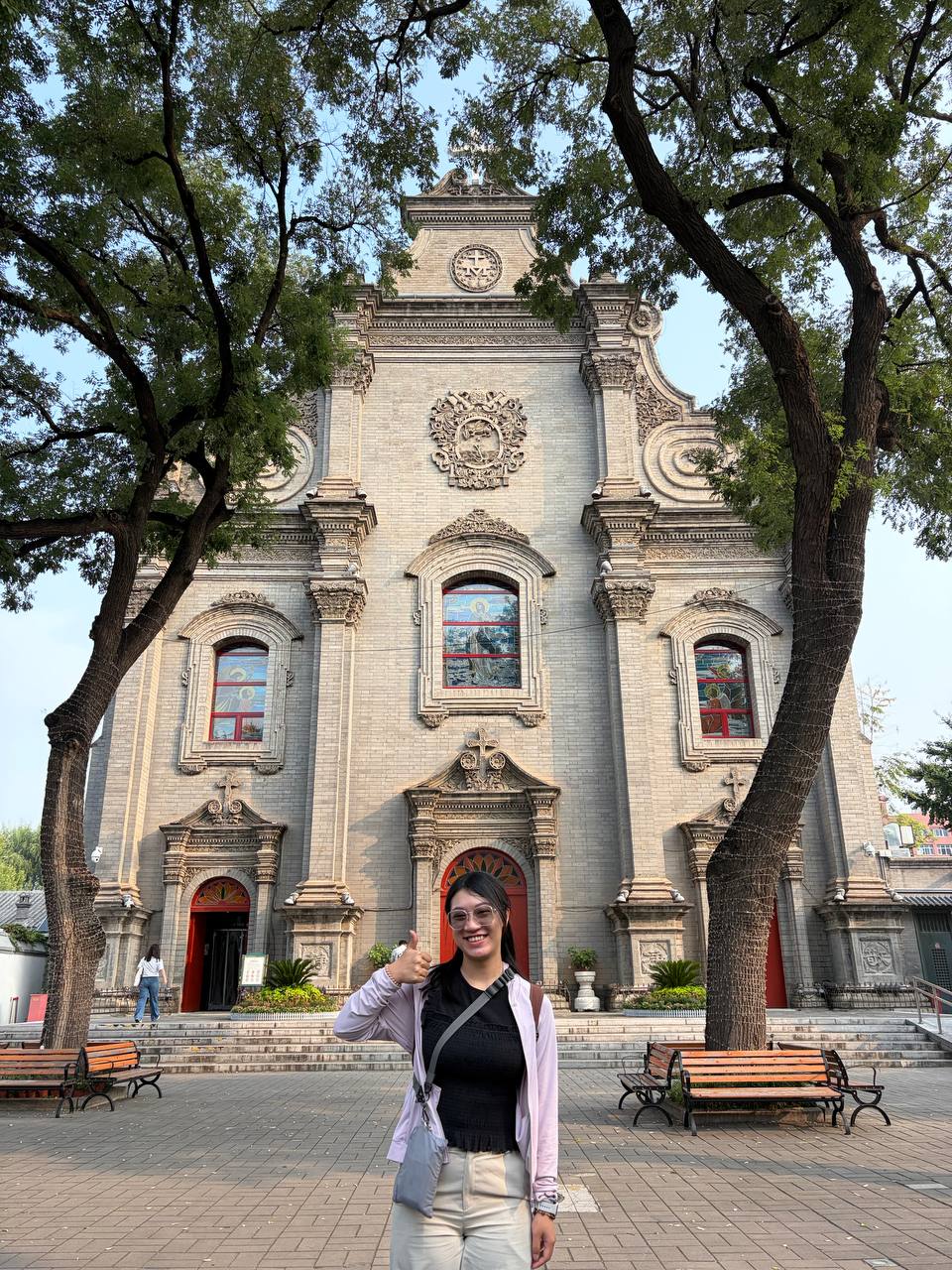
Beyond historical ruins, walking through Beijing’s Catholic churches has moved me deeply. The churches like Cathedral of the Immaculate Conception, St. Joseph Church, Church of the Saviour and Church of Our Lady of Mount Carmel he South, all have long histories. When I step inside them, the feeling is very different from visiting ordinary historic buildings. Whether it is the architecture, space, decoration, or the quiet atmosphere within, I sense a special aura of faith. I cannot help but imagine the many people who have prayed and lived here over the past several centuries. To me, these churches are no longer just structures of historical value, but carriers of people’s faith and life stories.

This journey led me to reflect more deeply on my identity as a theology student. I came to Beijing not only to learn about Chinese culture and visit historical sites, but also to explore the relationship between faith and culture through the traces left by the past, and to reflect on my own vocation.

Centuries ago, people left distant Europe for a strange land out of faith. They had to learn the language, culture, and social environment, and find ways to communicate and converse with the locals. Today, coming from Malaysia to study theology in Taiwan and making a brief visit to Beijing, I realize that even though times are different, stepping into a foreign place is, in itself, a form of learning.

I cannot fully know what they truly experienced centuries ago, nor can I completely comprehend the struggles, loneliness, and perseverance they faced. Yet through these remains, I am at least brought closer to the era they lived in and can more deeply feel the path they walked.

Over these ten-odd days, I have not simply come to Beijing to sightsee, but to re-discover a history that was once unfamiliar to me. The Forbidden City, the Beijing Ancient Observatory, and the various churches have taken on new meanings because of this history. What they show me is not just architecture and tourist spots, but the people who once lived within them and the traces of life they left behind.

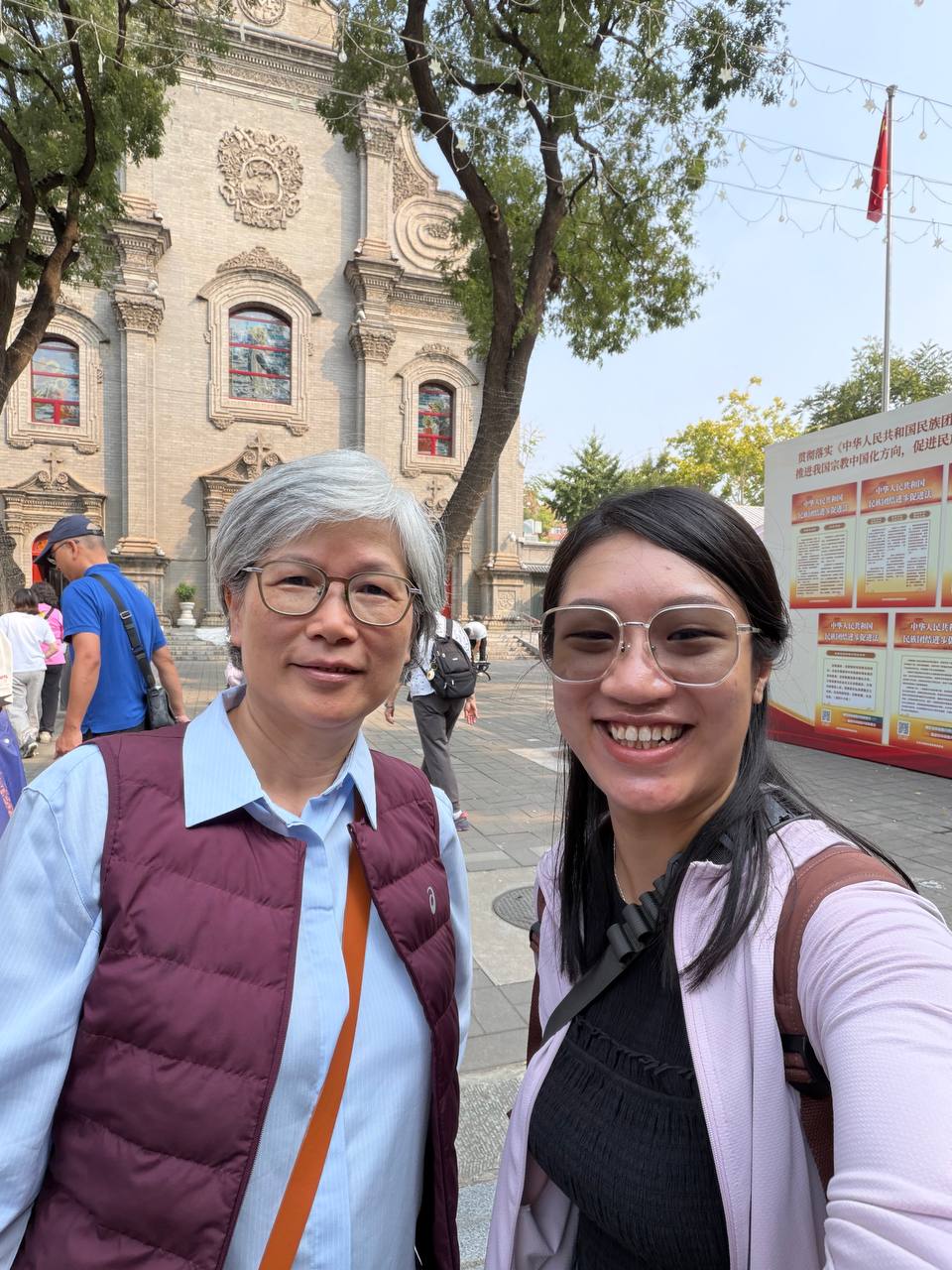
At the South Church with Rose Chan

I am very grateful to TBC for giving me the opportunity to visit Beijing and see this place from a new perspective. I had never imagined that Beijing held such a rich history of faith. I am glad that I finally had the chance to come here and experience it for myself.

History has given me a fresh perspective on them, and the footprints they left behind have also allowed me to rediscover myself. At the same time, this journey has taught me that understanding history requires diverse perspectives and personal experiences. Whether it is closely observing the past through cultural artifacts or stepping directly into the spaces where history unfolded, every experience opens a new door for us. What matters most is not comparing which experience is better, but being willing to keep an open mind and integrate everything we see and feel along the way. In doing so, history is no longer just a distant past, but a meaningful part of our lives that helps us understand culture, faith, and our own existence.

By Chen Jien Teng, Fu Jen Catholic University

More To Explore

Cultural Dialogues

TBC’s Rare Books Featured at the Beijing Confucian Temple

TBC loaned three rare books to The Great Confucius exhibition at the Beijing Confucian Temple and Imperial College Museum, showcasing the spread of Confucian thought in Europe and centuries of cultural exchange.