跳到主要内容

The Beijing Center

TBC’s Rare Books Featured at the Beijing Confucian Temple

Share This Post

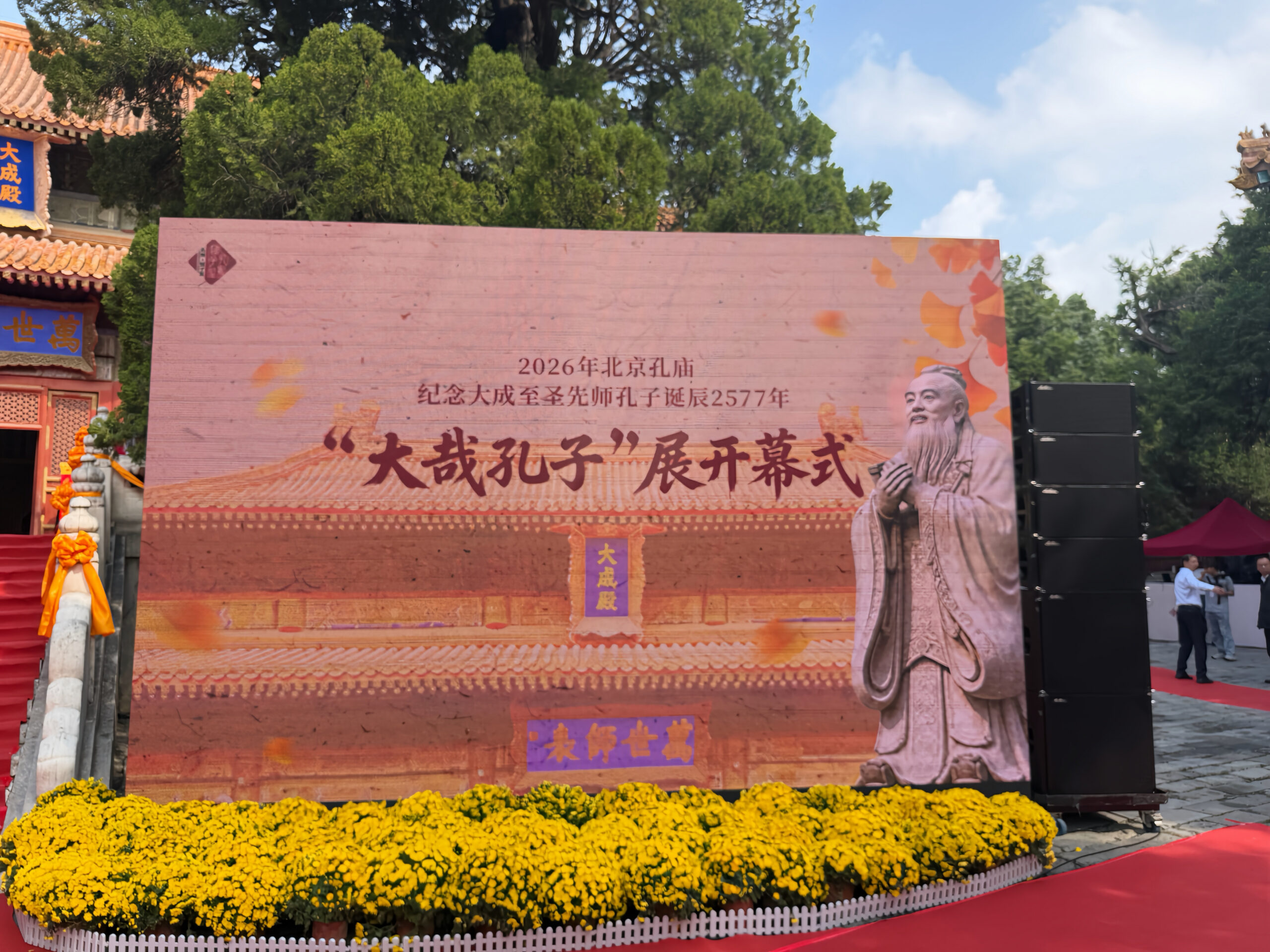
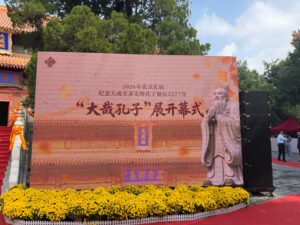
On September 28, 2026, marking the 2,577th anniversary of Confucius’s birth, the Beijing Confucian Temple and Imperial College Museum held a traditional ceremony in honor of Confucius and officially opened its new exhibition, Great Indeed Is Confucius. The Beijing Center (TBC) contributed three rare books from its collection to the exhibition, offering a glimpse into the history of Confucian thought in Europe and the long-standing exchange of ideas between China and the West.


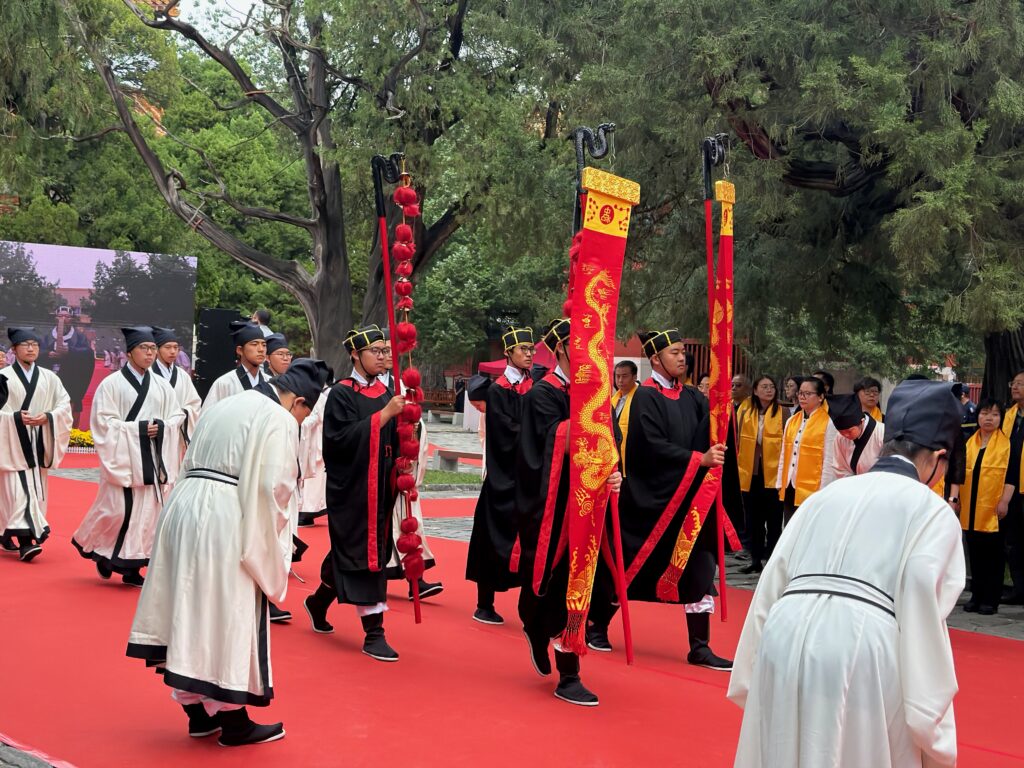
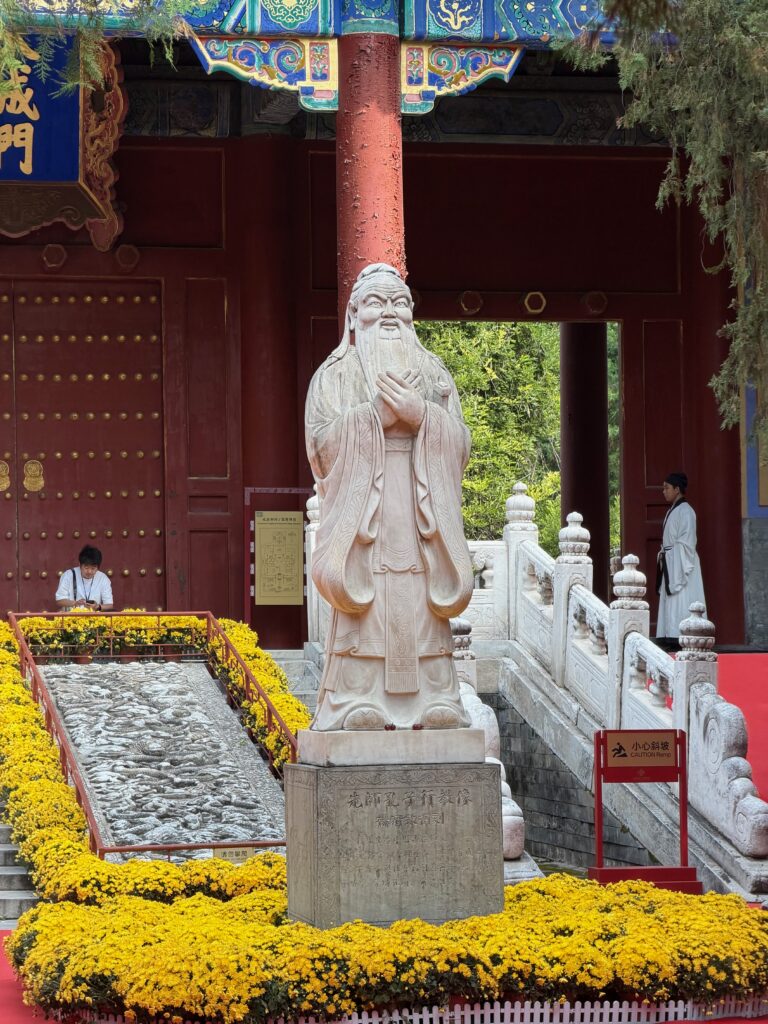
Representatives of TBC were invited to attend both the ceremony and the exhibition opening. The traditional ceremony Shidianli, also known as Ancestral Remembrance Service, has a history spanning more than two thousand years and honors revered figures in Chinese history. Following traditional ritual procedures, the ceremony included six stages, from the welcoming session and presenting offerings to the concluding rites. Guests paid their respects to Confucius, the Four Sages (Sipei, four eminent figures in the Chinese philosopher and Confucianism tradition), and the Twelve Philosophers (Shi’erzhe, 12 important thinkers in ancient China who followed the teachings of Confucius), commemorating the influential Chinese thinker, educator, and founder of Confucianism.

The traditional ceremony (Shidianli) honoring Confucius

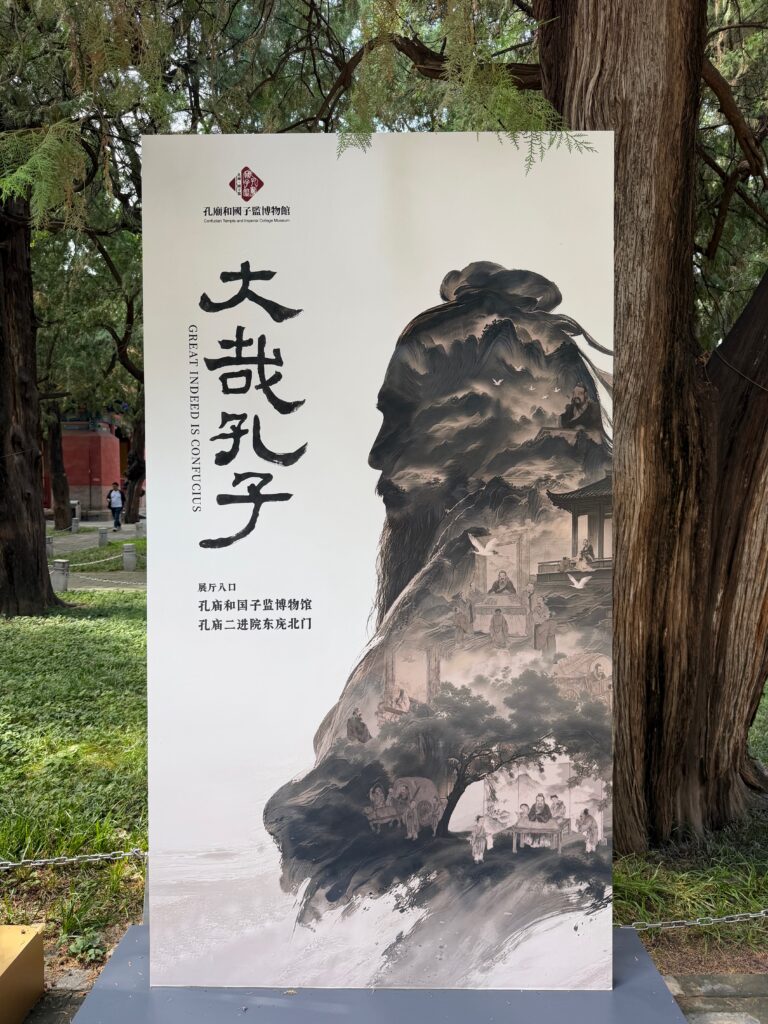
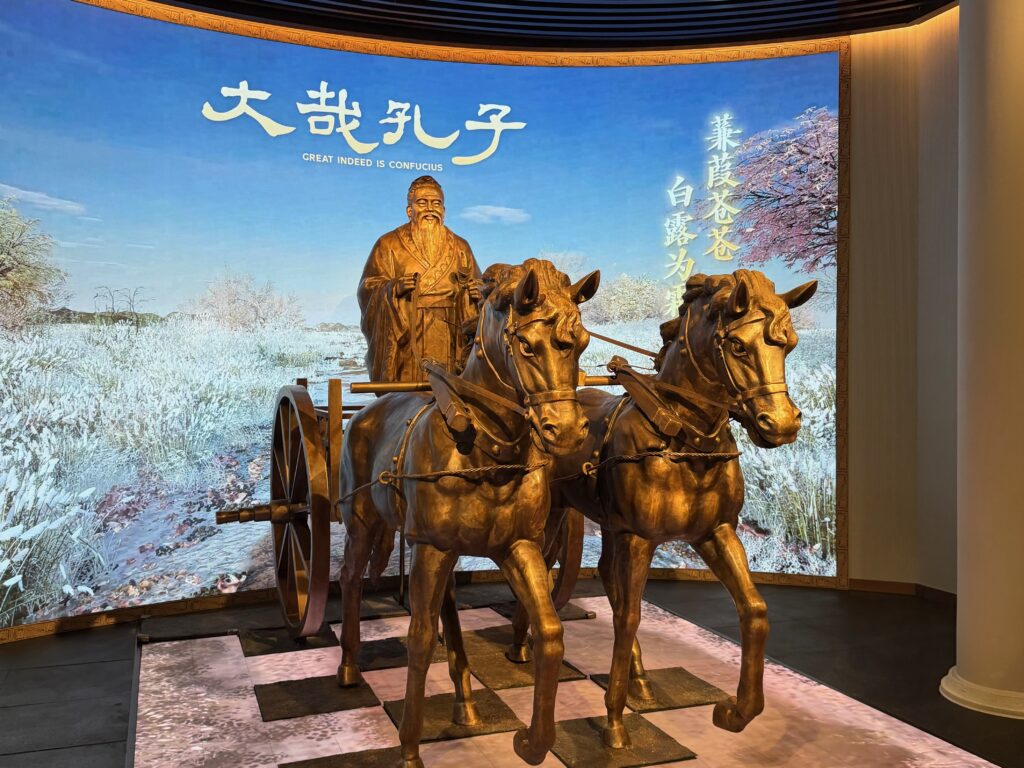
The exhibition Great Indeed Is Confucius traces Confucius’s life, philosophical thought, and historical legacy, exploring his enduring influence on Chinese civilization and the wider world. Its title draws on a passage in the Analects (Book IX, “Zi Han”), in which a person praises Confucius for the breadth of his learning.

Poster of the exhibition

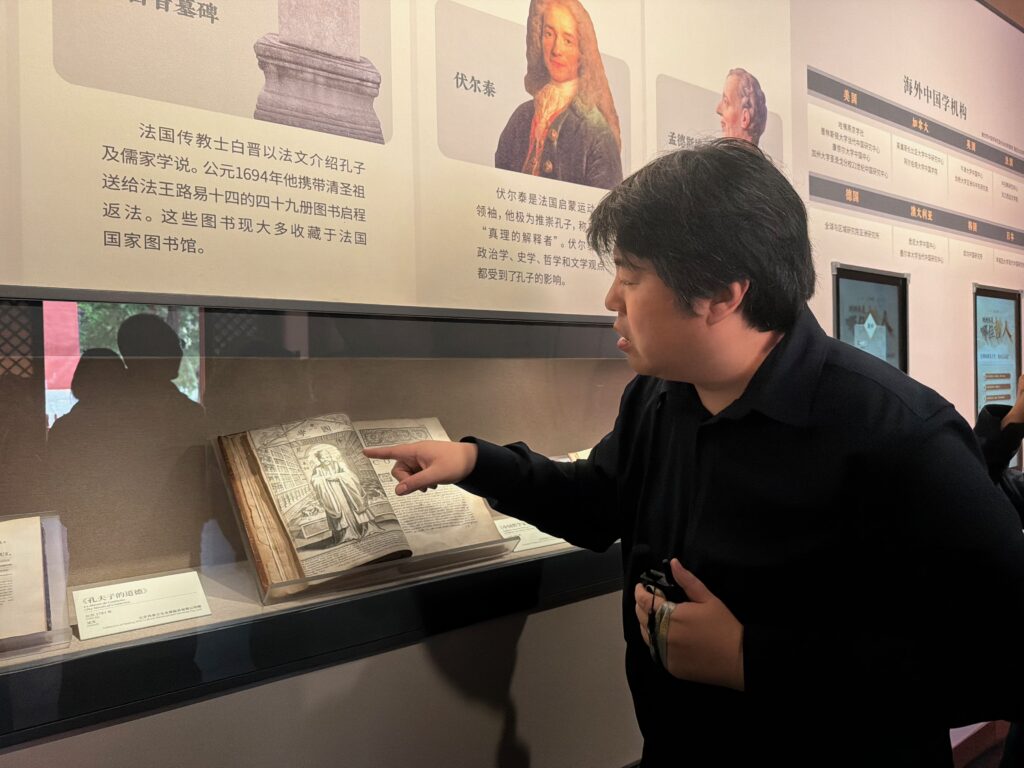
Through rare artifacts, historical documents, and multimedia displays, the exhibition presents the development of Confucian thought and its transmission across cultures. Mr. Kong Zhe, a research fellow at the museum, guided guests through the exhibition, explaining its curatorial approach, key objects, and historical context, including the three rare books loaned by TBC.

Museum research fellow Mr. Kong Zhe introduces the rare books loaned by TBC

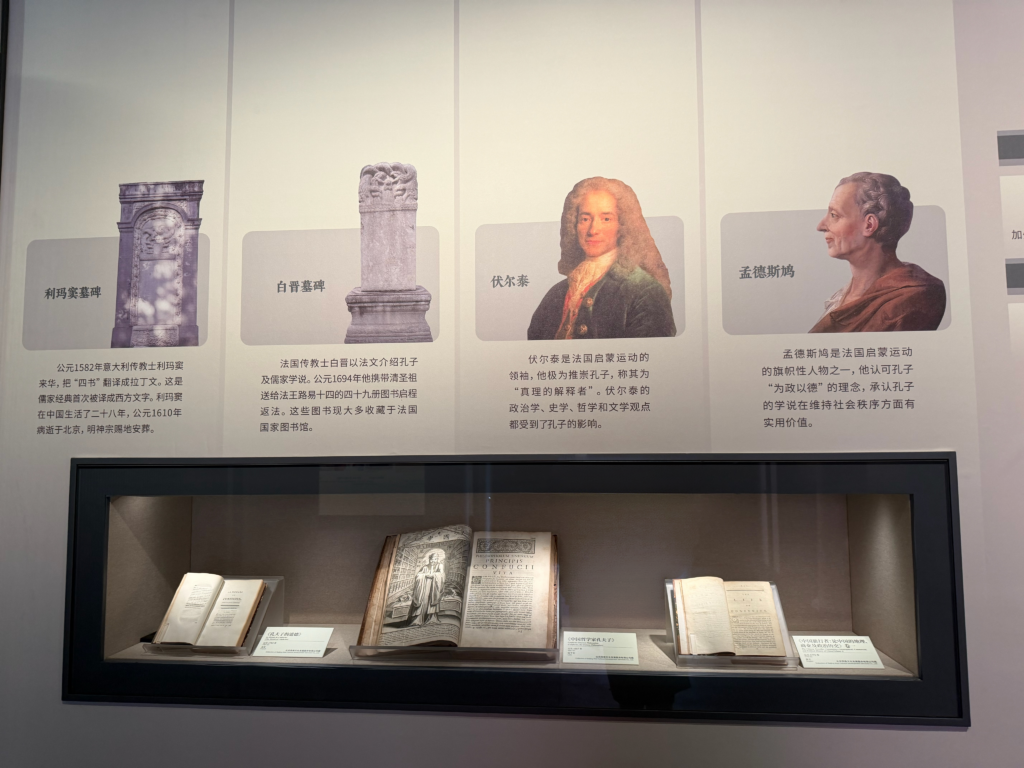
The three works illustrate how Confucius and Confucian thought entered European intellectual life from the seventeenth to the eighteenth centuries.

Rare books loaned by TBC for the exhibition

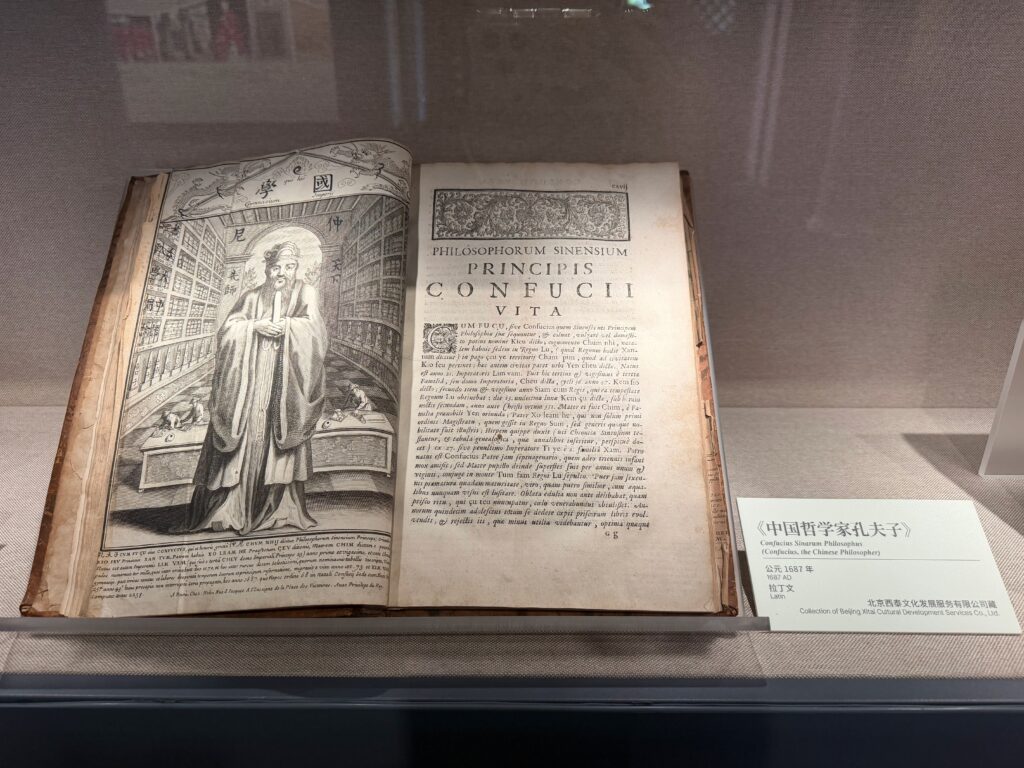
Published in Paris in 1687, Confucius Sinarum Philosophus (Confucius, Philosopher of the Chinese) was one of the earliest major European works to present Confucius and Confucian thought systematically. It includes Latin translations of classical texts such as the Great Learning, the Doctrine of the Mean, and the Analects. Through these translations and sections such as the biography of Confucius, the book introduced European readers to the philosopher’s life and ideas, as well as to Chinese cultural traditions, bringing Confucian thought into wider European scholarly and cultural discussions.

Confucius Sinarum Philosophus, 1687
(Confucius, Philosopher of the Chinese)

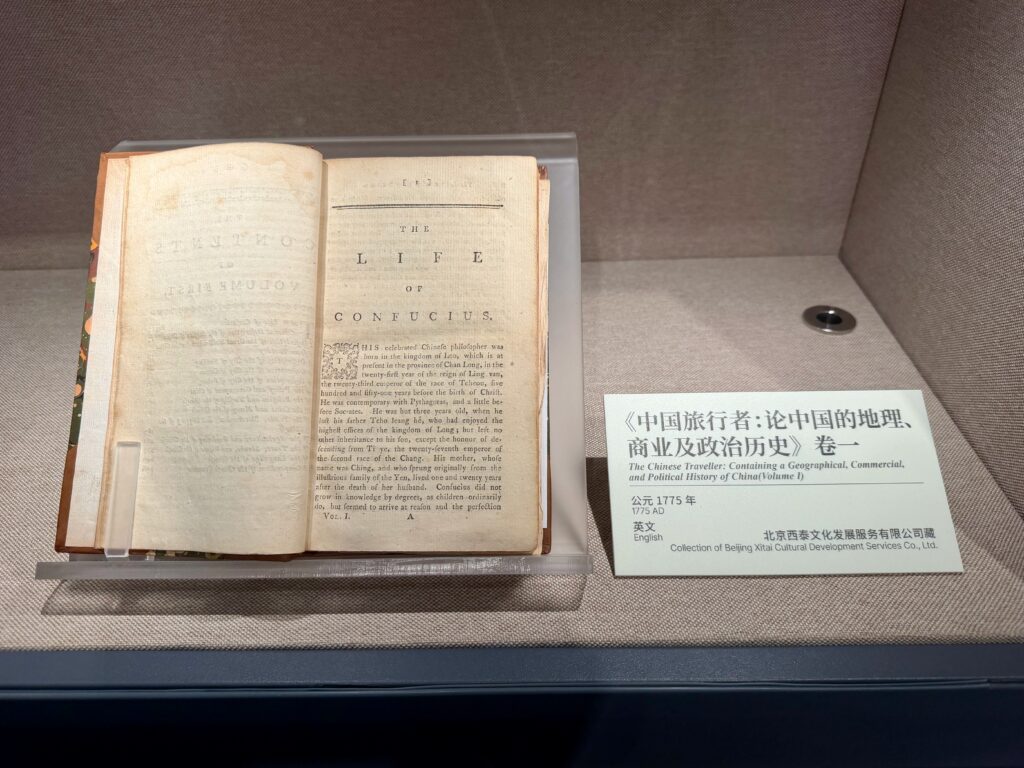
Published in 1775, The Chinese Traveller: Containing a Geographical, Commercial, and Political History of China (Volume I) opens with a depiction of Confucius and introduces his life and teachings. Addressing an English-speaking readership, the book presents aspects of China’s history, social institutions, and cultural traditions. It stands as a testament to the role of printed works in shaping European understandings of China.

The Chinese Traveller: Containing a Geographical, Commercial, and Political History of China (Volume I), 1775

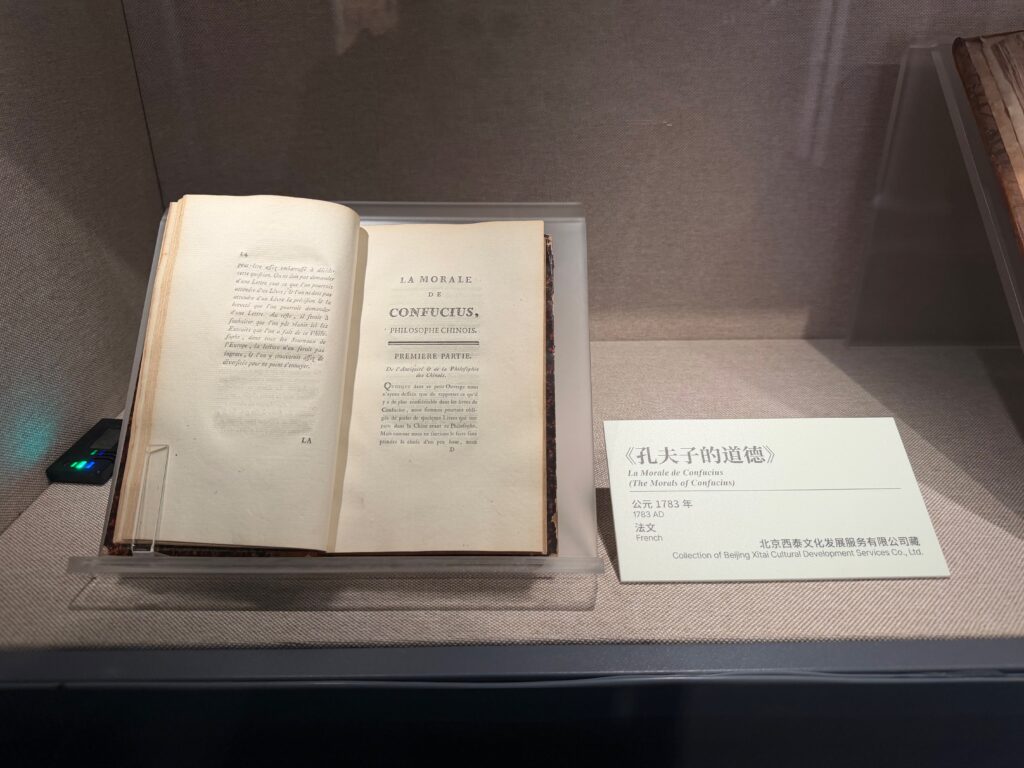
The French-language La Morale de Confucius (The Morality of Confucius), published in 1783, presents Confucius’s thought and ethical teachings to French readers. By making Confucian ideas accessible in French, the work helped bring Chinese perspectives on ethics, self-cultivation, and social order into the awareness of European intellectual and public audiences. Translation and publication thus served as important channels through which European readers encountered Chinese thought, demonstrating the continued influence of Confucius across languages and cultures.

La Morale de Confucius, 1783
(The Morality of Confucius)

The transmission of Confucian thought across Europe was part of a broader history of intellectual exchange between China and the West. From the Ming and Qing dynasties onward, Jesuit missionaries in China, including Matteo Ricci, S.J., introduced Chinese classics and ideas to European audiences through translation and publication. Scholars such as Joachim Bouvet, S.J., also contributed to the dissemination of knowledge about Confucius and Confucianism. During the European Enlightenment in the eighteenth century, thinkers including Voltaire took an interest in Confucian ethics, which became an important reference point in European understandings of Chinese civilization.


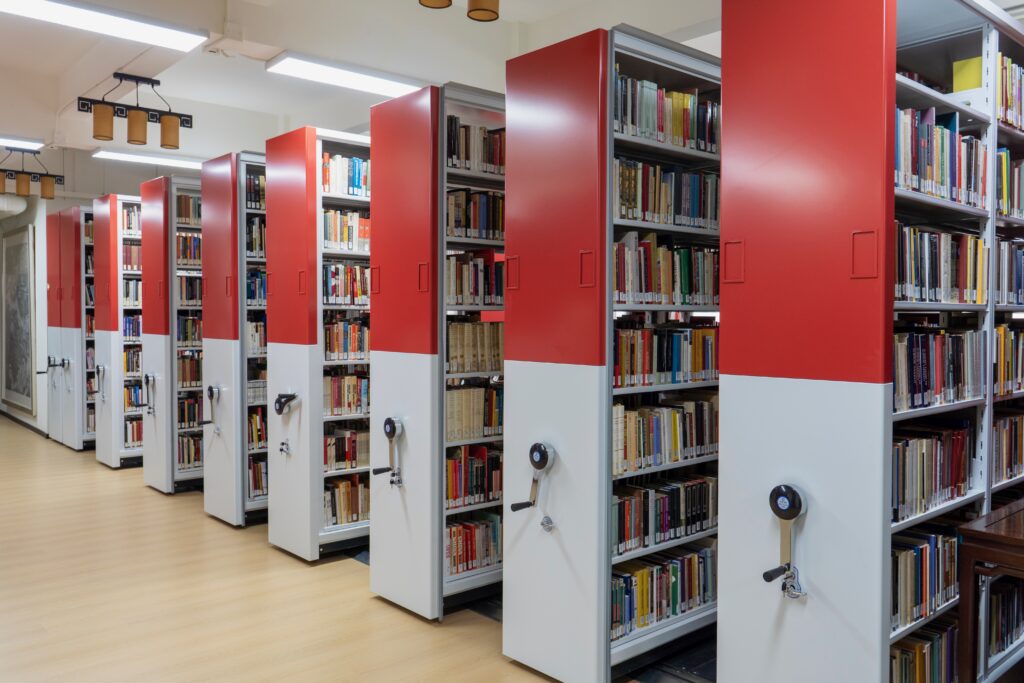
TBC’s Anton Library houses a significant collection of rare materials related to this history, documenting centuries of exchange in philosophy, culture, and knowledge between China and the West.

TBC’s Anton Library

Through the preservation, research, publication, and exhibition of its historical collections, TBC continues to connect the past with the present and East with West, guided by its mission to “Transform, Bridge, Connect.” The three books loaned to the museum bring these centuries-old documents beyond the library and into public view, illuminating the historical journey of Confucian thought into Europe.

The exhibition hall for Great Indeed Is Confucius

The Great Indeed Is Confucius exhibition is located in the East Wing exhibition hall of the Beijing Confucian Temple and Imperial College Museum and is now open to the public. All three books loaned by TBC are displayed in their original editions. The initial exhibition period is six months, and visitors are welcome to explore the exhibition.

More To Explore

Cultural Dialogues

TBC’s Rare Books Featured at the Beijing Confucian Temple

TBC loaned three rare books to The Great Confucius exhibition at the Beijing Confucian Temple and Imperial College Museum, showcasing the spread of Confucian thought in Europe and centuries of cultural exchange.
Academic Highlights

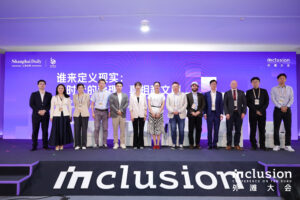
TBC Speaks at the 2026 INCLUSION Conference in Shanghai

TBC participated in the 2026 INCLUSION Conference on the Bund in Shanghai, where Executive Director Dr. Simon Koo joined discussions on AI, human-centric values, and the implications of technological innovation for society.