
TBC’s 29 Rare Books Featured at Beijing Administration Institute
On September 21, 2026, TBC contributed 29 rare books and maps from its collection to the Sino-French Cultural Heritage Exhibition at the Beijing Administration Institute.
On September 21, 2026, The Beijing Center (TBC) contributed 29 rare books and maps from its collection to the Sino-French Cultural Heritage Exhibition, held alongside the China-France Salon for Dialogue on Cultural Heritage at the Beijing Administration Institute. The collection highlights centuries of intellectual and cultural exchange between China and Europe, offering a glimpse into how knowledge of Chinese society, geography, and philosophy traveled across continents and shaped cross-cultural understanding.
Part of the 2026 Beijing Culture Forum’s Guest Hall series, the salon focused on cultural heritage dialogue between China and France. Under the forum’s annual theme, “Cultural Heritage and Mutual Learning among Civilizations,” approximately 300 participants from both countries—including scholars, cultural heritage professionals, institutional representatives, and university faculty and students—gathered to discuss heritage preservation, transmission, and revitalization.
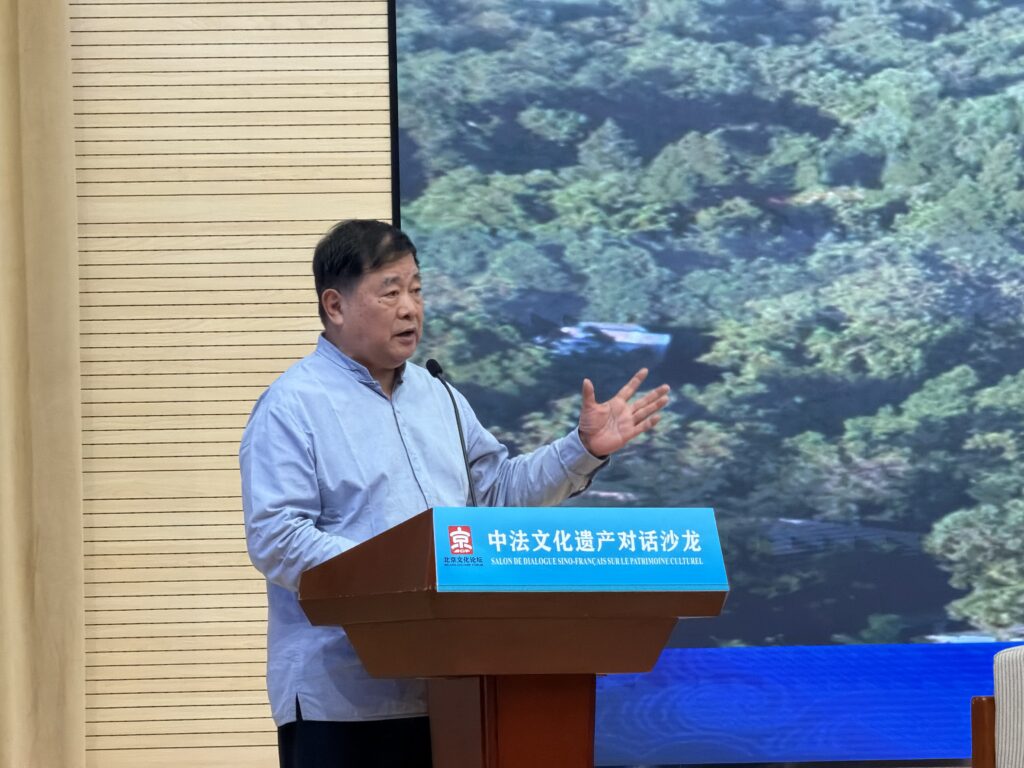
Shen Jie, Executive Vice President of the Beijing Administration Institute, delivered the opening remarks, highlighting the longstanding exchanges between China and France in cultural heritage preservation and the potential for further cooperation. Shan Jixiang, former director of the Palace Museum, and Cécile Cukierman, French senator and vice president of the France-China Friendship Association, also shared their perspectives on cultural exchange and dialogue between civilizations.
Dr. Shan Jixiang, former director of the Palace Museum
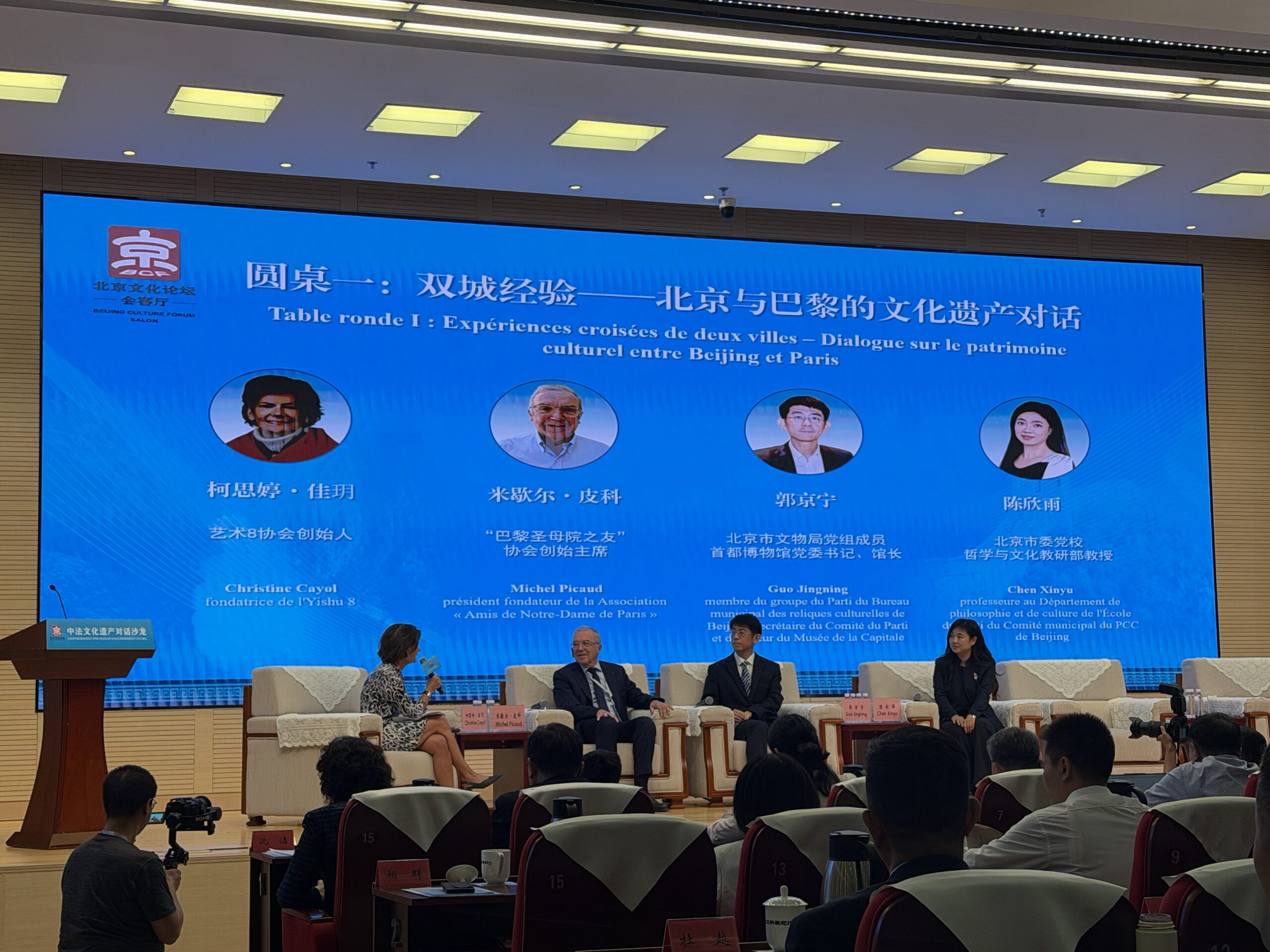
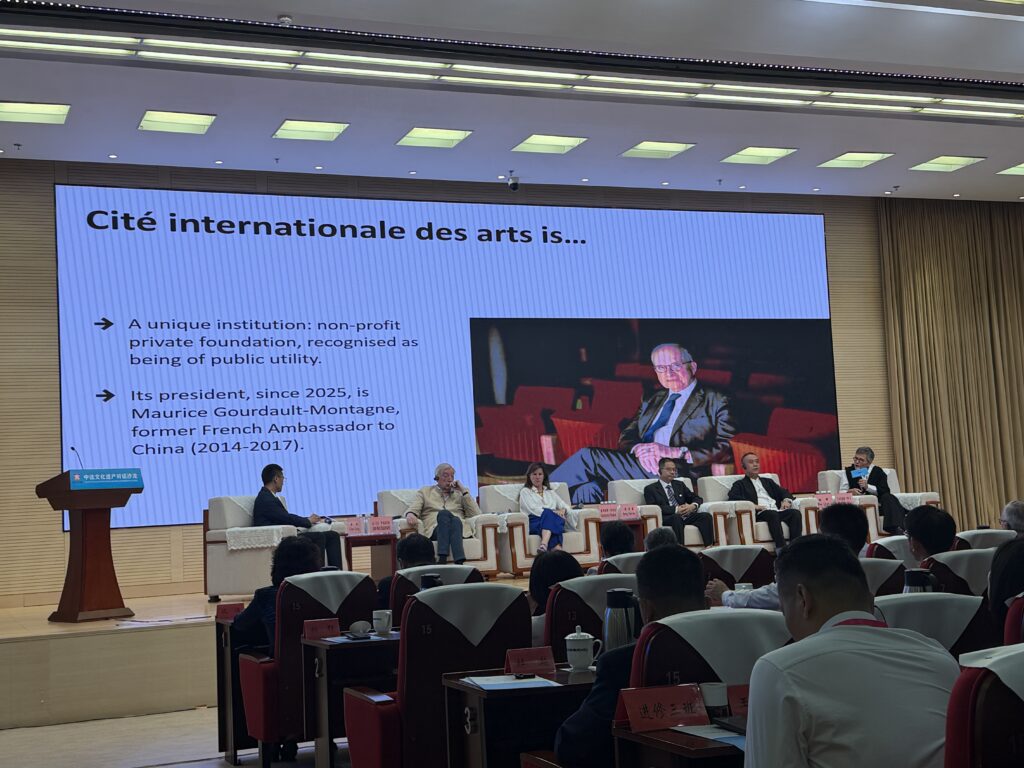
Two roundtable discussions explored heritage preservation in Beijing and Paris and opportunities for cooperation between Chinese and French museums. The discussions brought together experts from museums, cultural institutions, and academia in both countries.
Experts from China and France exchange views during a roundtable discussion
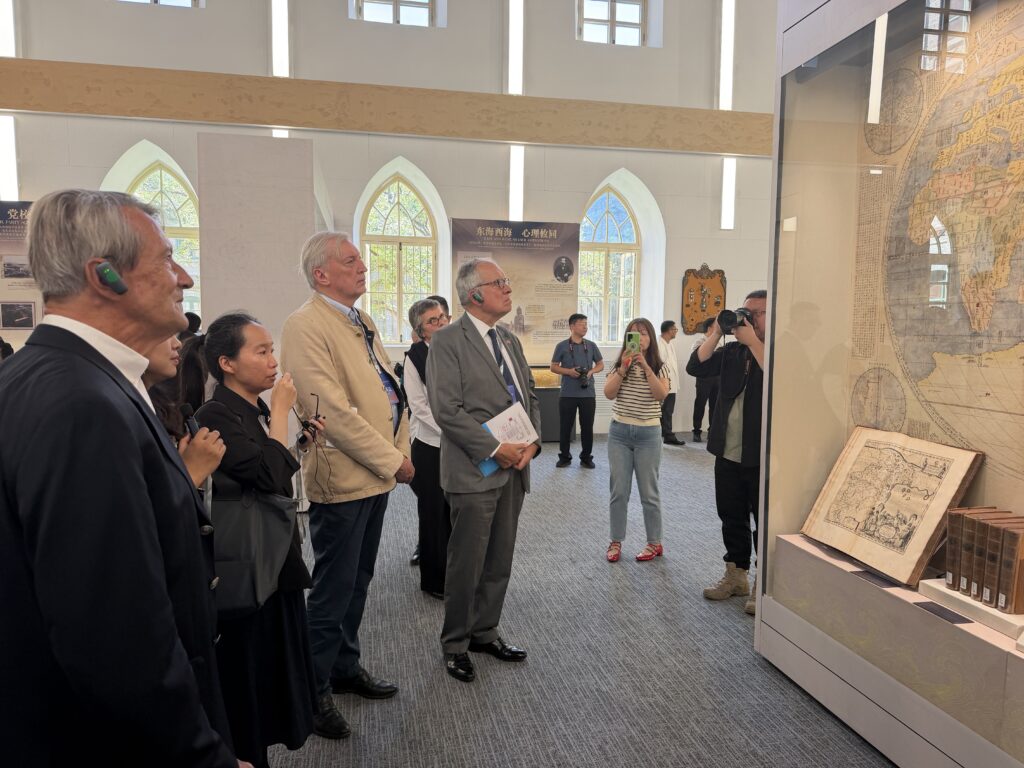
Following the salon, participants visited the exhibition, which was installed in the central hall of the E-shaped Building (Shan Zi Lou, part of the former church complex) and the campus’s underground wine cellar. The setting, alongside historical sites on campus such as the cemetery of Matteo Ricci, S.J., and other foreign missionaries, provided a distinctive backdrop for exploring the history of cultural encounters between China and the West.
Guests explore the Sino-French Cultural Heritage Exhibition
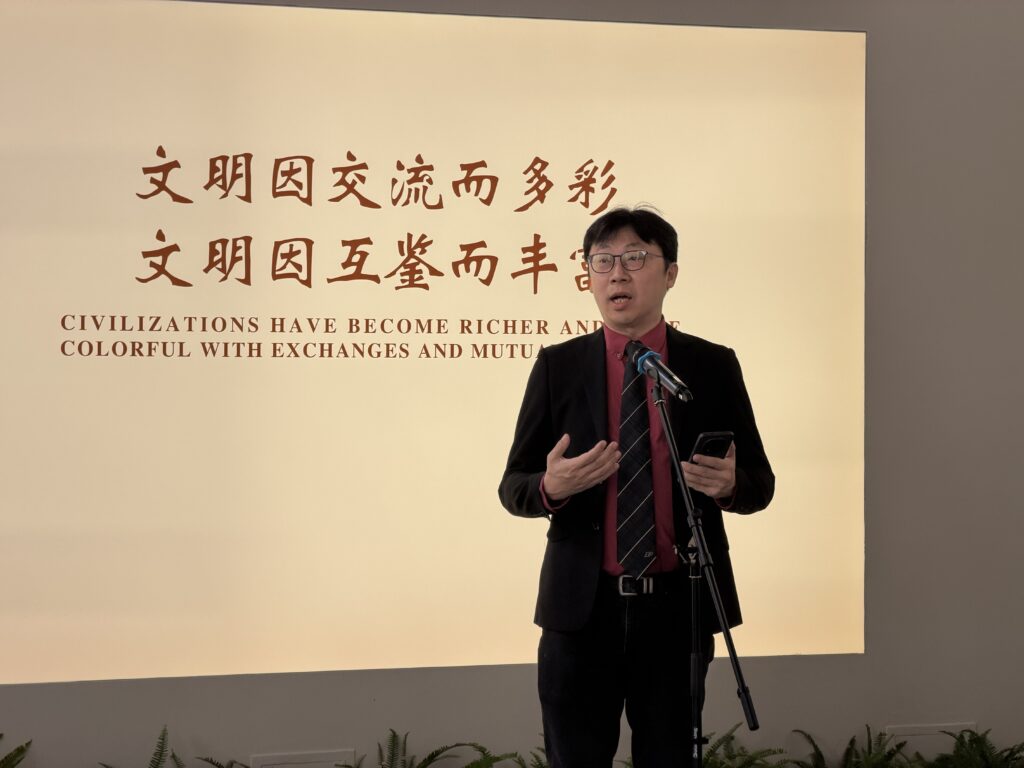
During the exhibition, representatives of participating institutions introduced their collections and the stories behind the displayed objects. Dr. Simon Koo, Executive Director of TBC, highlighted TBC’s efforts in cultural exchange and its collection, preservation, and study of historical materials documenting encounters between China and other countries. Drawing on the featured books and maps, he reflected on the history of cultural exchange between China and the West over several centuries.
Dr. Simon Koo, Executive Director of TBC
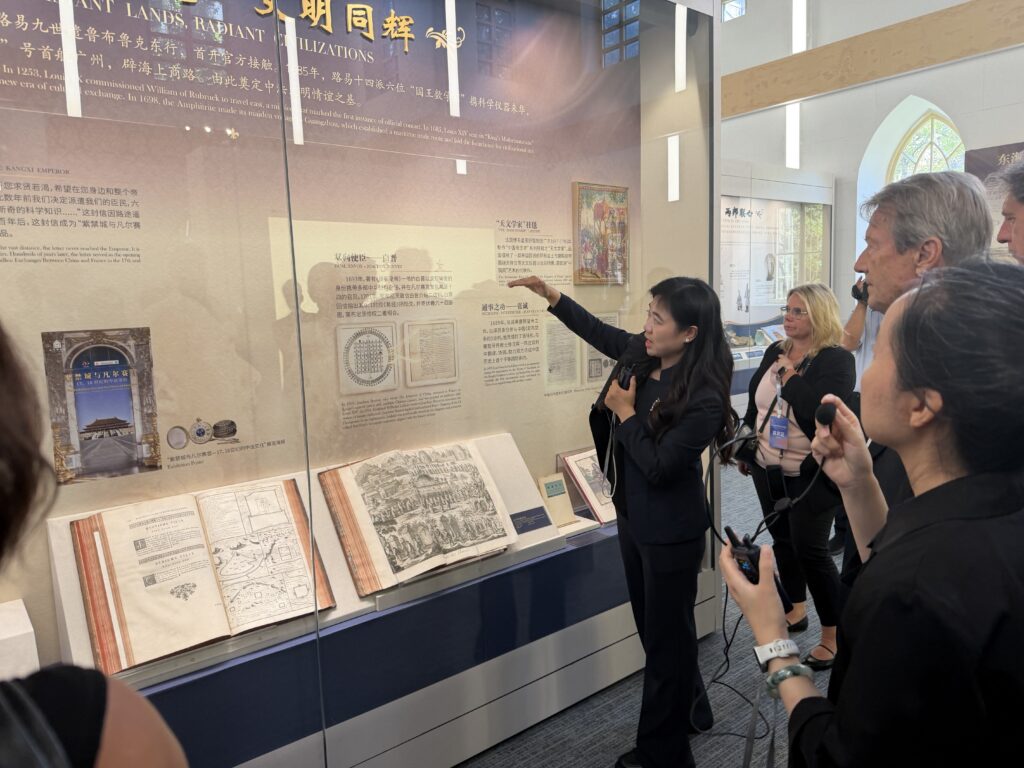
The 29 items selected from TBC’s collection illustrate different aspects of Europe’s evolving understanding of China, demonstrating how written accounts, cartography, and philosophical texts helped introduce Chinese history, geography, and thought to European audiences.
Guests view rare books and maps from TBC’s collection
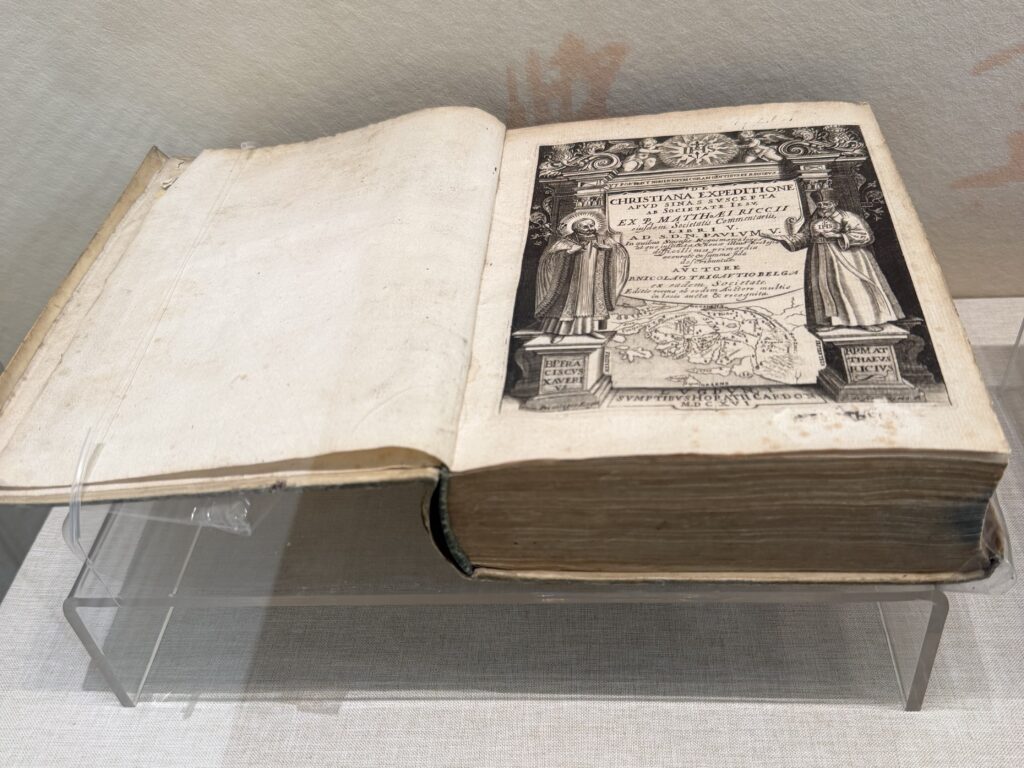
Published in Latin in 1615, De Christiana expeditione apud Sinas records early European observations of Chinese society, history, and culture. Its publication offers insight into how accounts of China circulated in Europe through writing, translation, and print, shaping the knowledge available to European readers.
De Christiana expeditione apud Sinas (1615)
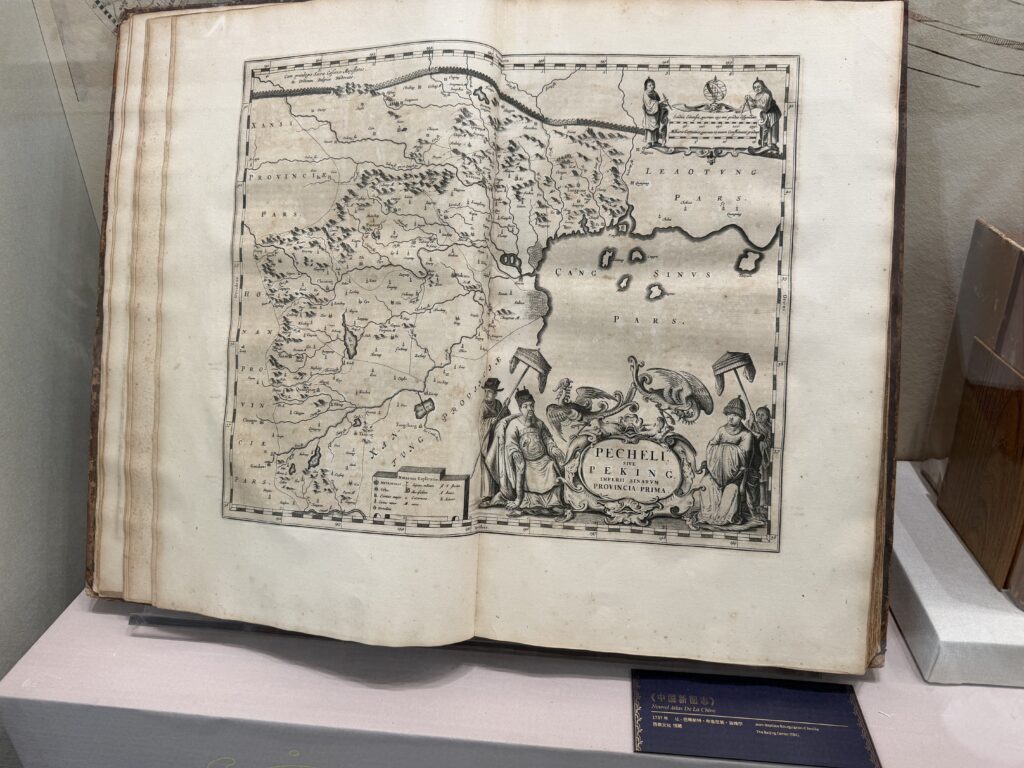
Published in Latin in 1655, Novus Atlas Sinensis brought together detailed descriptions and maps of China’s provinces, offering European readers one of the most comprehensive accounts of Chinese geography available at the time. It stands as an important example of how Chinese geographical knowledge was transmitted and reinterpreted through European scholarship and cartography in the seventeenth century.
Novus Atlas Sinensis (1655)
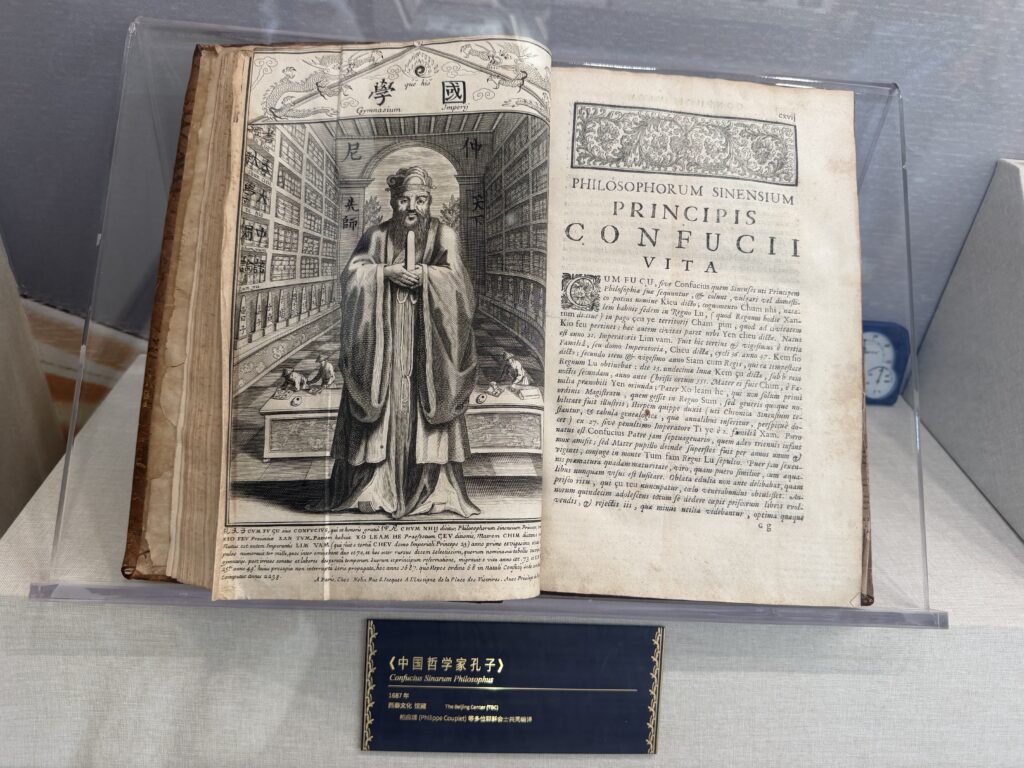
Published in Paris in 1687, Confucius Sinarum Philosophus was a landmark work in the European reception of Confucius and Confucian philosophy. Written in Latin, it introduced European intellectual audiences to Confucian classics and Chinese philosophical thought, helping bring China’s intellectual traditions into wider European academic and cultural discussions.
Confucius Sinarum Philosophus (1687)
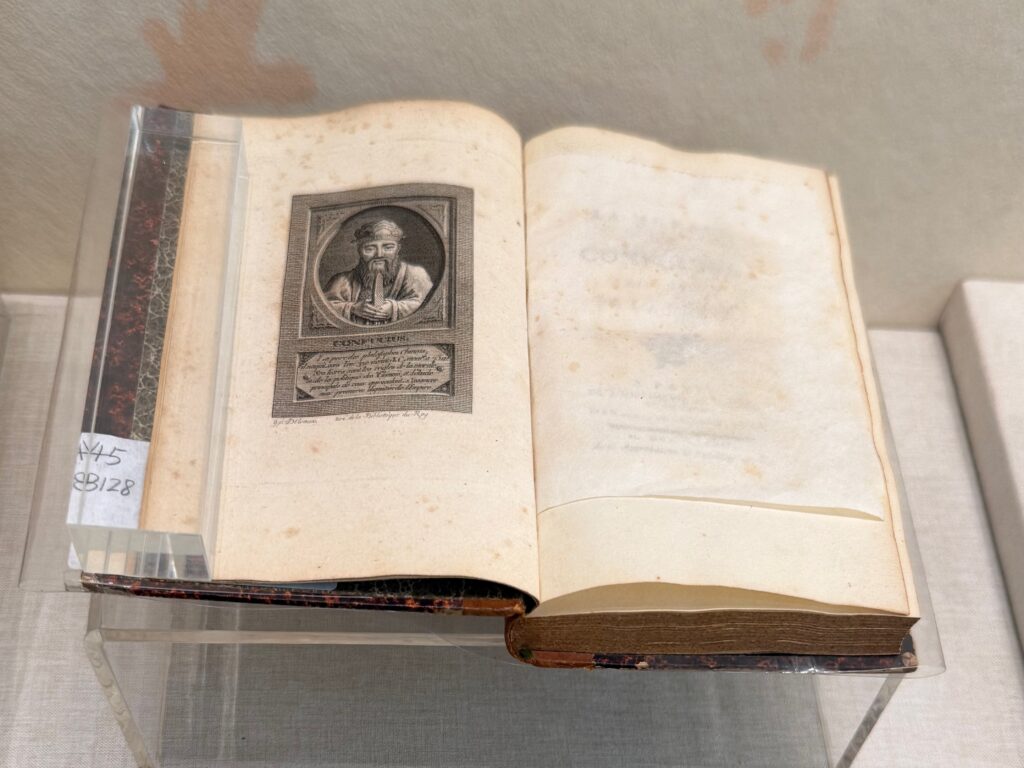
The French-language La Morale de Confucius, published in 1783, reflects the continuing interest in Confucian philosophy and Chinese ethical traditions in eighteenth-century France. Through translation, publication, and readership, Chinese thought became an important point of reference for European intellectuals seeking to understand China’s philosophical and cultural heritage.
La Morale de Confucius (1783)
Together, these works trace several dimensions of cultural exchange: the recording of Chinese society and customs, the transmission of geographical knowledge, and the introduction of Chinese philosophical traditions to Europe. Displayed alongside other historical materials, they make tangible the long history of intellectual and cultural encounters between China and the West.
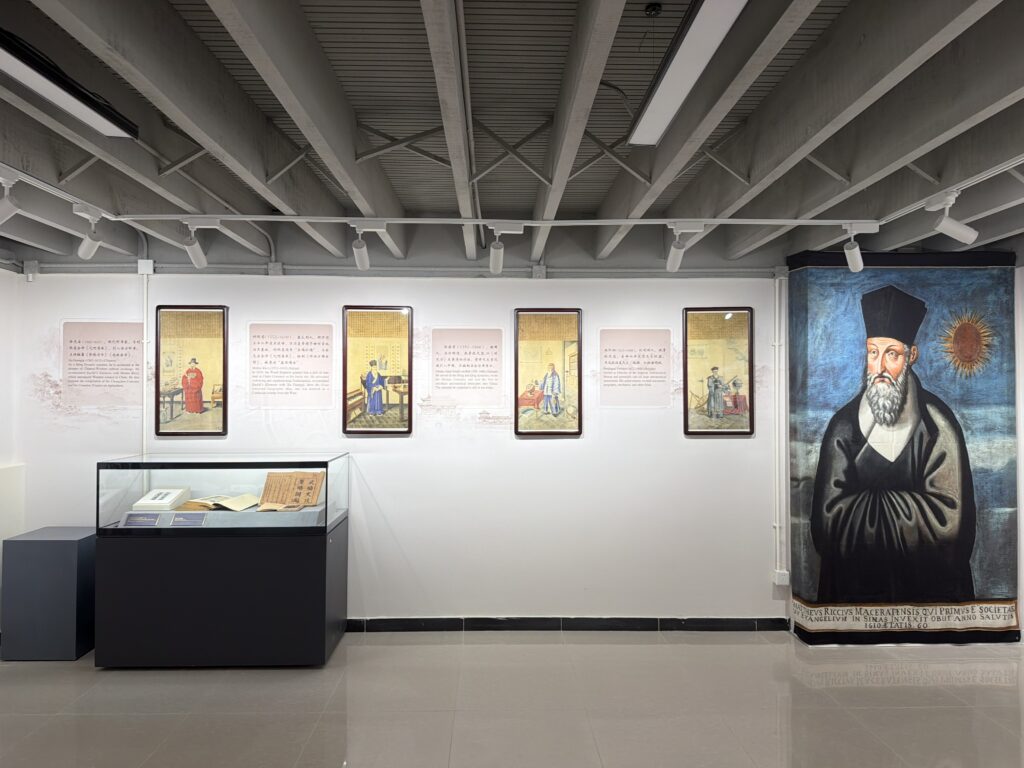
Exhibition in the historic underground wine cellar
Historical documents such as these have long been an important focus of TBC’s collecting and research activities. TBC’s Anton Library holds approximately 27,000 volumes and welcomes readers by appointment. Through collection management, research, exhibitions, and publications, TBC works to make these historical resources accessible to wider audiences.
Centuries ago, the books and maps on display crossed linguistic and geographical boundaries, carrying knowledge of China to European readers. Their presentation at the Beijing Administration Institute offers a renewed opportunity to explore this shared history and consider the enduring role of historical collections in fostering cultural understanding between China and the world.
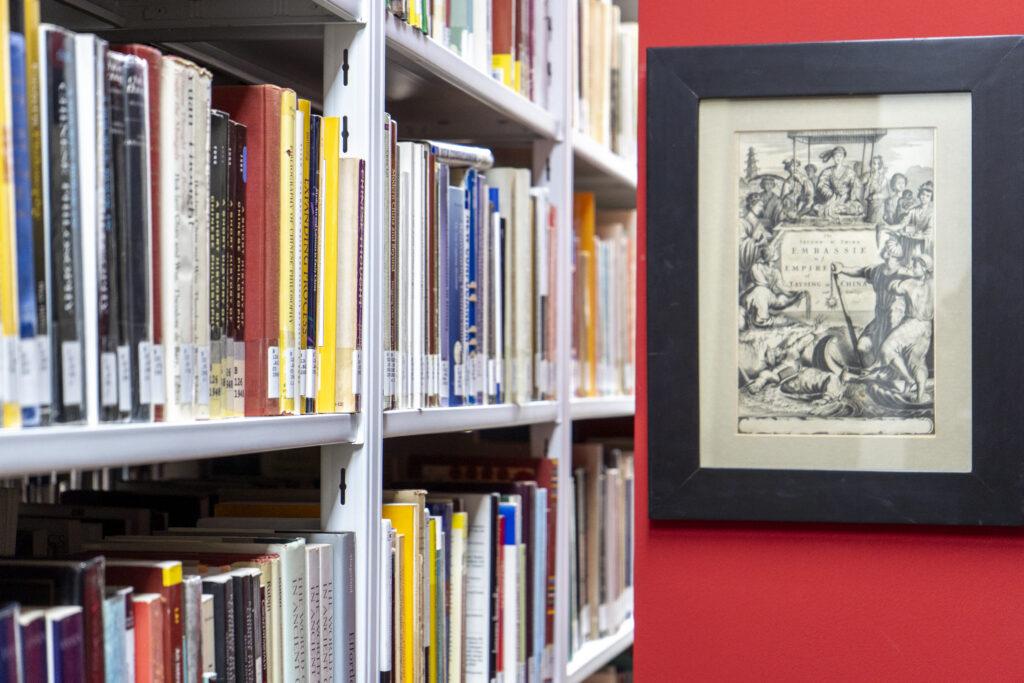
TBC’s Anton Library

On September 21, 2026, TBC contributed 29 rare books and maps from its collection to the Sino-French Cultural Heritage Exhibition at the Beijing Administration Institute.

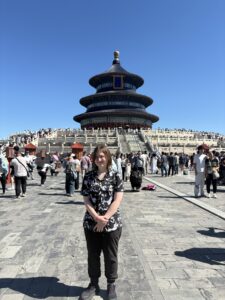
To be honest, I’d never planned to study in Beijing, or even to pursue studying Chinese. What I have had, however, is a lifelong appreciation for languages and cultures.

This past summer at The Beijing Center (TBC), students from Marquette University took TBC’s Chinese language courses for college credit. TBC’s program offers an intensive, immersive curriculum in the heart of Beijing.

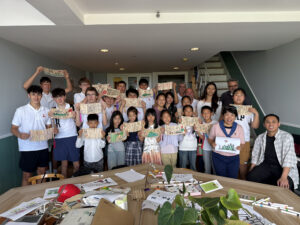
This past summer in China, TBC connected students from Notre Dame School of Manhattan and Xavier High School with some of Beijing’s local elementary students. The young children were shy at first, but they eventually loved interacting with their new American friends.