
Taking the Leap: My Semester in Beijing
To be honest, I’d never planned to study in Beijing, or even to pursue studying Chinese. What I have had, however, is a lifelong appreciation for languages and cultures.
When I entered university, I decided I wanted to challenge myself by studying the hardest language I could imagine—Mandarin Chinese—with the caveat that if it was too hard or if I hated it, I could always drop the class. My experience was the opposite: I immediately fell in love with the language and culture of China. When the opportunity to come to Beijing with The Beijing Center arose this past semester, I immediately applied.
I’d been to other countries before and had considered moving abroad for university programs as well, but I’d always ultimately been too scared. Studying abroad seemed like the perfect moment to really push myself, as much as it terrified and excited me in equal parts. I wanted to continue my studies and improve my Mandarin, of course, but I also wanted to develop personally, try new things I’d been too scared to do, and develop my own independence in the process.
I had almost no expectations going in beyond that same excitement and fear, since China is so often sensationalized by Western, especially American, media. When I landed in late February this year, I was initially shocked—but not for the reasons you’d think.
I was shocked by how similar everything actually seemed.
Beyond some of the obvious infrastructure, language, and cultural differences, the other side of the world was just like the side I was used to in many ways. We eat many of the same things, celebrate many of the same things, and, of course, act in very similar ways. I think a lot of people might find that fact disappointing to a degree, but for me it was comforting. It made me realize that the hardest part all along had been taking the leap to get myself there in the first place.
In the academic side of things, studying abroad was one of the best decisions I could have made for myself. The language immersion it provides is invaluable, both in the classroom and out of it.
Not only were my Chinese language courses taught in Chinese, but my whole life was in Chinese as well. There was never a break or a period when I wasn’t learning something, because every little interaction I had needed to be a kind of learning experience.
Traditional classroom courses teach you a lot, but only riding the Beijing Metro every day will quickly teach you, “抱歉,可以借过一下?” or other, less impolite but equally useful phrases. I can learn all I want and study menus in class, but only eating in Minzu University’s cafeterias taught me that my favorite cheap lunch is 鱼香茄子.
No in-class recording will ever be as hard to decipher as the local uncles with their Beijing accents, and my Chinese is that much better for all of these experiences. Immersion, both linguistic and cultural, teaches you more than just how to speak a language—it also teaches you how to live in that language.
It takes a lot of getting used to, and there’s definitely a learning curve. On one of my first days at Minzu University, I asked some very confused but very patient cafeteria worker for a “甜土豆” (红薯), and once told my roommate, “在花儿里,有……大朋友?” because I forgot the word 虫子.
While it’s a hard, stressful, and often lonely experience, it can also be incredibly rewarding. The day I realized, on a train in Chongqing, that I could actually understand the women across from me gossiping about the red-haired foreigner—also me—I didn’t even care that I was blatantly being talked about in public. I was just happy I understood a conversation without it being done slowly and without it being intentionally tailored for a foreigner or Chinese learner.
I embarrassed myself more times than I could count, being put into a situation where I had to speak Chinese all the time with everyone I spoke to, but it was absolutely worth it. It taught me how to be embarrassed and how to make mistakes for the sake of learning in a way that no other experience has.
It’s hard to let yourself be so consistently embarrassed, but it’s an effective way to learn quickly. It also teaches you that other people are more than willing to help you.
No matter who I ran into or interacted with in China, everyone was overall understanding. Maybe my tones, accent, or grammar were incomprehensible, or I couldn’t place an important word, but people were almost always willing to be patient, to help me through it, or even play a game of charades if the occasion called for it.
The people I met here were truly one of the most important parts of the experience. TBC staff, my other TBC co-students, all the students at Minzu University, friends I made in Beijing or in other cities I traveled to, and even strangers on the street really made the study abroad experience what it was.
Like language learning, cultural learning gets taken to a new level when it’s an immersive experience, and the people you meet make up a huge portion of that.
Without the amazing TBC staff, first and foremost, I wouldn’t even have made it to China. I wouldn’t have known the processes for basic daily living things like insurance, or how to talk to the university, or how to open a bank account and phone line. I wouldn’t have had anyone to show me around Beijing, introduce me to the rich history and culture I’ve learned to love so much, or take me to places I’d never heard of.
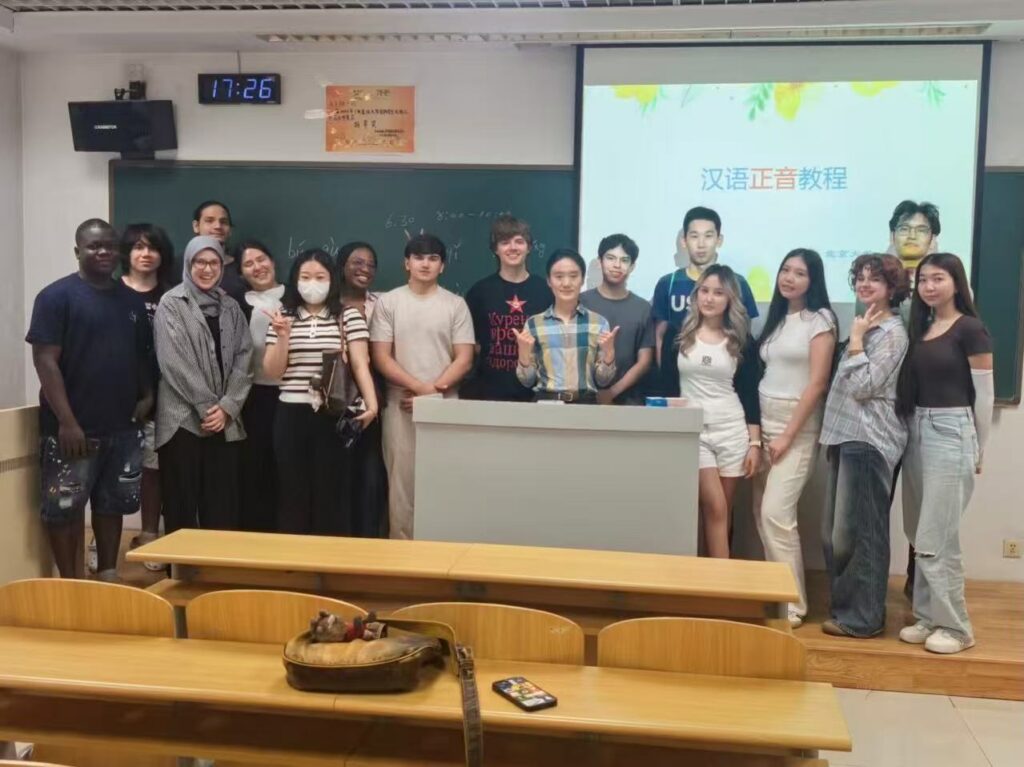
My university classmates not only introduced me to Chinese culture, but also to their own cultures: Russian, Kazakh, French, Mexican, Honduran, Saudi Arabian, Tajik, Moroccan, Turkish, and many more. It opened my eyes to how interesting the world and all its people are in a way that only meeting those people firsthand can.
My local friends across China may have helped me learn some Mandarin, but they also exposed me to how rich and varied Chinese culture can be, all the way from teaching me traditional folk songs in the South to bringing me fermented horse milk at a techno club in the North.
The breadth of Chinese culture is truly amazing, and without these opportunities to make all these incredible friends across the board, I wouldn’t know half of what I know now about Chinese culture.
The Beijing Center also played a huge part in this. Obviously, I couldn’t have gotten to China without them or gotten the skills to travel on my own, but in particular, the trip around Yunnan Province was wonderful.
It showcased a less talked-about side of China for my first travel experience there, and also functioned as an amazing immersive experience—not only into the culture, but also into using Chinese as our everyday language of communication.
Throughout the semester, I was able to experience so many different parts of China. I hiked in Zhangjiajie, climbed the Great Wall, went to a water-splashing festival in Xishuangbanna, and saw the grasslands of Inner Mongolia.
Each experience showed me something different, and together they gave me a much broader understanding of the country than I could ever have gained from a classroom or a textbook.
I will always carry these experiences with me, and I sincerely hope the changes I’ve made over these past few months to my personality and self-confidence will be lifelong.
Studying abroad was something I was scared to do, but Beijing, Minzu University, and The Beijing Center gave me access to that opportunity and pushed me beyond my comfort zone, and I’m much better off for it.
I did things in China I never thought I’d be able to do- hiked in Zhangjiajie, climbed the Great Wall, went to a water-splashing festival in Xishuangbanna, and saw the grasslands of Inner Mongolia- and I couldn’t have done any of it without the organizations and people who supported me the whole way.
It made me more confident, developed my language skills, did wonders for my lived cultural understanding, and encouraged me professionally as well: I now plan to return to China for my master’s degree as well.
What I got to do in Beijing in terms of learning couldn’t be replicated by any in-classroom experience, and I am so grateful I went and wouldn’t trade it for anything. I’m grateful to be home but I’ll miss China and the times I had there a lot, and I can’t wait to come back someday!
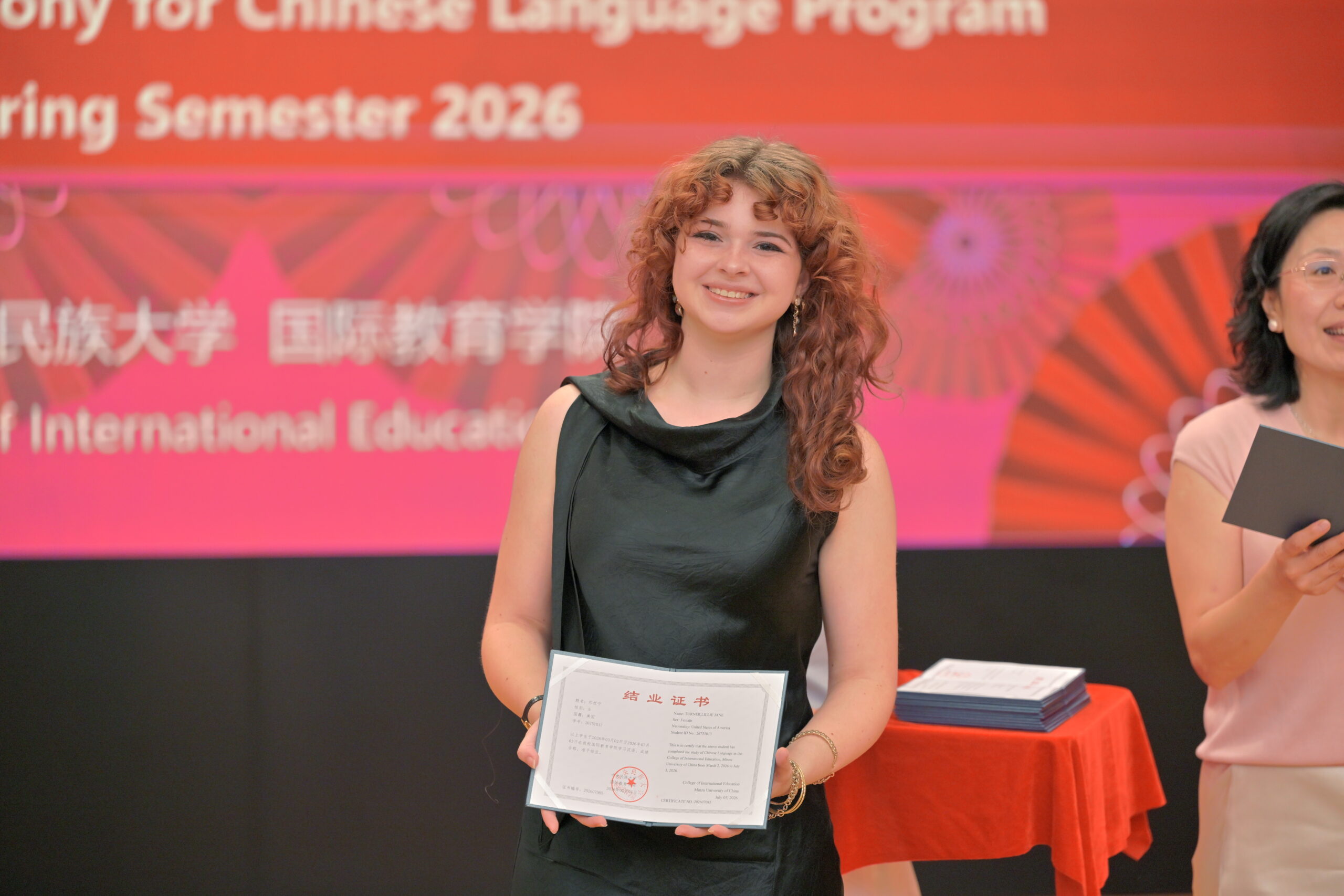
By Jane Turner, Spring 2026

To be honest, I’d never planned to study in Beijing, or even to pursue studying Chinese. What I have had, however, is a lifelong appreciation for languages and cultures.

This past summer at The Beijing Center (TBC), students from Marquette University took TBC’s Chinese language courses for college credit. TBC’s program offers an intensive, immersive curriculum in the heart of Beijing.

This past summer in China, TBC connected students from Notre Dame School of Manhattan and Xavier High School with some of Beijing’s local elementary students. The young children were shy at first, but they eventually loved interacting with their new American friends.

Last summer, The Beijing Center (TBC) hosted Loyola Blakefield High School, Boston College High School, Xavier High School, and Notre Dame High School in China.