The Beijing Center

A Journey Inward: Culture, Identity, and Encounter in Yunnan

Share This Post

Ms. Panatsaya Inprom
Xavier Learning Community / Saengtham College, Xavier Campus, Chiang Rai

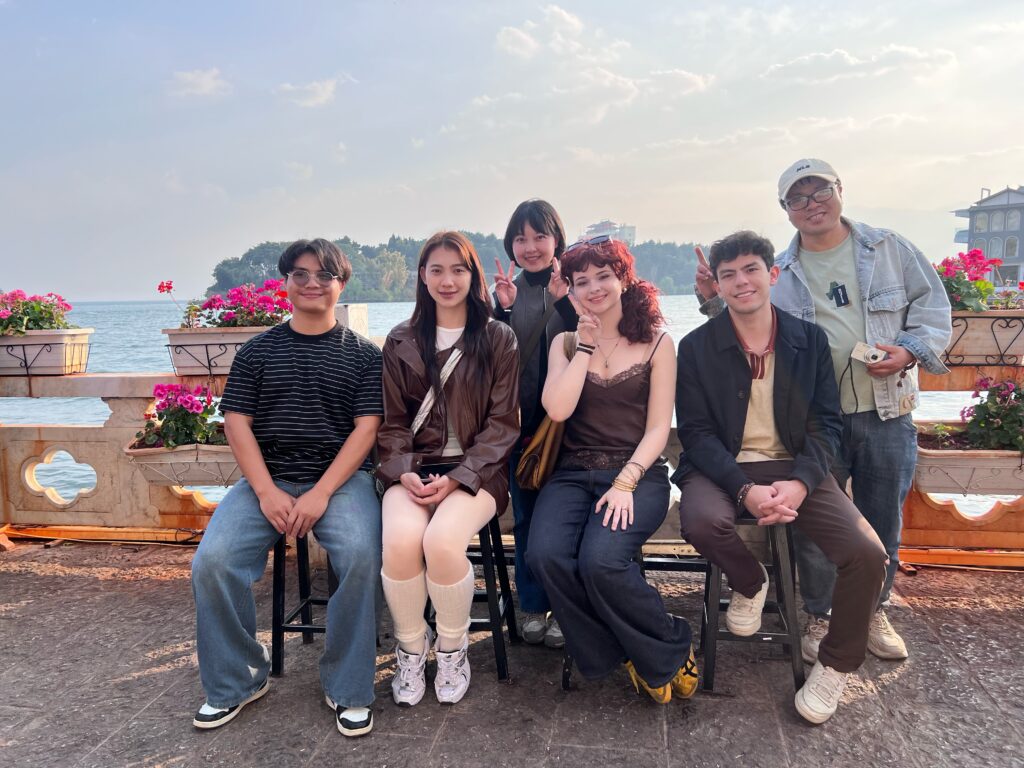
My name is Panatsaya, a third-year student at Xavier Learning Community (XLC)/ Saengtham College, Xavier Campus, Chiang Rai (SC-XCC), and I come from the Akha ethnic community. Questions of culture, identity, and belonging have never been abstract to me—they have always been part of my daily life. Still,before joining the Yunnan Intercultural Excursion, I never imagined I would be given the chance to experience something like this. What unfolded was not simply an academic program or a cultural visit. It was something rarer—a journey that brought me beyond familiar spaces and, unexpectedly, deeper into myself.

When I look back now, Yunnan feels less like a series of destinations and more like a series of encounters— moments that slowly reshaped how I understand culture, connection, and my place in the world.

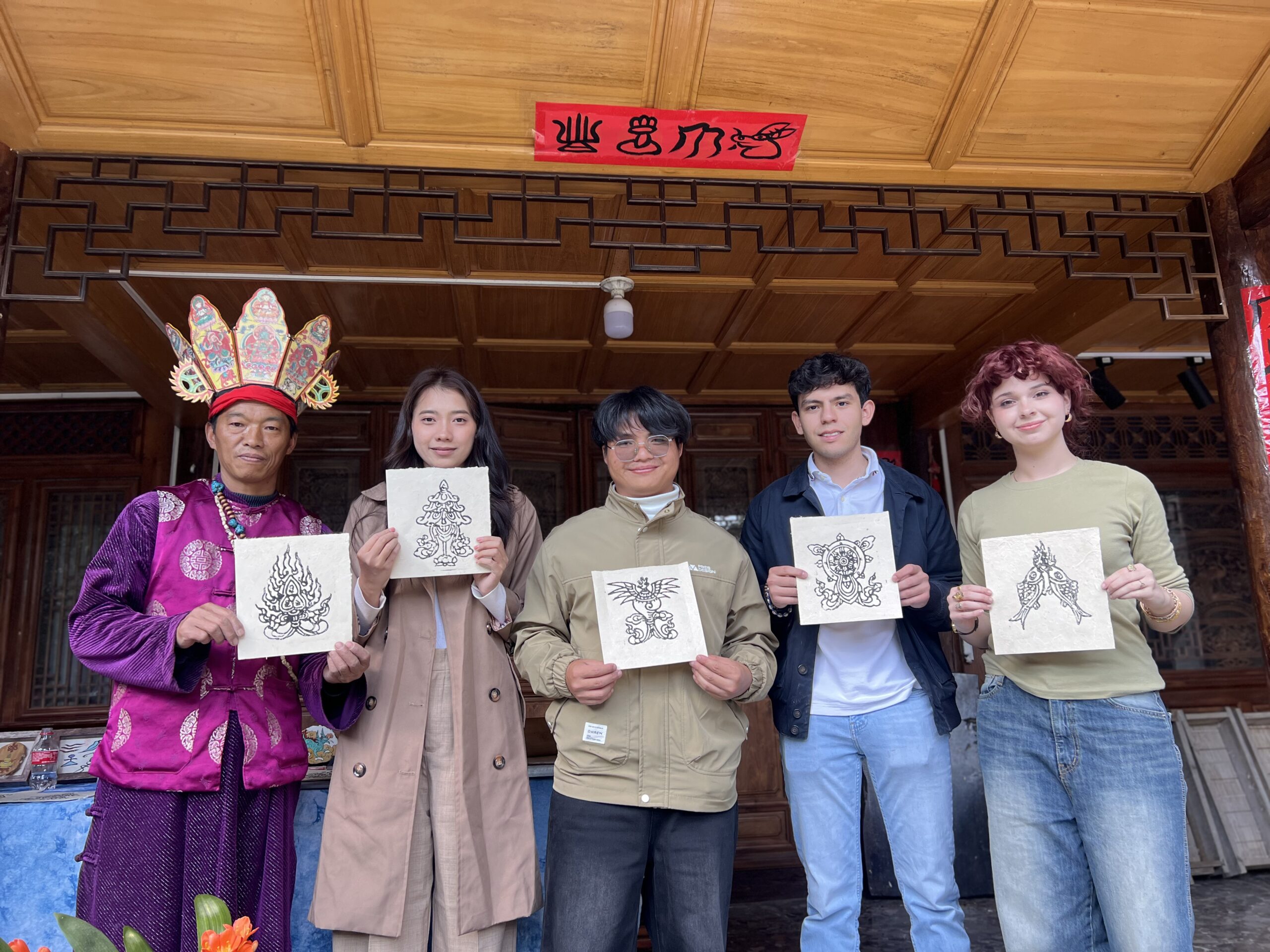
One of the moments that stays with me most vividly is standing in a village,surrounded by music, movement, and color. I remember the rhythm of traditional dancing, the intricate patterns of clothing, and the quiet strength of a community gathered together. But what made that moment unforgettable was not what I saw— it was what I felt. I was not just watching from a distance. I was there, moving with them in small ways, sharing space, exchanging smiles. In that moment, culture stopped being something to observe or describe. It became something alive—something I could feel with my whole being.

Coming from the Akha community, I have always known that culture is not separate from life. It shapes how we speak, how we relate to one another, and how we carry our history. Yet, encountering the Bai, Naxi, and Dai communities in Yunnan allowed me to see this truth more clearly. Despite their differences,there was something deeply familiar in how culture lived through them—in their food, their rituals, their work, and their relationships. It reminded me that identity is not only inherited; it is practiced daily, protected through memory,and carried forward through community.

As we moved through different places, I began to notice a quiet contrast. In more urban or tourist-centered areas, culture was still present—beautiful,vibrant, carefully preserved—but often arranged for visitors. People came to admire, to photograph, to take something with them. I do not see this as wrong;these spaces play an important role in sustaining cultural visibility. But in the villages, something felt different. There, culture was not performed—it was
lived. We did not remain observers; we were invited into shared experiences—eating, listening, learning, and simply being present with others. It was in those spaces that I began to understand that culture is most powerful when it is part of everyday life.

This realization also changed how I think about tradition and modernity. Before the trip, I carried the quiet assumption that modernization might gradually weaken traditional culture. But Yunnan showed me a more complex reality.Tradition does not simply disappear—it adapts, transforms, and sometimes even strengthens. In some places, it continues quietly through daily practices. In others, it is preserved through sharing and exchange. Both forms matter, but
they feel different. What stayed with me most is this: culture feels most authentic when it remains rooted in relationships, memory, and lived experience.

Some of my deepest learning did not come from explanations, but from moments of doing and being. Hiking Cangshan, for example, slowed me down in a way I did not expect. Surrounded by mountains and silence, I found myself fully present, as if the world had gently asked me to pause and listen inwardly. In another moment, learning tie-dye taught me patience—the kind that cannot be rushed, the kind that reminds you that beauty often comes from careful attention. Experiencing tea culture revealed how tradition can live quietly in everyday routines. These experiences reminded me that learning is not always intellectual. Sometimes, it is physical, emotional, and deeply relational. 

One of the most transformative parts of this journey came from something I initially feared—the language barrier. As an English major, I have always believed that communication depends on words, on clarity, on being understood. In Yunnan, there were moments when I could not rely on language at all. At first, this made me feel uncertain, even distant. But slowly, something shifted. 

I began to notice the way people smiled, the way they welcomed us through gestures, shared food, and simple acts of kindness. Without speaking the same language, we still connected. And in that realization, I learned something I had not fully understood before: communication is not only about words. It is also about presence, openness, and the willingness to meet others where they are. 

This experience challenged me deeply. Instead of feeling frustrated by what I could not understand, I learned to listen differently—to observe more closely, to pay attention to what is unspoken. The language barrier, rather than blocking connection, became a teacher. It taught me patience, humility, and a deeper form of attentiveness. In many ways, this was one of the most important changes I experienced during the trip. 

The spiritual dimension of the journey also unfolded in ways I did not expect. At first, I thought I would encounter the sacred in temples, landscapes, or moments of formal reflection. But gradually, I began to recognize something quieter. I felt God not only in the stillness of the mountains or the beauty of the places we visited, but in the simple, sincere encounters between people.

There was something deeply moving about meeting others—people from different ethnic groups, languages, and beliefs—and feeling a shared sense of dignity. Despite our differences, there was a quiet understanding that we were equal in worth. In those moments, I felt that God was present—not in something distant or abstract, but in the way we showed kindness, respect, and openness to one another. This became one of the most meaningful spiritual insights I carried with me. 

This journey also reshaped how I see my academic path. As an English major, I have spent years studying language as a system—grammar, vocabulary, structure. But Yunnan showed me that language is also about silence, emotion, context, and cultural understanding. It made intercultural communication feel real in a way that no classroom alone could fully offer. It reminded me that engaging with other cultures requires more than curiosity—it requires humility, respect, and a willingness to learn without immediately trying to define or explain. 

As I return from this experience, I realize that what I carry with me is not just a collection of memories or images. I carry a deeper appreciation for cultural diversity, a renewed gratitude for my Akha identity, and a clearer understanding of what meaningful connection looks like.

Most importantly, I carry a simple but profound lesson: understanding does not always begin with speaking. Sometimes, it begins with listening. Sometimes, it begins with presence. And sometimes, it begins with recognizing that in the quiet act of meeting another person with openness, something sacred is already there. 

For me, Yunnan is no longer just a place I visited. It has become part of the person I am still becoming.

More To Explore

Global Connections

Yunnan Excursion: A Life-Changing Cultural Experience

My name is Jane Turner, and I’m a student from America- a second-year at Saint Louis University in St. Louis, Missouri. Although I’m studying in the middle of America, I come from the very south, from a state called Louisiana.

Global Connections

A Journey Inward: Culture, Identity, and Encounter in Yunnan

My name is Panatsaya, a third-year student at Xavier Learning Community (XLC) / Saengtham College, Xavier Campus, Chiang Rai (SC-XCC), and I come from the Akha ethnic community. Questions of culture, identity, and belonging have never been abstract to me—they have always been part of my daily life.

Global Connections

Yunnan Excursion: A Journey That Changed How I See the World

My name is Tasan Sisuphasap, a third-year student at Xavier Learning Community (XLC), Saengtham College, Xavier Campus, Chiang Rai (SC-XCC), and I come from a Karen ethnic community. Growing up on a mountain, the world beyond my village often felt far away and unfamiliar.