The Beijing Center

Yunnan Excursion: A Journey That Changed How I See the World

Share This Post

Mr. Tasan Sisuphasap
Xavier Learning Community / Saengtham College, Xavier Campus, Chiang Rai

My name is Tasan Sisuphasap, a third-year student at Xavier Learning Community (XLC), Saengtham College, Xavier Campus, Chiang Rai (SC-XCC), and I come from a Karen ethnic community. Growing up on a mountain, the world beyond my village often felt far away and unfamiliar. Opportunities to experience life outside my surroundings were limited, and for a long time, I never imagined that I would have the chance to travel abroad or encounter different cultures so closely.

What I experienced through the Yunnan Intercultural Excursion, however, was not simply a journey across places. It was a journey that slowly changed the way I understand culture, connection, and myself. Looking back, Yunnan does not feel like a list of destinations. Instead, it feels like a collection of quiet and meaningful moments—moments that stayed with me long after the trip ended.

During this program, I stayed in Yunnan, an inland province in the southwest of China, for ten days from March 5th to March 14th. Yunnan is well known for its long history, cultural diversity, and beautiful natural landscapes. It is home to many ethnic groups such as the Bai, Naxi, and Dai, each with their own traditions and ways of life. Famous places in Yunnan include Dali Ancient Town, Lijiang Old Town, Shaxi village, Xishuangbanna, Cangshan Mountain, and Erhai Lake. Among these, Lijiang Old Town is recognized as a UNESCO World Heritage Site. The province is also known for its tea culture and the historical Tea-Horse Road, which connected people through trade in the past. All these cultural and natural elements made Yunnan a meaningful place for learning and reflection. But more than the names of places, what truly mattered were the experiences I had inside them.

During my time there, one of the most powerful moments happened at Cangshan Mountain in Dali. Standing there, surrounded by wide natural views and fresh air, I felt a deep sense of calm. The mountains did not need to do anything special, yet they created space for me to think. The quietness felt different from what I was used to. In that moment, I became more aware of myself, as if nature was gently asking me to stop and simply be present. It reminded me that understanding does not always come from words, but from awareness.

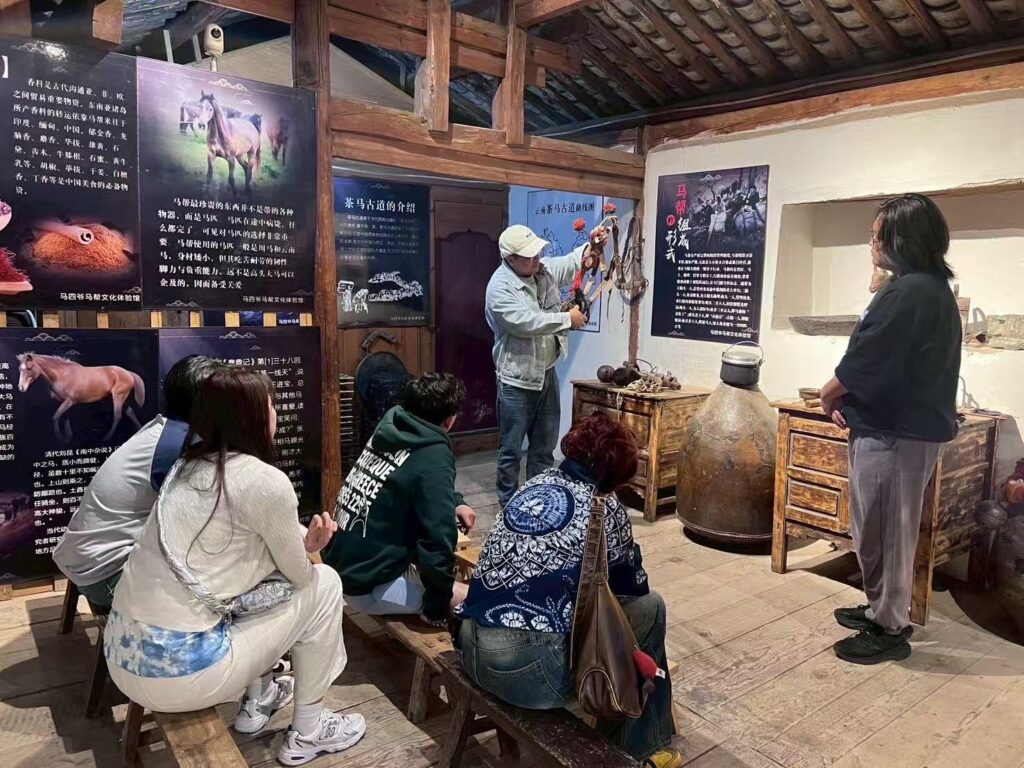
Another important experience happened in Shaxi village. As I walked along the old stone road, I could feel history around me. It was not the kind of history that stays only in books. It felt alive, as if the village itself was still holding stories from the past. Inside one of the houses, I saw tools that were used along the Ancient Tea-Horse Road. When I touched them, I could feel their rough surfaces—worn down by time and use. These were not just old objects. They were part of real people’s lives. And when the owner shared that his grandfather had once done this work, history no longer felt distant. Suddenly, it felt real and close, as if the past had reached out and touched the present.

These experiences made me reflect more deeply on my own background. As someone from a Karen community, I began to see clear connections between my culture and the cultures I encountered in Yunnan. Traditions and ways of living may look different, but they are all kept alive through daily life, memory, and relationships. This realization made me feel more connected to my own identity. It reminded me that culture is not something far away—it is something we live every day.

My experiences with the Bai, Naxi, and Dai communities helped me understand this even more. At first, I noticed the visible things: the colorful clothes, the music, and the dances. But as I spent more time there, I began to realize that these were not just performances. They were expressions of identity.

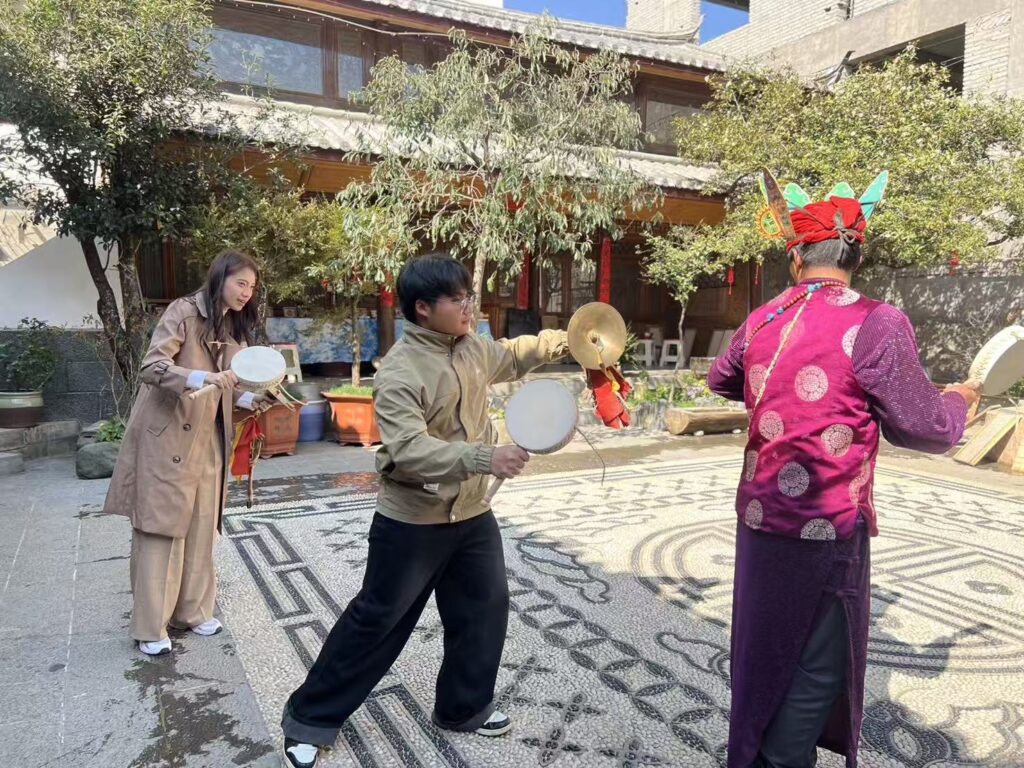
One experience that stayed with me was learning and practicing the traditional Tuba dance. At the beginning, I felt shy. I was afraid of making mistakes or not doing it correctly. But slowly, I began to feel more comfortable. I realized the dance was not just movement—it was a way for people to express who they are and where they come from.

 I also learned some basic parts of the Naxi language. Even though I could not understand much, the experience was still meaningful. It showed me that learning a language is not only about being fluent. It is also about trying and about showing respect. It is a way of meeting others with humility.

In another activity, I joined the Dai community in picking tea and learning how to make tea cakes. Walking in the tea fields and following each step of the process, I saw how much care and patience were needed. It was not only about making tea. It was about keeping tradition alive. Each step felt like part of a story that had been passed down through generations.

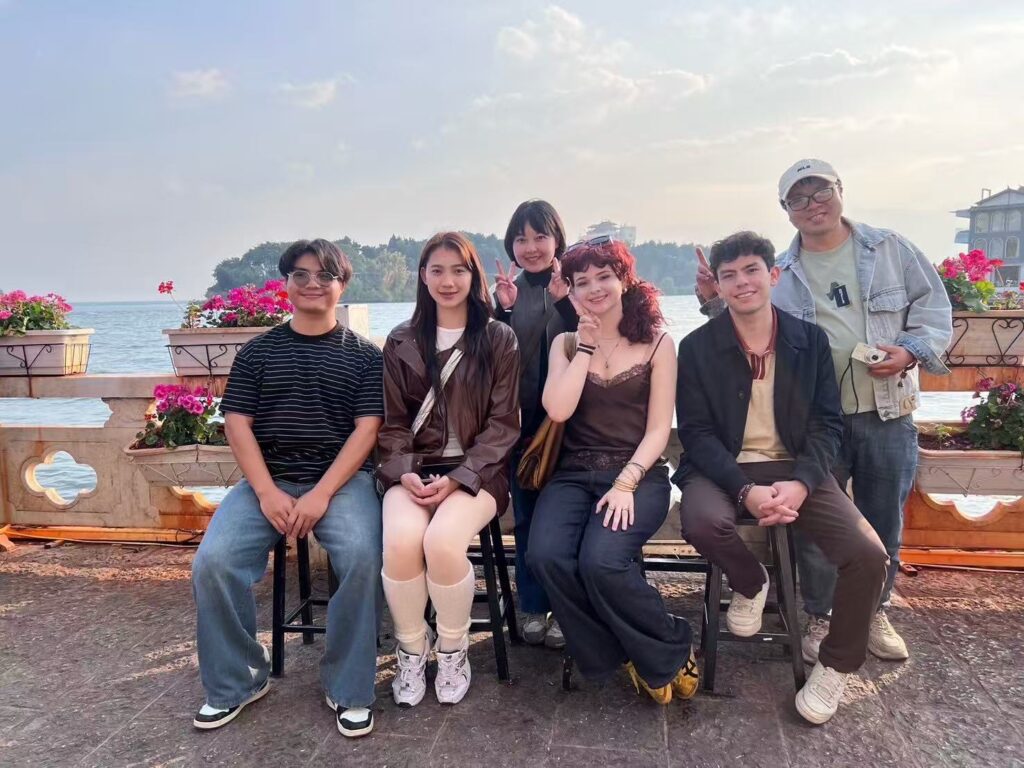
Another moment that I clearly remember is visiting Erhai Lake. The place was calm and beautiful. I could hear seagulls playing on the water, and the soft sound of waves touching the shore. Everything felt peaceful and balanced. In that moment, I felt fully present, as if time moved more slowly. It was a simple experience, but it gave me a deep feeling of peace— something that stayed in my heart even after leaving.

One of the most important parts of this journey was something I first found difficult—the language barrier. As a language student, I always believed that communication depends on words, grammar, and clear speaking. But in Yunnan, there were many times when I could not use language at all. At first, I felt unsure and a little disconnected. There were moments when I wanted to ask for help or understand instructions, but I could not express myself clearly. This made me feel stressed, and sometimes I felt like an outsider.

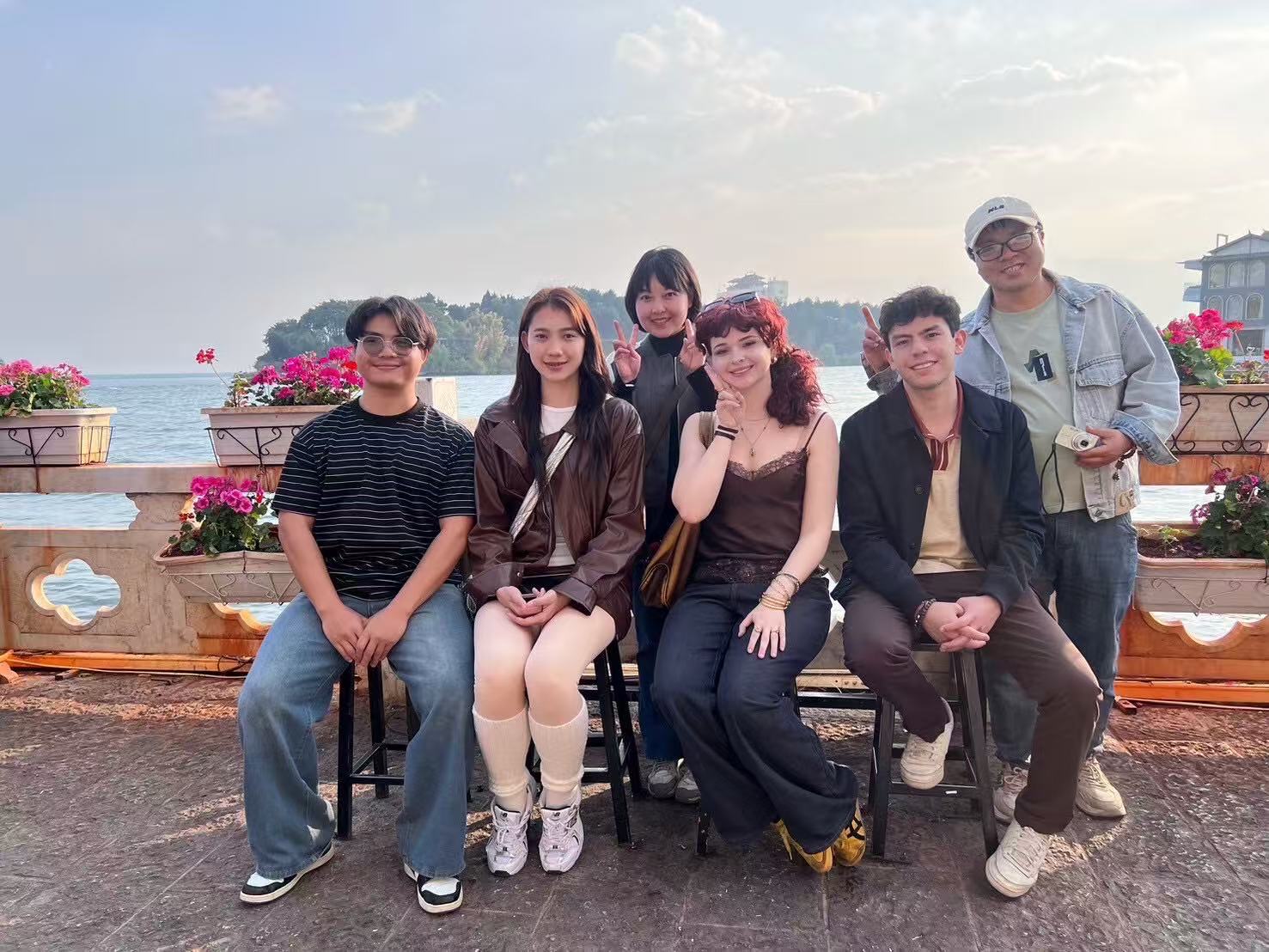
However, I did not face this problem alone. Olina, who was a staff member of the program and took care of us throughout the ten-day journey, was always there to support me. She helped explain things in a simple way, gave advice, and encouraged me when I felt unsure. Her presence reminded me that support does not always come in big actions—sometimes it comes through patience, kindness, and guidance.

Instead of giving up, I started to change the way I communicated. I used gestures, simple words, and paid more attention to people’s expressions and actions. Slowly, I became more confident and less afraid of making mistakes. Through this experience, I realized something important: communication is not only about words. It is also about being present, paying attention, and being open to others. The language barrier did not stop connection—it helped me grow. It taught me to observe more carefully and accept that not everything needs to be fully understood.

The spiritual dimension of this journey also became clear to me in a very personal way. At first, I was not the one selected to join this program. Because of that, I did not expect that I would have the chance to go. But in the end, things changed, and I was chosen to take part in the journey. This unexpected moment made me feel surprised, but also deeply thankful.

For me, this was not just a coincidence. It made me feel that God had a plan for me. Being given this opportunity allowed me to see beautiful places, experience different cultures, and learn things that I could not have learned in a classroom. It helped me believe that this journey happened for a reason.

During the trip, I began to feel God’s presence not only in nature—such as the quiet mountains or the beauty of Erhai Lake—but also in the people around me. I could see kindness, care, and support in small actions, especially from people like Olina who guided me when I faced difficulties. This experience helped me understand that God is not only found in special places, but also in everyday moments—in opportunities, in people, and in the connections we share.

This journey also helped me face my fears. Before traveling, I often worried about new situations—about not understanding, not fitting in, or not being ready. But being in Yunnan showed me that many of these fears came from my own thoughts, not from reality. With support from my friends and guidance from people like Olina, I began to feel more comfortable. I learned that I do not need to control everything. Sometimes, it is enough to trust the process and stay open.

This experience also changed how I see language learning. I began to understand that language is not only a subject, but a way to connect with people. It made intercultural communication feel real, not just something from a classroom. As a future teacher, I now want to teach language as a way for students to connect with others and understand different cultures.

At the same time, this journey helped me understand my own identity more clearly. Seeing how people in Yunnan keep and value their culture made me think about my own Karen background. I started to feel prouder of who I am. I realized that identity is something we continue to learn and grow over time.

In the end, what stays with me are not only the places, but the small moments—the quiet mountains, the feeling of old tools, the movement of dance, the process of making tea, and the peaceful lake. These moments may seem simple, but they helped me understand more than I expected.

Yunnan is no longer just a place I visited. It has become part of how I see the world and myself. What I learned from this journey is simple but meaningful: understanding does not always begin with speaking. Sometimes, it begins with being present, being open, and being willing to truly learn from others.


More To Explore

Global Connections

Gubei: An Excursion to China’s Newest Old Water Town

Over this past weekend, some of our students enrolled at Minzu University of China took their annual Spring Outing – this year, to Gubei Water Town. Situated about a 2-hour drive northeast of Beijing, the April weather made it absolutely perfect to explore for a spring outing. It surrounds various canals and offshoots of Yuanyang lake.

Global Connections

Beijing’s Hutongs: From Snuff Bottles to Exploration with a View

If you ever want to get a taste of Old Beijing, by far one of the best ways is to visit the hutongs. They’ve conceptually been around all the way since the 1200s, and in their most modern forms exist as protected alleyways and streets surrounded by old traditional houses and neighborhoods in the heart of Beijing and are recognized in China to be an important part of cultural heritage in the city.

Global Connections

Yunnan Excursion: A Life-Changing Cultural Experience

My name is Jane Turner, and I’m a student from America- a second-year at Saint Louis University in St. Louis, Missouri. Although I’m studying in the middle of America, I come from the very south, from a state called Louisiana.

Global Connections

A Journey Inward: Culture, Identity, and Encounter in Yunnan

My name is Panatsaya, a third-year student at Xavier Learning Community (XLC) / Saengtham College, Xavier Campus, Chiang Rai (SC-XCC), and I come from the Akha ethnic community. Questions of culture, identity, and belonging have never been abstract to me—they have always been part of my daily life.

这是示例文本,单击 “编辑” 按钮更改此文本。