跳到主要内容

The Beijing Center

The Fu Jen Student’s Beijing Journey Continues: The Ancient Observatory 

Share This Post

Following her previous interview, Tseng Chun-Ting, the graduate student at the Fu Jen Faculty of Theology of St. Robert Bellarmine, shares her reflections on Beijing Ancient Observatory, exploring its Jesuit history and the role of science in cultural exchange between China and the West.

The Beijing Ancient Observatory at a glance

Visitors to Beijing usually head straight for the Forbidden City and the Temple of Heaven, but the Ancient Observatory deserves a place on the itinerary too. It holds centuries of Ming and Qing astronomy, charts how Chinese astronomy evolved, and tells of the meeting between Chinese and Western learning. Standing among its instruments, you get a sense of how people once read the sky to make sense of their world, and how different cultures found their way to one another.

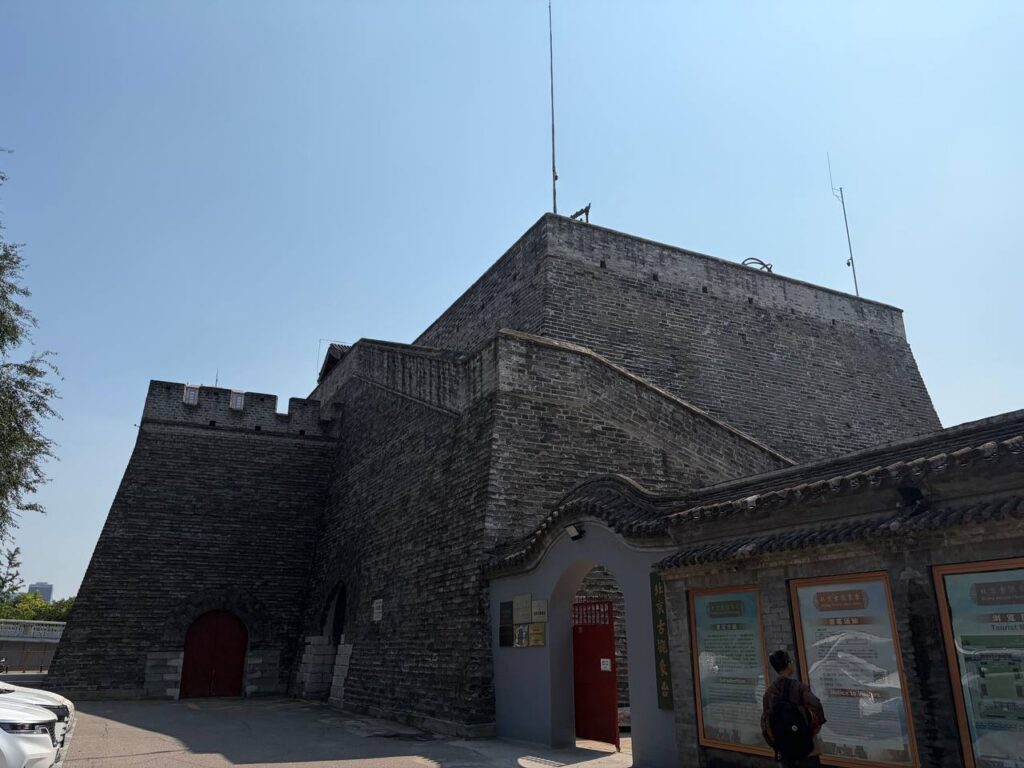
The Observatory was founded in 1442, under the Ming dynasty’s Zhengtong Emperor, and served as the imperial observatory for both the Ming and the Qing. It remains one of the oldest observation sites in China still standing. In the past, watching the sky was part of everyday life: astronomers used what they saw to compile calendars and track the seasons, which farmers and rulers alike depended on. Astronomy was as much a matter of public service as of scientific curiosity.

The site consists of a fortress-like terrace and a set of courtyard buildings. Over the Ming and Qing periods, the instruments on the terrace were replaced several times, and the terrace itself was extended to the east. Much of what stargazers built and used here can still be seen today.

In 1900 the Observatory’s instruments were looted, and they were eventually returned. The site was named a Major Historical and Cultural Site Protected at the National Level in 1982 and reopened as a museum the following year. That it has survived at all is remarkable. It is more than a relic: it is a place where visitors can learn history and see how early science developed.

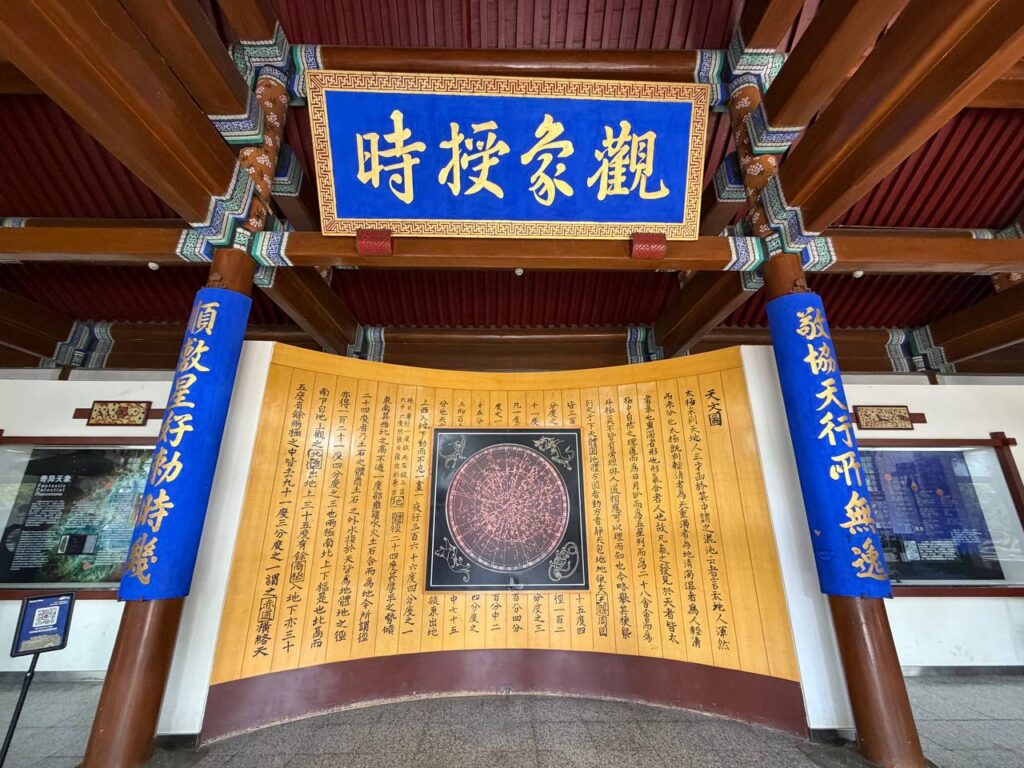
Gallery on astronomy and timekeeping

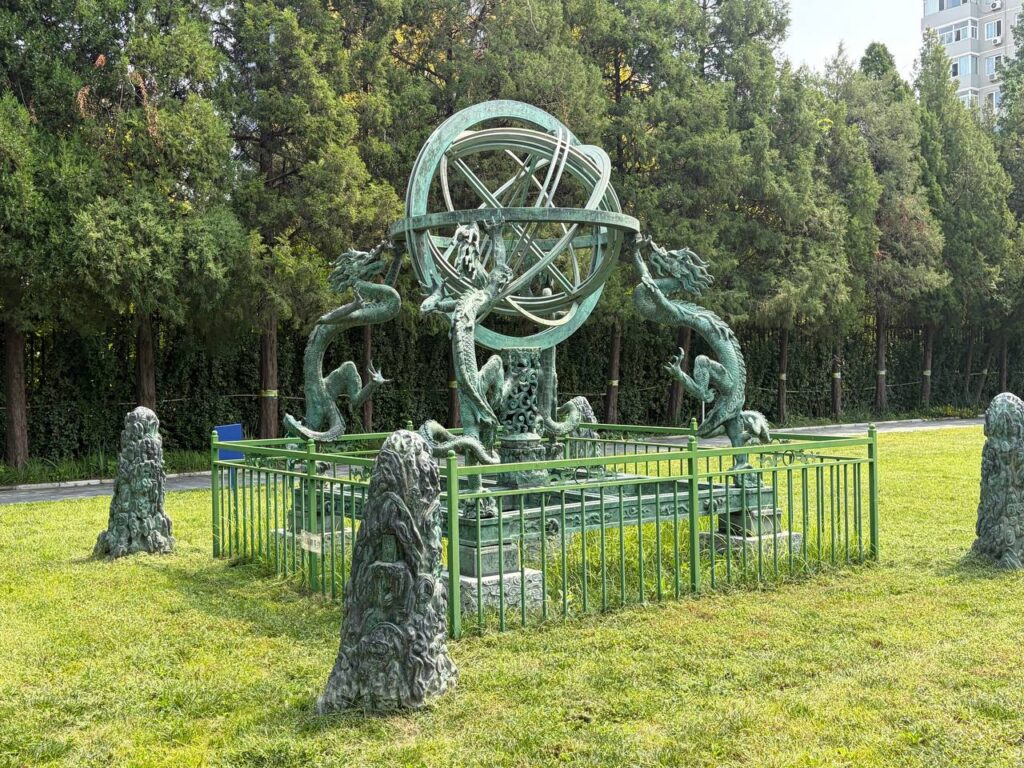
The main attraction is the set of eight Qing-dynasty instruments on the terrace. Cast mostly in bronze, they are huge, yet finely made, and up close you can pick out their engraved scales and delicate detail. It is a good moment to reflect on how easy we have it. Today, a phone tells us where the planets are and when the sun will set. For the people who built these instruments, that knowledge took years of patient observation, measurement and calculation. The instruments are a tribute to their ingenuity, and a reminder that what we know today rests on the work of countless others.

It is worth looking at the place a little differently, too, and paying attention to what it stirs in us. Before such massive instruments, awe is the obvious response, but other questions follow. Why did people devote so much time to studying the sky? How did they keep searching for answers to things they did not yet understand? And what about us: when we run into something unfamiliar, do we take the time to understand it, or do we jump into conclusions? Somehow we need to know that learning often begins by slowing down, looking closely and noticing how we respond.

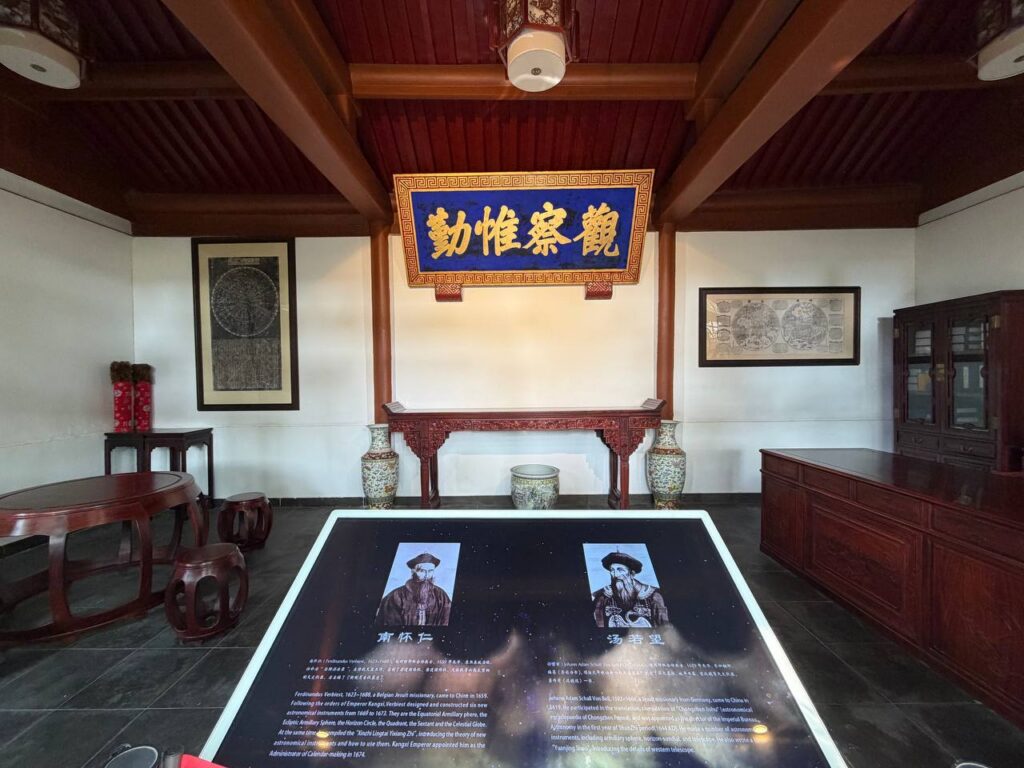
The Observatory is also tied to the exchange between China and the West in the late Ming and early Qing. Two missionaries who had travelled from far away, Adam Schall von Bell and Ferdinand Verbiest, both worked on the court’s astronomy and calendar. Schall, a German, reached China in the late Ming and later helped reform the calendar under the early Qing. Verbiest, from Belgium, served as an astronomer at the Qing court, where he built instruments and helped introduce Western science to China.


Display on Adam Schall von Bell and Ferdinand Verbiest

The exhibits here tell the story of the two men. It is not hard to picture them settling into an unfamiliar culture and using their astronomical expertise to work with Chinese scholars and officials. Their story was not without turbulence: a bitter dispute over the calendar broke out, showing how much friction and adjustment can come when different cultures and traditions of knowledge meet.

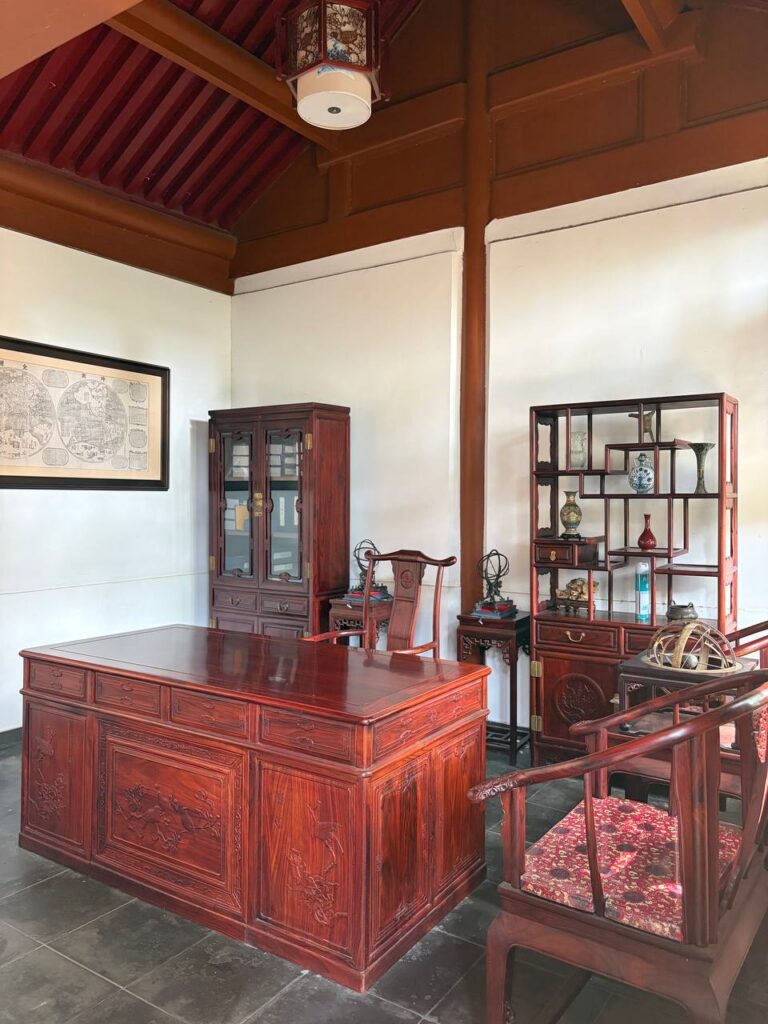
More of the Schall and Verbiest display

Still, it was through such contact that two worlds were able to meet. Real cultural exchange is more than handing over your own knowledge; it means understanding how people live and think, and learning to work with them. That raises a question for any of us arriving somewhere new or meeting someone who sees things differently: will we listen first? We do not have to agree with everything we hear, but we can try to understand why others think as they do. Seen this way, the story of Schall and Verbiest is about more than astronomy; it is about the value of understanding and communication across cultures.

Beyond the terrace, the courtyard buildings host further exhibitions on the ancient Chinese night sky, the development of astronomy, and the history of exchange between China and the West. If time permits, take it slowly rather than hurrying through every gallery. Lingering over one artifact or reading one passage of history often reveals details you would otherwise miss. The instruments might make you think about humanity’s urge to explore the unknown; the story of cultural exchange, about how you deal with difference; the changes the site has been through, about why heritage is worth cherishing and protecting. These thoughts may not lead to neat answers, but they turn a visit into more than sightseeing and photos, and give you something new to take away. Look closely, and from more than one angle, and a place will show you far more than its surface.

The Observatory shows how astronomy developed in ancient China and how knowledge and technology passed between cultures. Today, information that once took years of study can be found with a few taps. Yet the Observatory is a reminder that knowledge builds up slowly, and that it depends on people who stay curious and keep exploring.

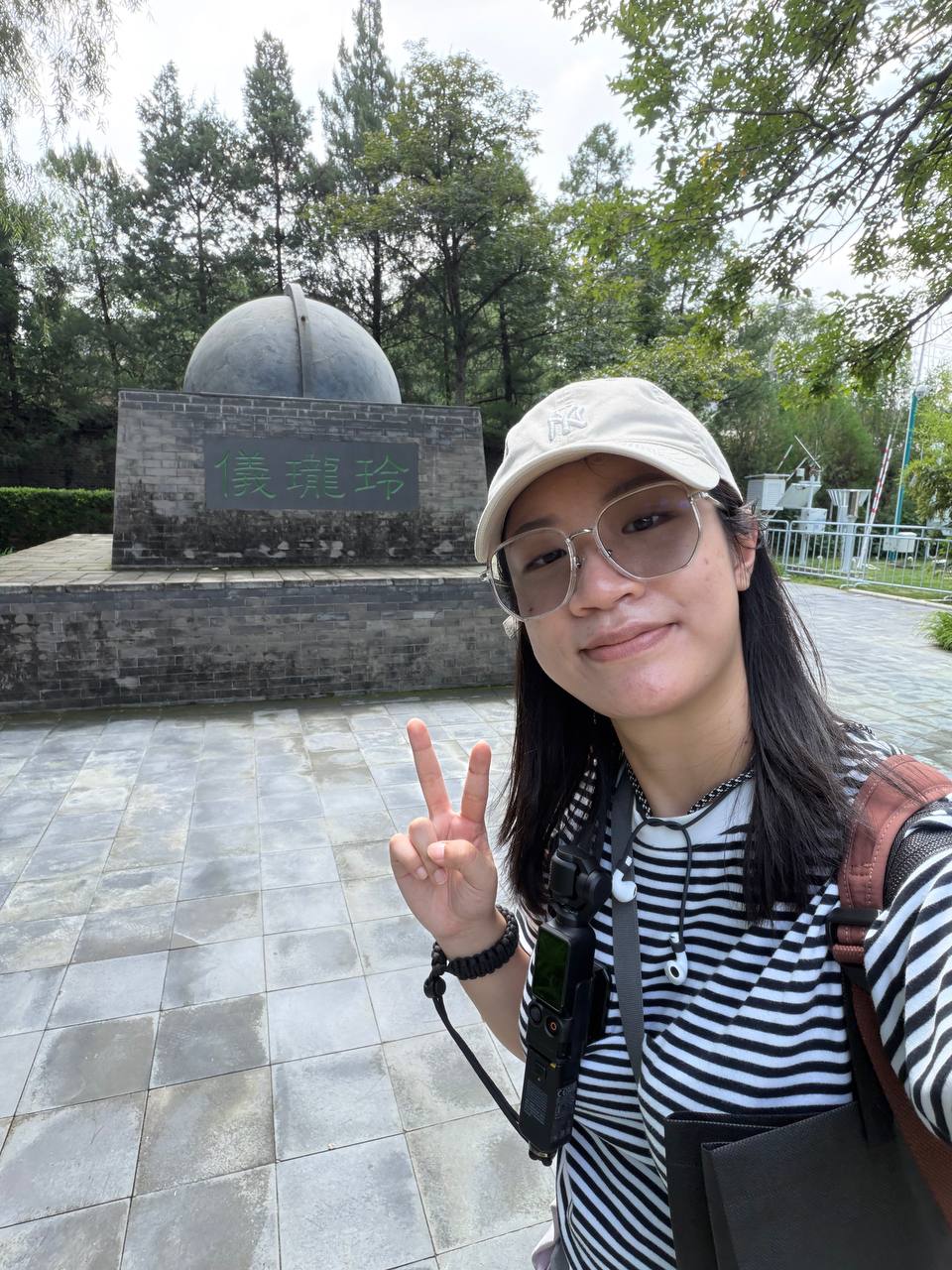
An armillary sphere

If you find yourself in Beijing, set aside some time for the Ancient Observatory. See the surviving instruments up close and learn the stories behind them. A visit to a historic site is about more than what happened in the past; it can change how you see the world, understand other people and approach other cultures. The best part of a trip is not always where you went or what you saw, but what you learn from it and bring back into your everyday life.

By Chen Jien Teng, Fu Jen Catholic University

More To Explore

Cultural Dialogues

TBC Welcomes Colombian University Delegation to Beijing

A Colombian university delegation visited Beijing with TBC to explore China’s history, culture, higher education, and technological development. Through meetings with universities, scholars, and leading companies, the visit opened up opportunities for future academic and cultural exchange between China and Colombia.
Cultural Dialogues

A Night in BOO(jing)

Samantha shares her experience at Universal Studios Beijing, from thrilling roller coasters and Kung Fu Panda attractions to Halloween haunted houses. Along the way, she discovers the park’s unique charm and offers tips for fellow visitors.

Cultural Dialogues

TBC’s Rare Books Featured at the Beijing Confucian Temple

TBC loaned three rare books to The Great Confucius exhibition at the Beijing Confucian Temple and Imperial College Museum, showcasing the spread of Confucian thought in Europe and centuries of cultural exchange.