跳到主要内容

The Beijing Center

TBC and Loyola Marymount University Co-host Second China in Dialogue Symposium

Share This Post

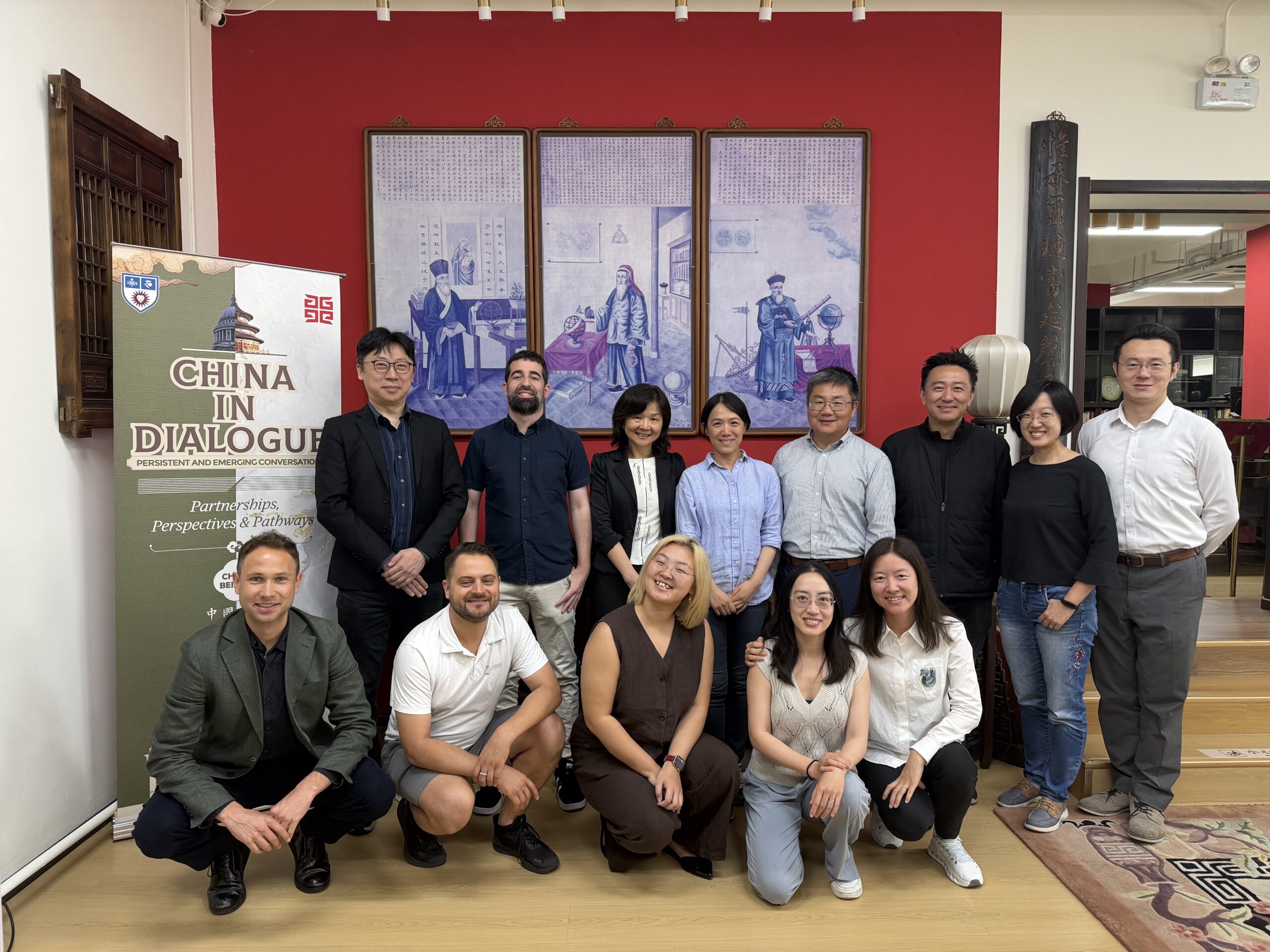
From May 20 to 22, The Beijing Center (TBC) and Loyola Marymount University (LMU) jointly hosted the second China in Dialogue Symposium in Beijing and Hangzhou, bringing together twelve scholars from leading universities in China and the United States to explore China–world relations through an interdisciplinary lens.

Representing institutions including Loyola Marymount University, Renmin University of China, Beijing Foreign Studies University, University of International Business and Economics, and Tongji University, participating scholars examined the historical foundations, contemporary challenges, and future opportunities shaping cross-cultural engagement.

China in Dialogue is a three-year academic initiative (2025–2027) dedicated to fostering sustained interdisciplinary dialogue on China and its relationship with the wider world. The inaugural symposium, held in 2025 under the theme “Voices, Visions & Values,” explored the historical interactions and intellectual exchanges that have shaped mutual understanding between China and the West.

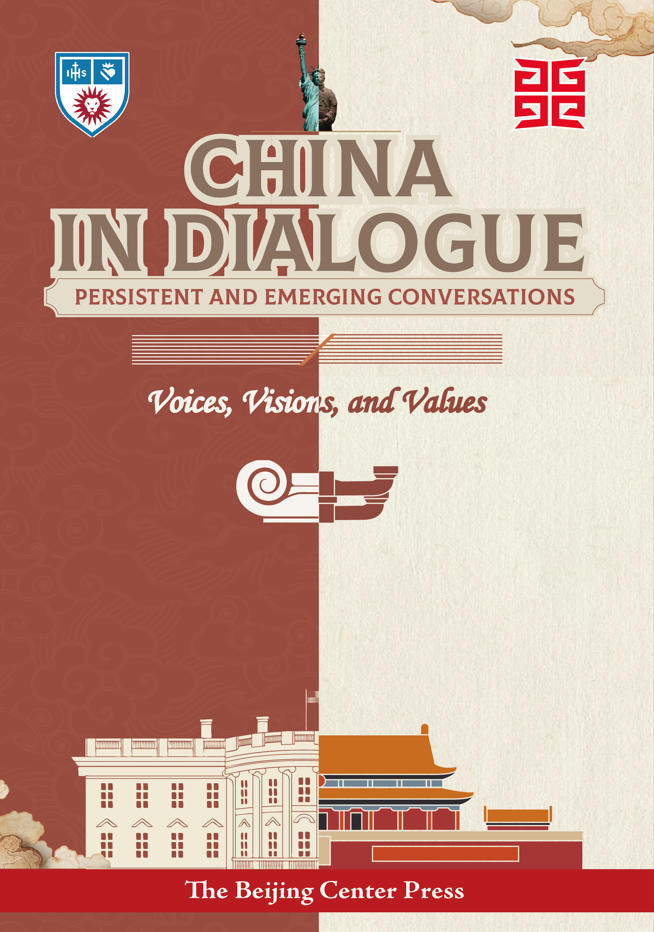
The proceedings from the first symposium have since been published as China in Dialogue: Persistent and Emerging Conversations and are available through Amazon. The volume documents the scholarship presented during the inaugural gathering and provides an intellectual foundation for continued dialogue.

China in Dialogue: Persistent and Emerging Conversations
Purchase Link: Amazon link

Building on the first year’s discussions, the second symposium adopted the theme “Partnerships, Perspectives, and Pathways.” Across twelve presentations, scholars explored topics spanning political economy, cultural communication, diplomatic history, technology, and industry.

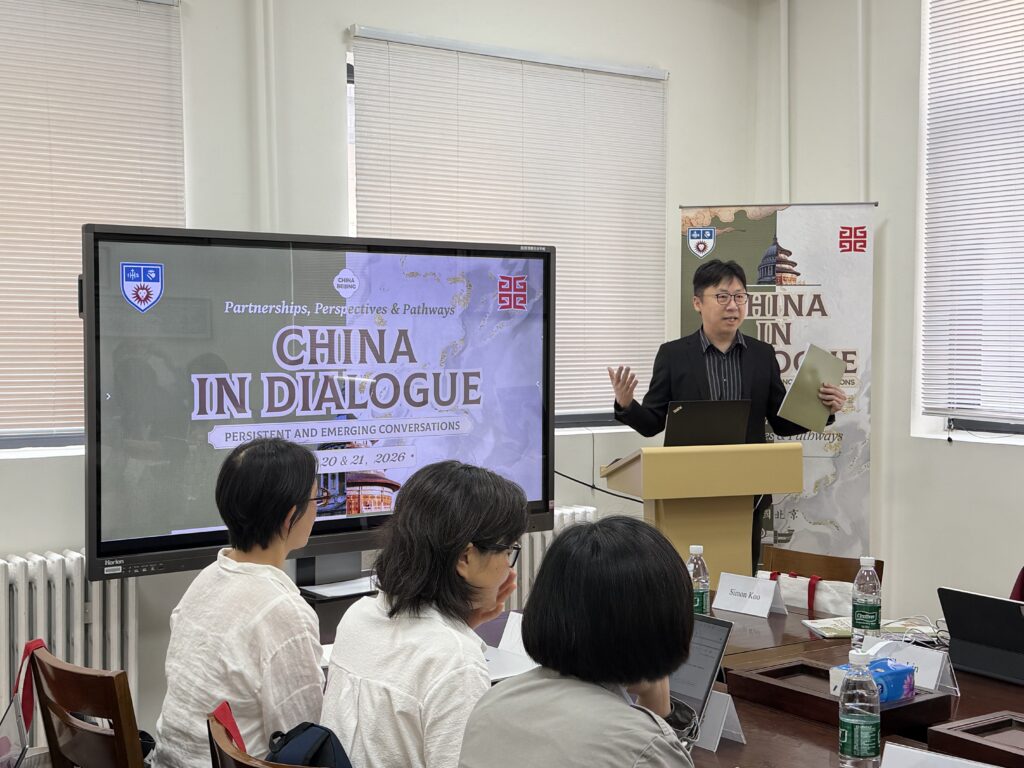
TBC Executive Director Simon Koo delivered the opening remarks, emphasizing the importance of sustained academic exchange and meaningful dialogue across cultures.

TBC Executive Director Simon Koo

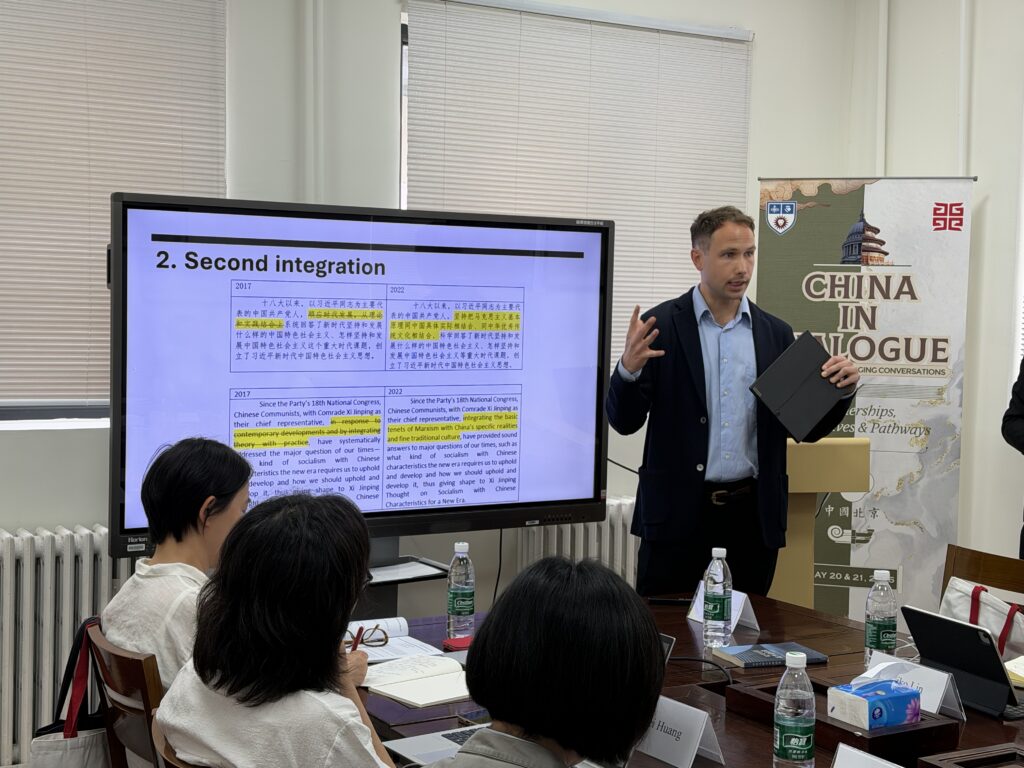
Sessions on political and economic thought examined Marxism as a historical bridge between Chinese and Western intellectual traditions, while also comparing Chinese and American perspectives on corporate governance, transparency, and information disclosure.

Moritz Kuhlmann, Ph.D.
Renmin University of China

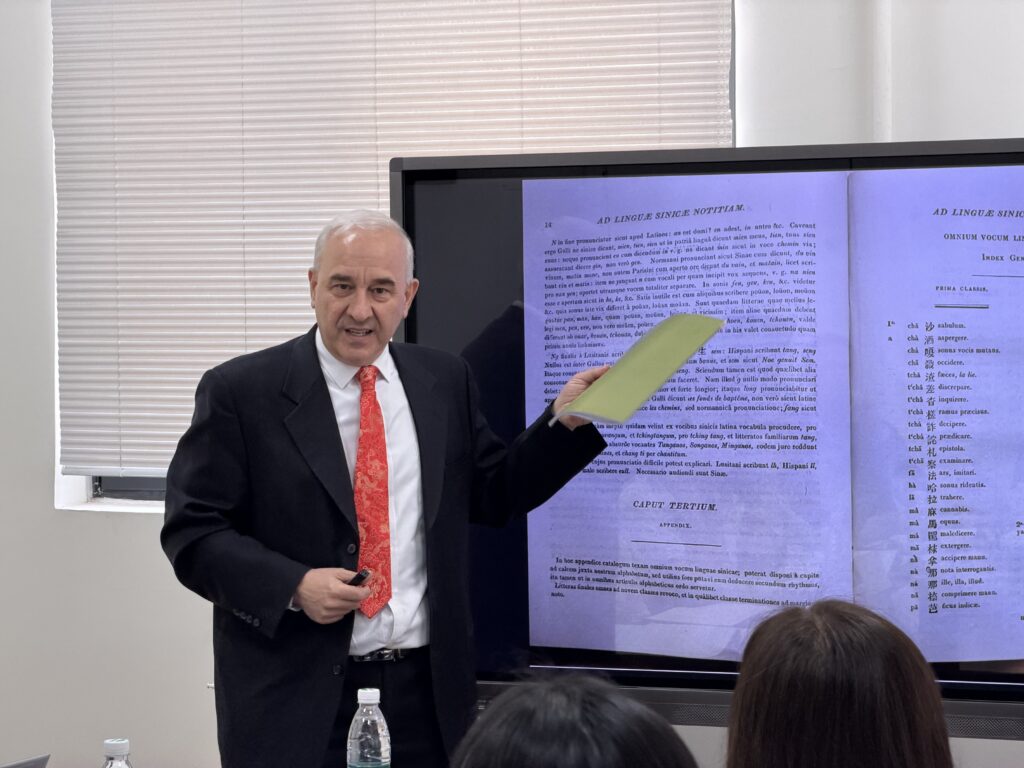
Humanities discussions explored the role of Latin translations in shaping European understanding of Chinese civilization, cultural expression through global typeface design, and the ways psychological concepts evolve as they are adapted across different linguistic and cultural contexts.

Michele Ferrero, Latin and Western Classics
Beijing Foreign Studies University

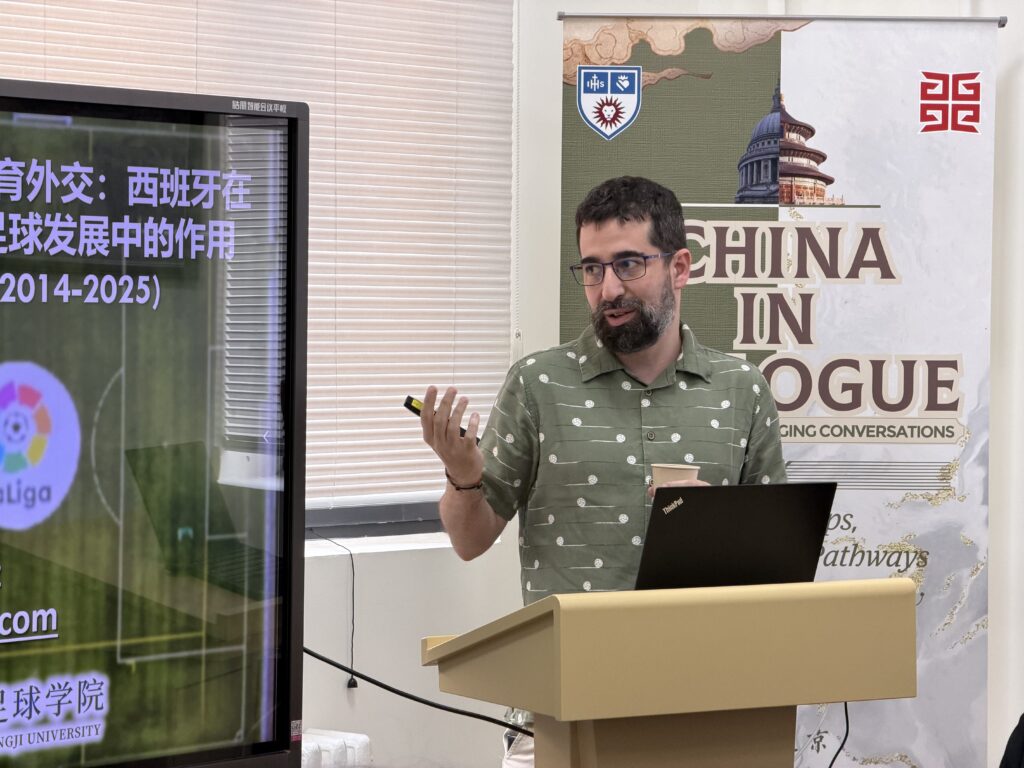
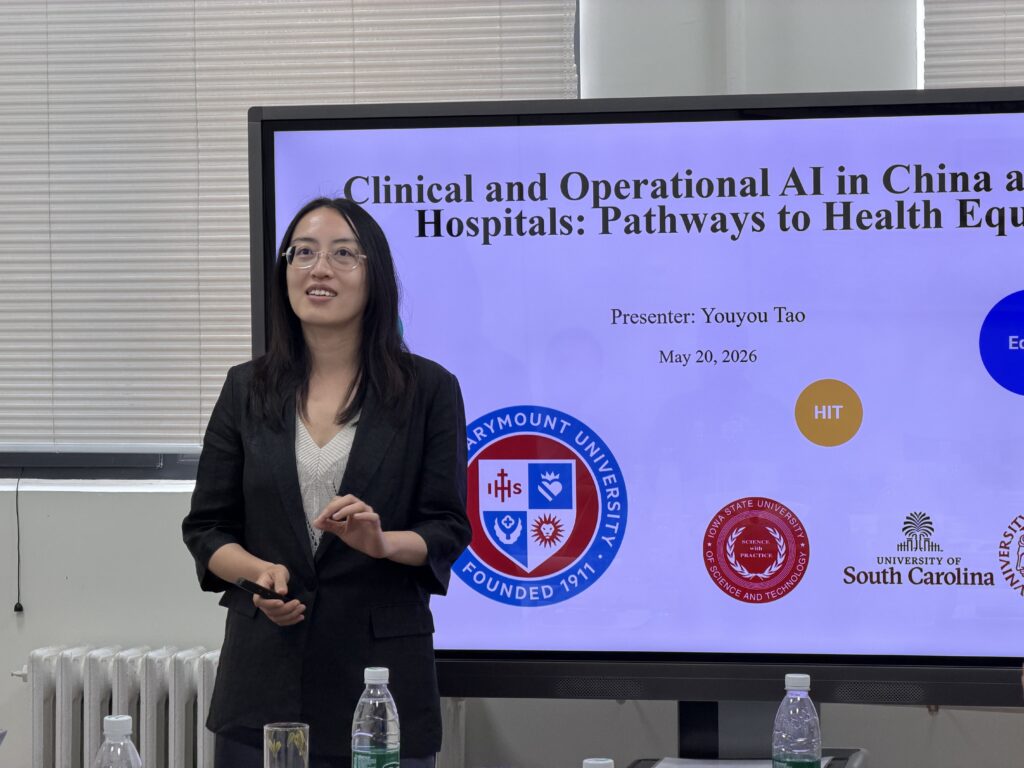
The symposium also addressed historical memory and international collaboration from a variety of perspectives. Presentations examined the multiple historical narratives surrounding the Marco Polo Bridge, the role of artificial intelligence in advancing global health, sports diplomacy as a vehicle for international exchange, and opportunities for collaboration between the Chinese and American film industries in the global marketplace.

Carlos Pulleiro Méndez, Research Fellow
Tongji University

Youyou Tao, College of Business Administration
Loyola Marymount University

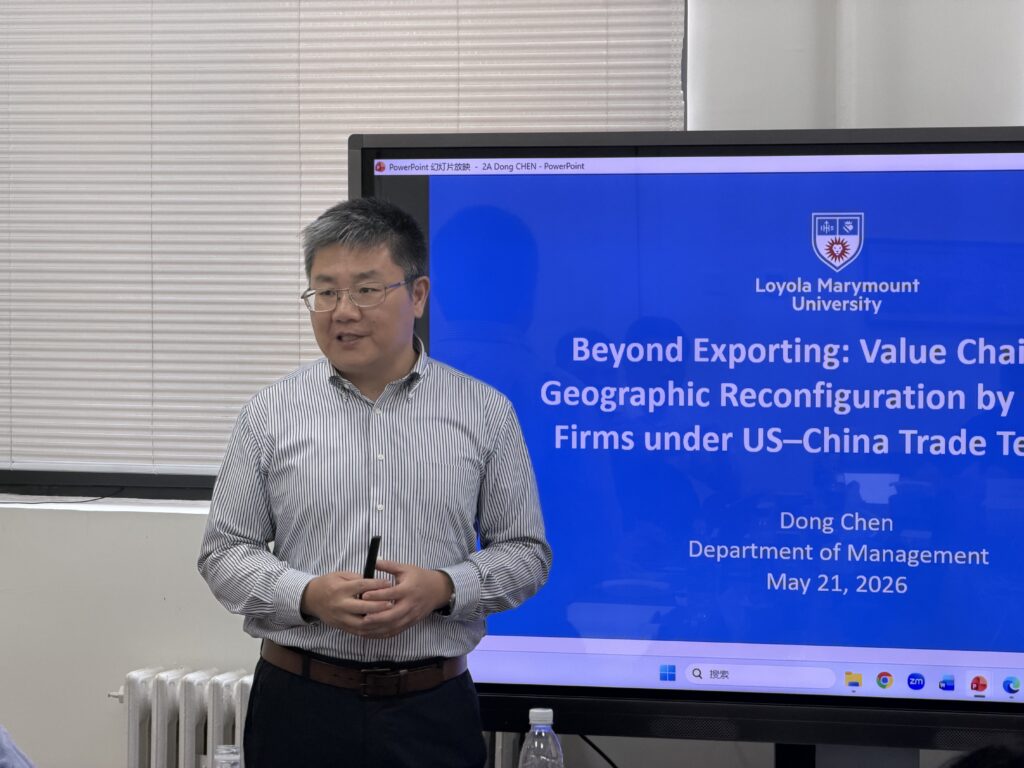
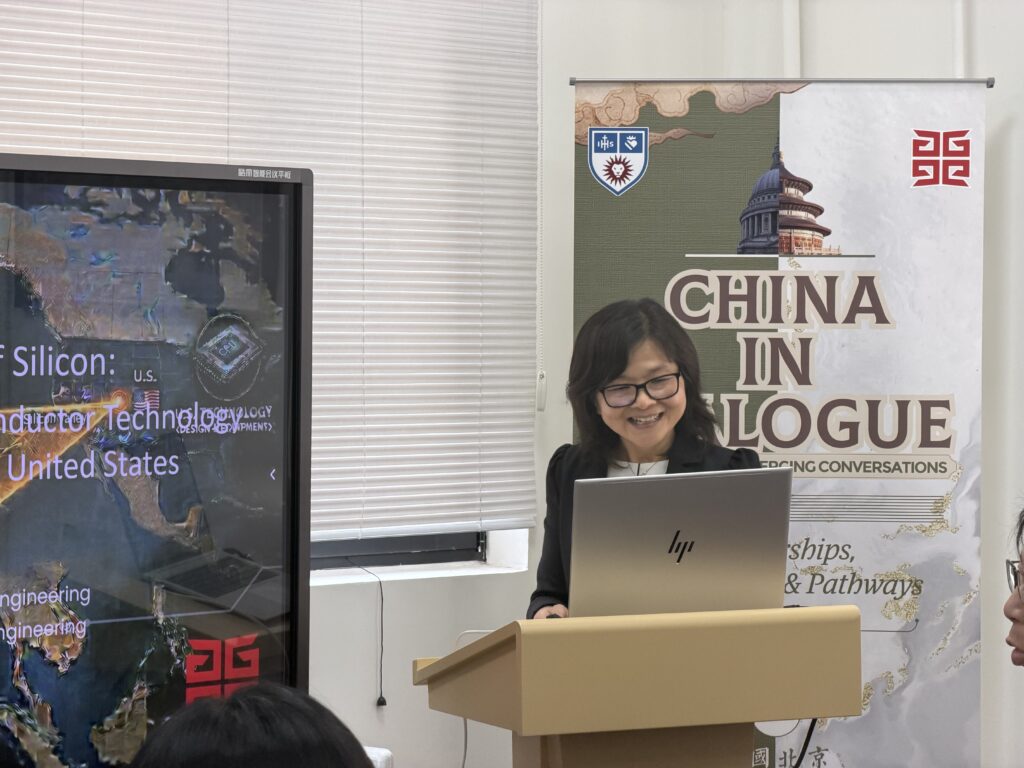
Additional discussions focused on technology and industry, including the restructuring of global supply and value chains amid evolving China–U.S. economic relations, the development of the new energy sector under the combined influence of policy and market forces, and patterns of cooperation and competition within the global semiconductor industry.

Dong Chen, College of Business Administration
Loyola Marymount University

Lei Huang, Department of Electrical and Computer Engineering
Loyola Marymount University

 Together, these presentations offered a multidimensional perspective on contemporary China—one shaped by historical traditions, technological innovation, globalization, and changing international relationships.

Continuing the format established during the inaugural symposium, this year’s program extended beyond academic discussions to include field visits and cultural experiences, allowing participants to engage with China through firsthand observation and exchange.

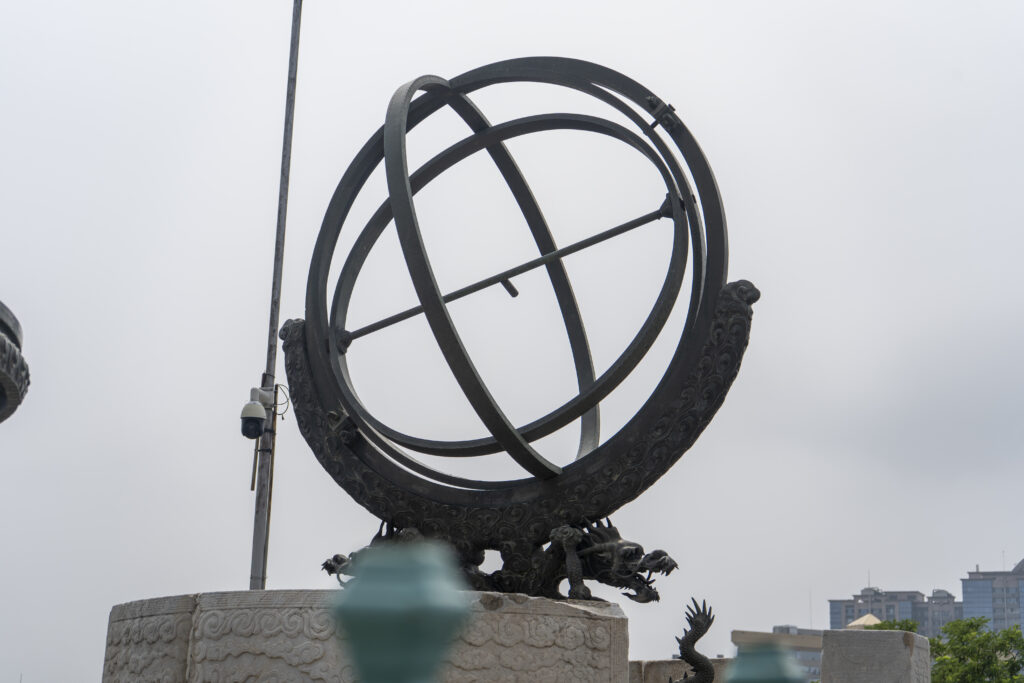
Following the Beijing sessions, participants visited the Beijing Ancient Observatory, where they viewed historic astronomical instruments developed under the direction of Belgian Jesuit astronomer Ferdinand Verbiest. The visit provided an opportunity to reflect on the long history of scientific exchange between China and Europe during the Ming and Qing dynasties.

The Beijing Ancient Observatory

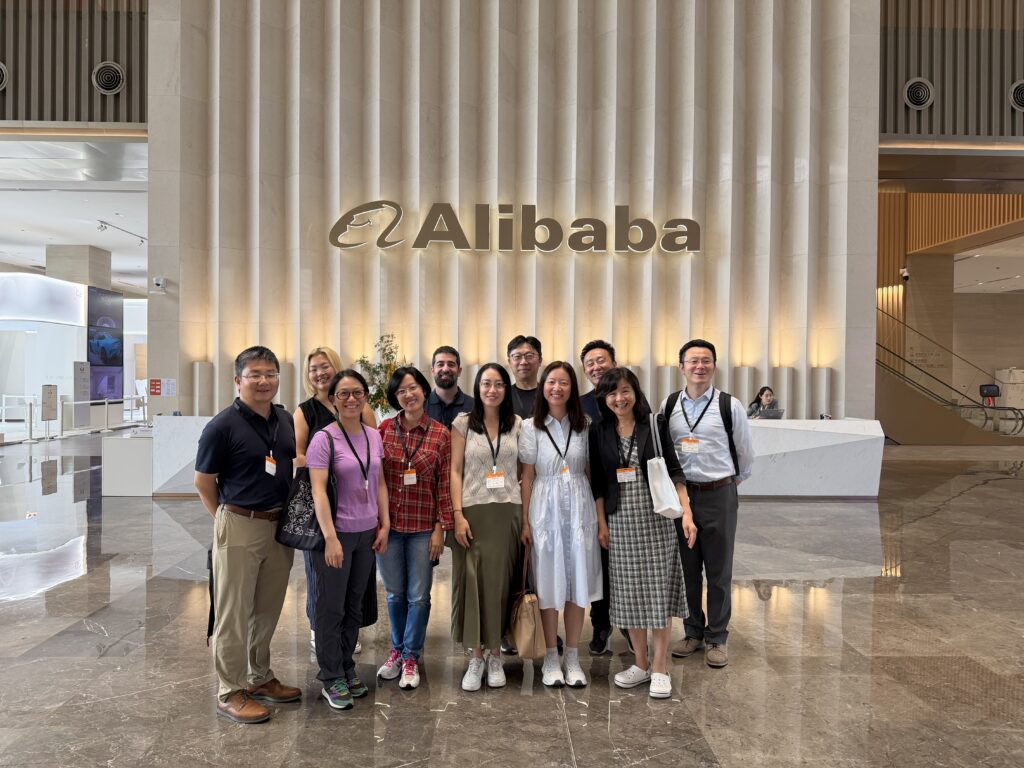
The symposium continued in Hangzhou with a series of site visits. At Alibaba Group Headquarters, participants learned about the development of China’s internet industry, the evolution of its digital economy, and emerging trends in business innovation in the age of artificial intelligence through presentations and discussions with company representatives.

Visiting Alibaba Group Headquarters

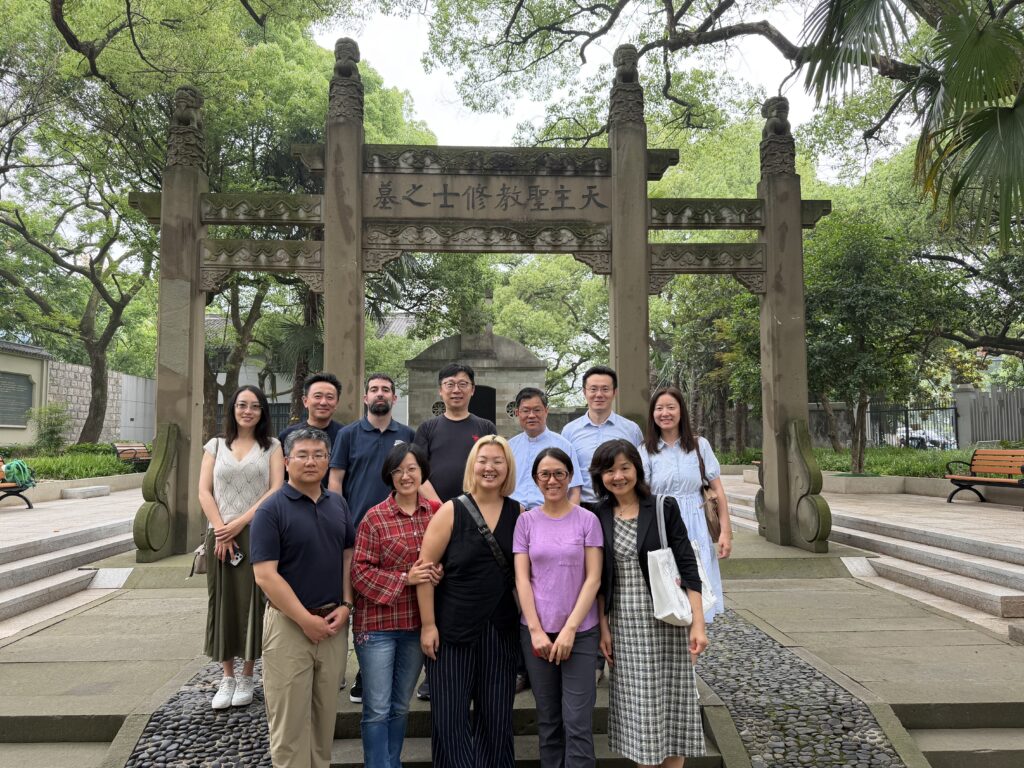
Participants also visited the tomb of Italian Jesuit missionary Martino Martini. The site is the final resting place of several pioneering Jesuits, including Nicolas Trigault, Lazzaro Cattaneo, and Prospero Intorcetta, whose contributions played an important role in fostering intellectual and cultural exchange between China and the West. The historical significance of the site was further highlighted in November 2024, when Italian President Sergio Mattarella visited the cemetery during his state visit to China.

Visiting the Tomb of Martino Martini, S.J.

From Beijing to Hangzhou, and from scholarly dialogue to firsthand cultural experiences, the second China in Dialogue Symposium expanded opportunities for academic collaboration and deepened mutual understanding among Chinese and American scholars.

As the symposium concluded, participants looked ahead to the third and final gathering in 2027, where conversations will continue through interdisciplinary collaboration, open dialogue, and a shared commitment to strengthening mutual understanding between China and the world.

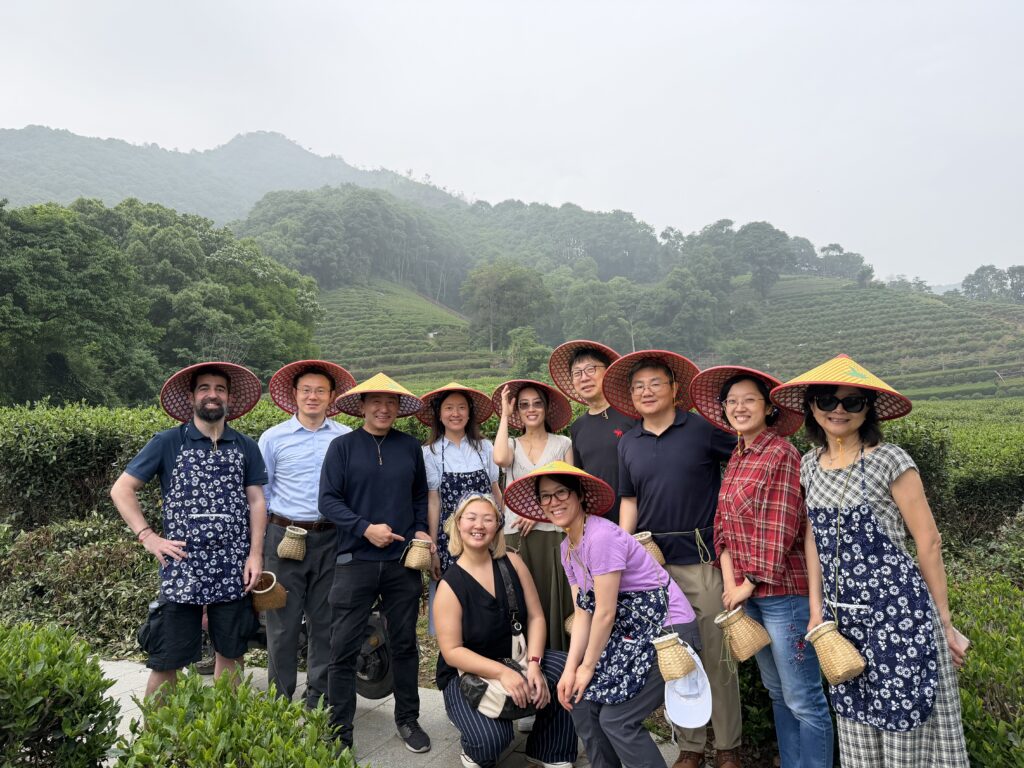
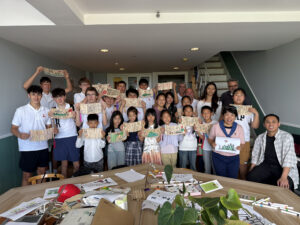
Experiencing traditional tea picking and pan-firing in Longwu Tea Town

More To Explore

Cultural Dialogues

Summer Language Program – Student from Marquette 

This past summer at The Beijing Center (TBC), students from Marquette University took TBC’s Chinese language courses for college credit. TBC’s program offers an intensive, immersive curriculum in the heart of Beijing.
Cultural Dialogues

American Jesuit High Schools Servicing Local School Children 

This past summer in China, TBC connected students from Notre Dame School of Manhattan and Xavier High School with some of Beijing’s local elementary students. The young children were shy at first, but they eventually loved interacting with their new American friends.