The Beijing Center

Mid-Autumn Festival as an American in Beijing 

Share This Post

The past month has been very exciting, and I have experienced a ton of events and celebrations unique to China, a highlight being the Mid-Autumn Festival. I have heard of the Mid-Autumn Festival in the U.S. in Chinese class, and it has always seemed like an interesting holiday. Compared to holidays like the National Day and Chinese New Year, where there is a mass migration and a week-long celebration, Mid-Autumn seems slightly more lowkey. Rather than a week-long party and reunion, it seemed to more of a simple appreciation for the friends and family around you, as well as an appreciation for nature and food around you.  

The festival falls on the 15th day of the eighth lunar month of the Chinese lunar calendar, when the moon is fullest. In this case Mid-Autumn Festival took place on Tuesday, September 17th. Not only was it a full moon, but it was also a supermoon or harvest moon, meaning the moon was especially full and bright. While Chinese students’ Monday classes were moved to Saturday to create a three-day weekend of sorts, us American students had class on Monday but still had Tuesday off.  

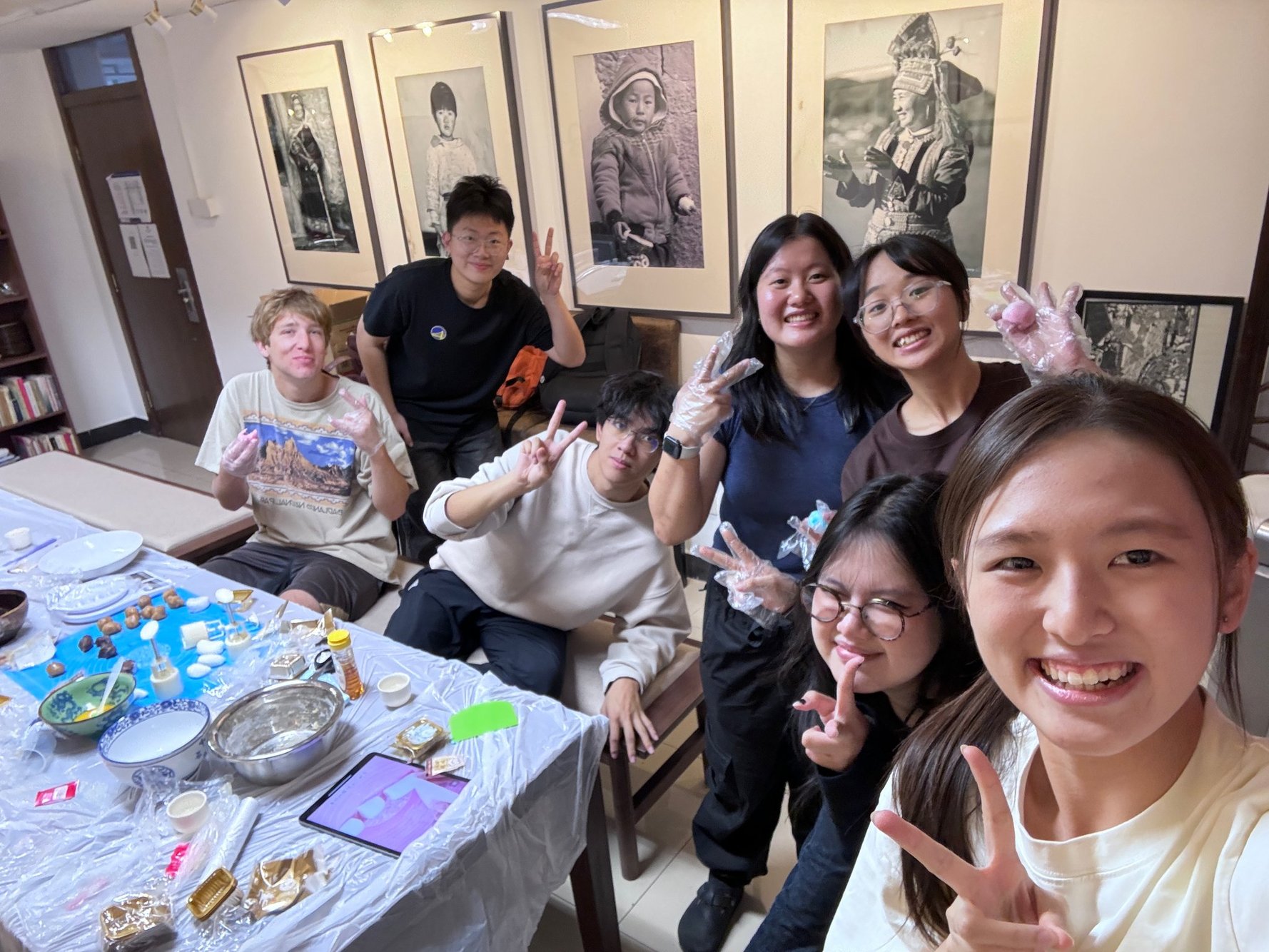
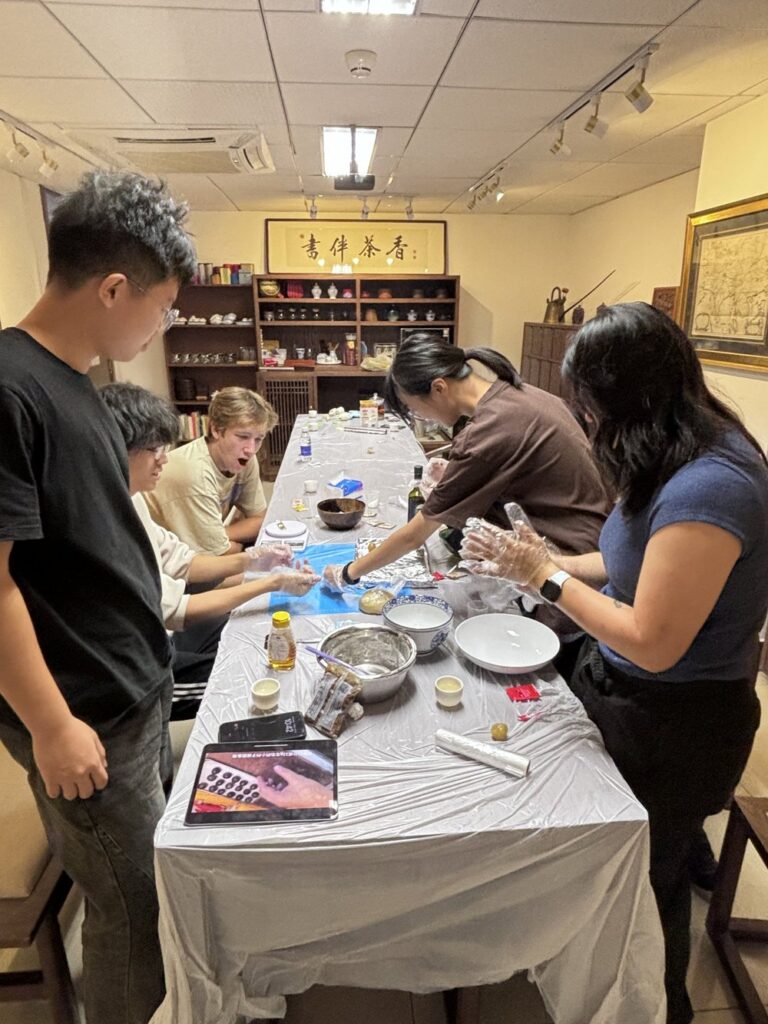
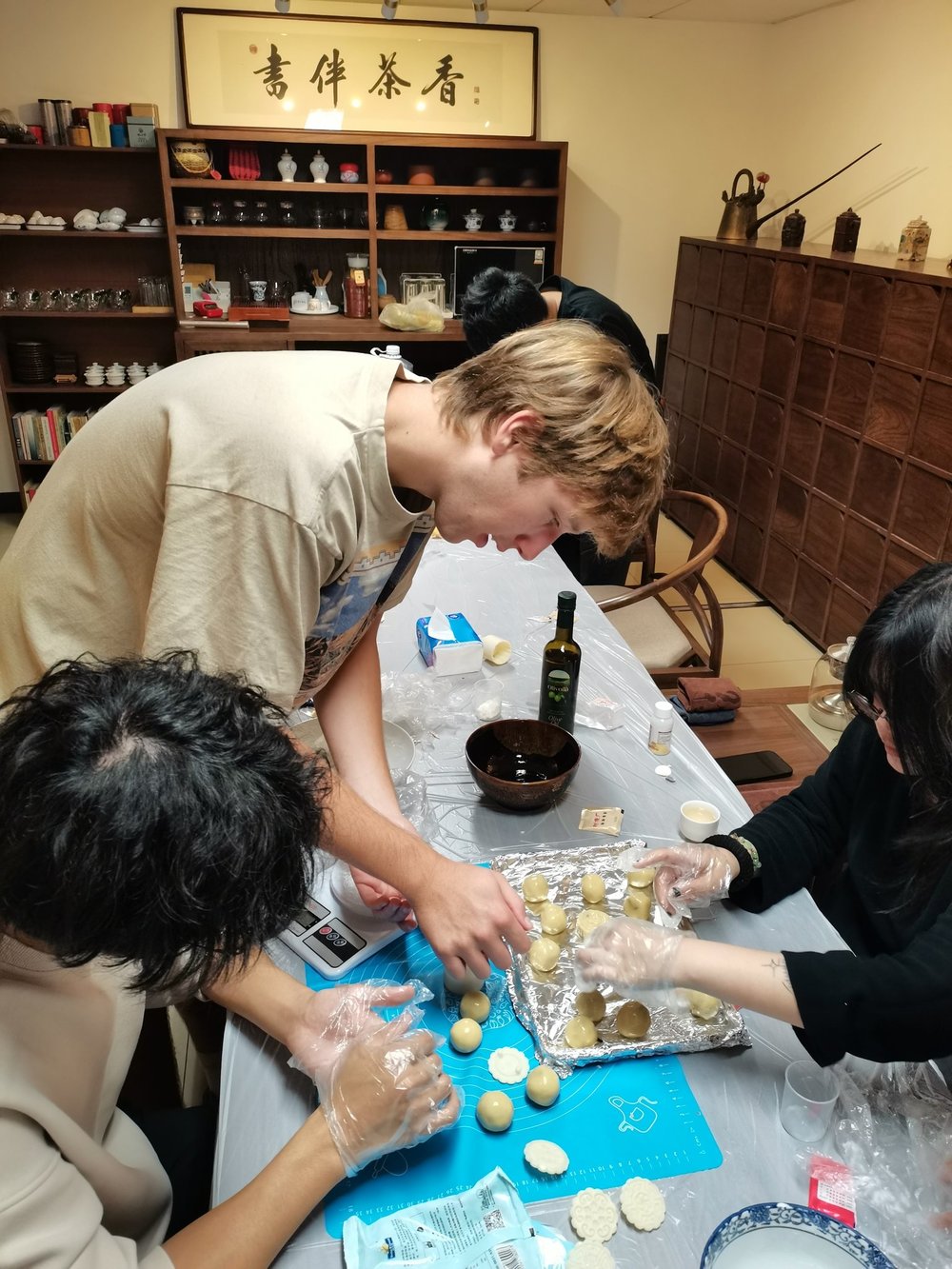
We started the day off at The Beijing Center, where we got to make mooncakes in one of the classrooms. Andy, a TBC intern, led us in making these mooncakes, and although he said he had never made them before, he seemed like a pro. I remember first trying mooncakes in high school during one of my Chinese classes, but I also remember not loving them. They are not super sweet in the way most American desserts are, the filling flavors are more sophisticated than most U.S. desserts as well. However, I have had them many times since then and they have really grown on me, to the point where this Mid-Autumn Festival I think I ate six or seven throughout the day. They are very dense, and the flavor is much more nuanced than the desserts I’m used to- plus they look beautiful. They are round detailed cakes, and many have a cured egg yolk in the center, both features meant to symbolize the moon. They have these intricate designs etched into the top of them as well. 

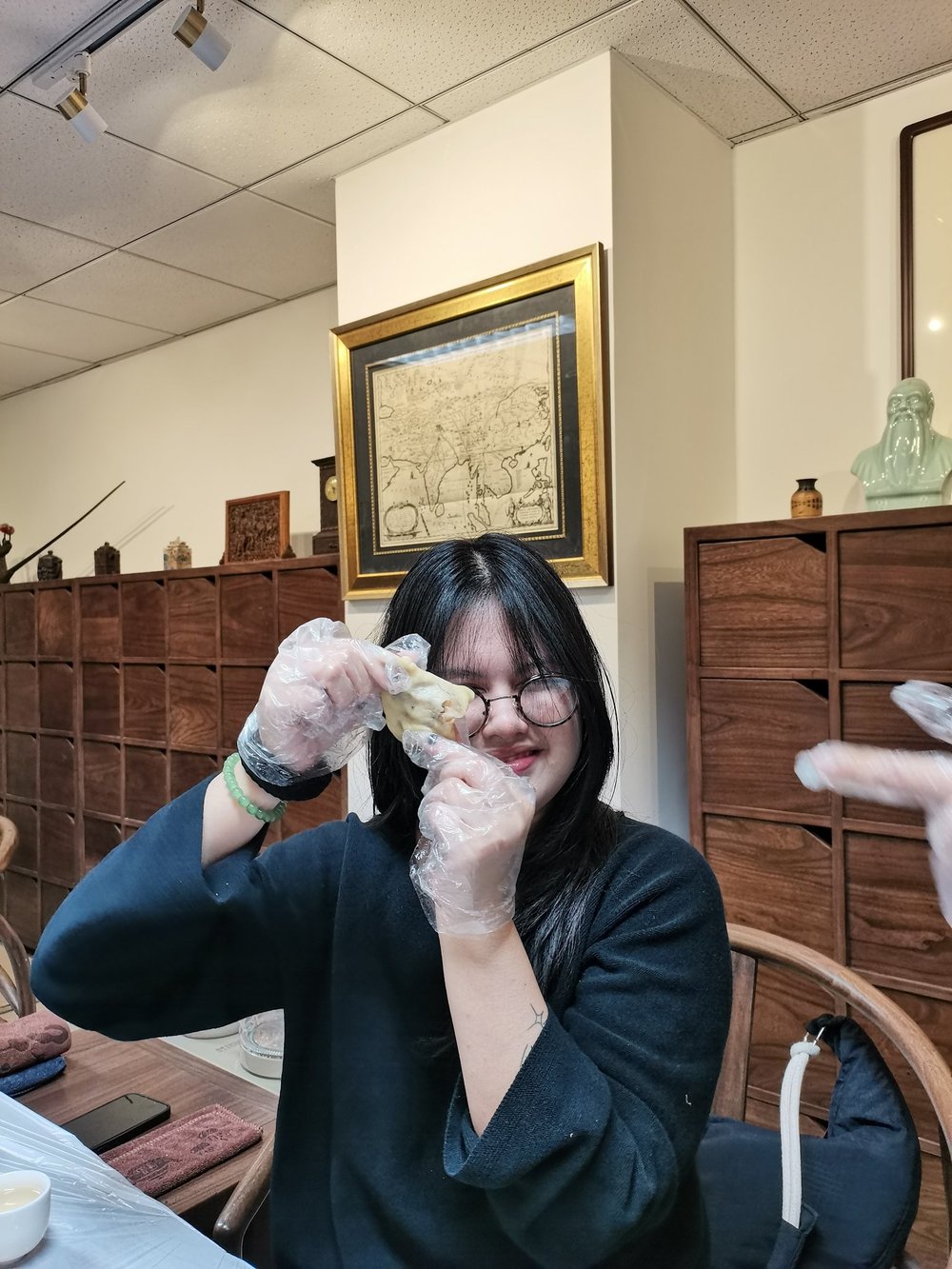
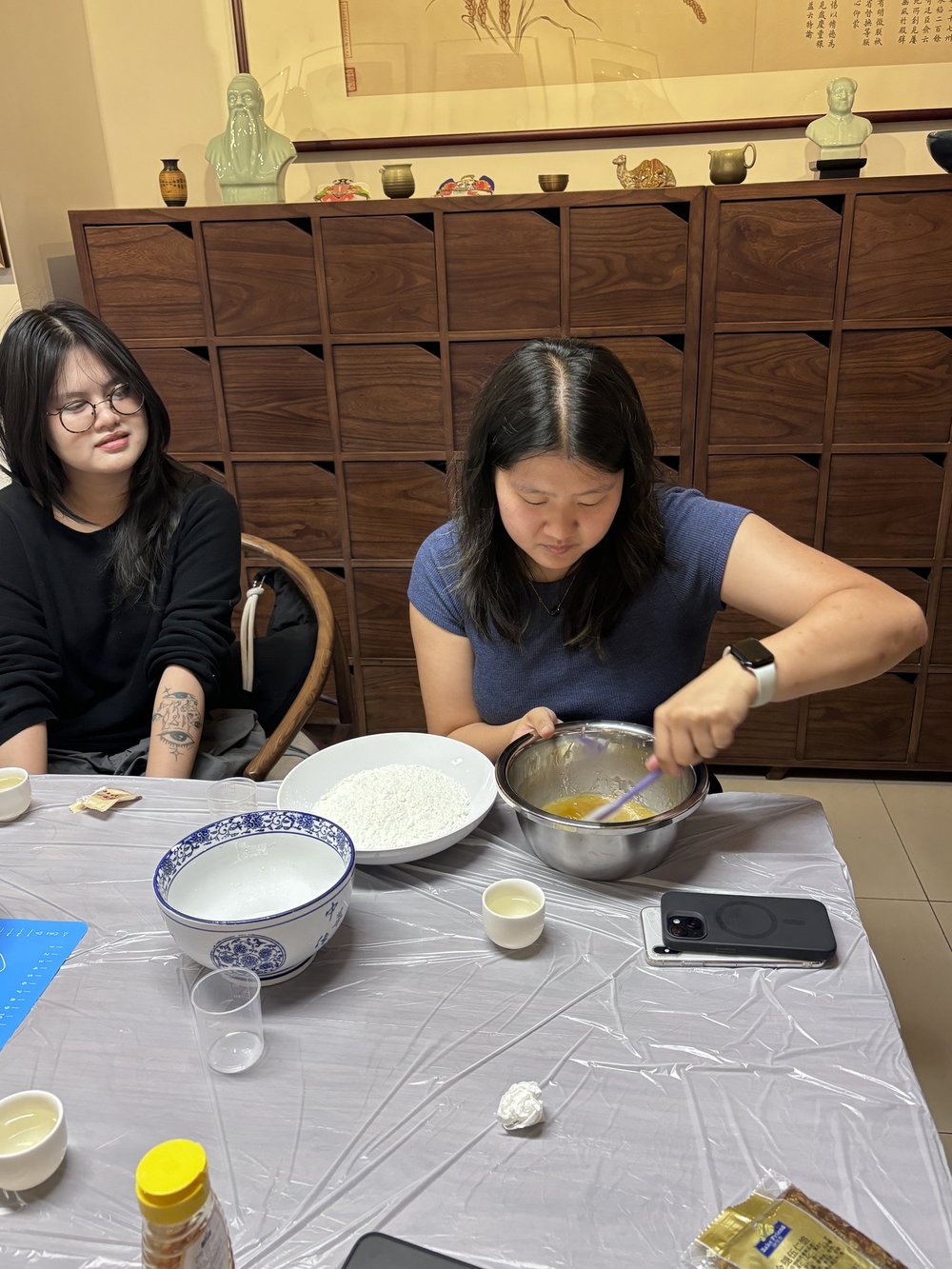
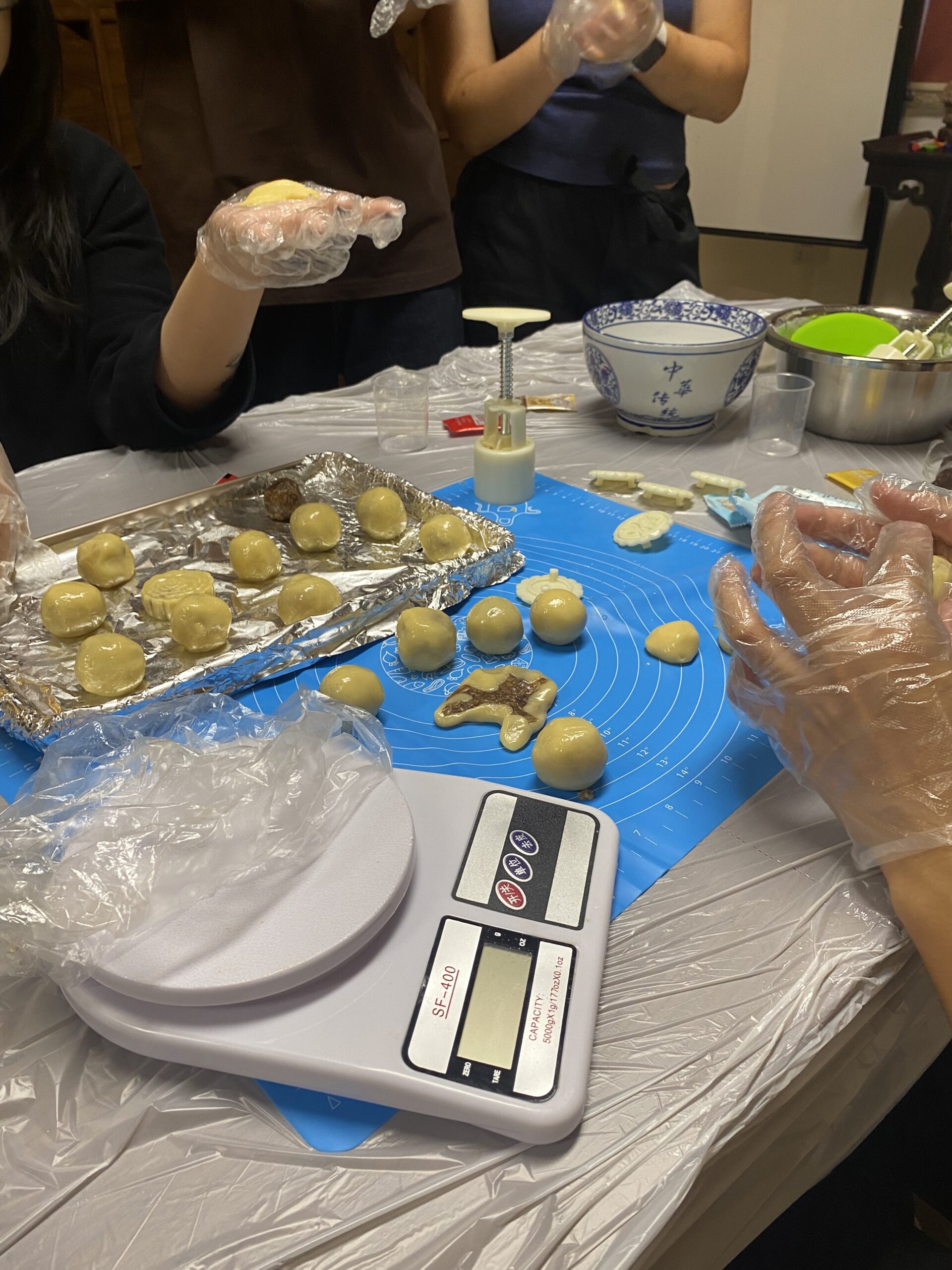
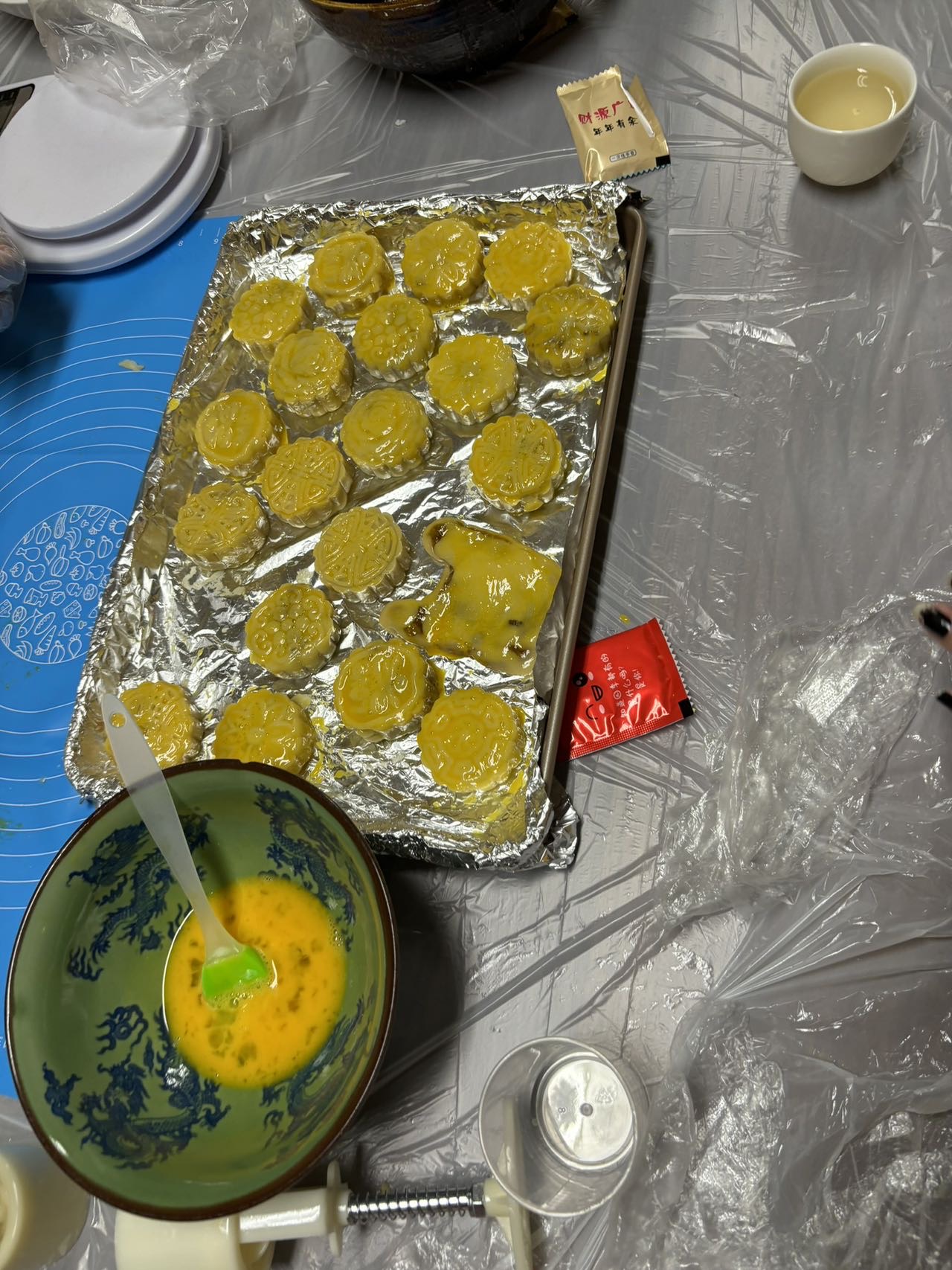
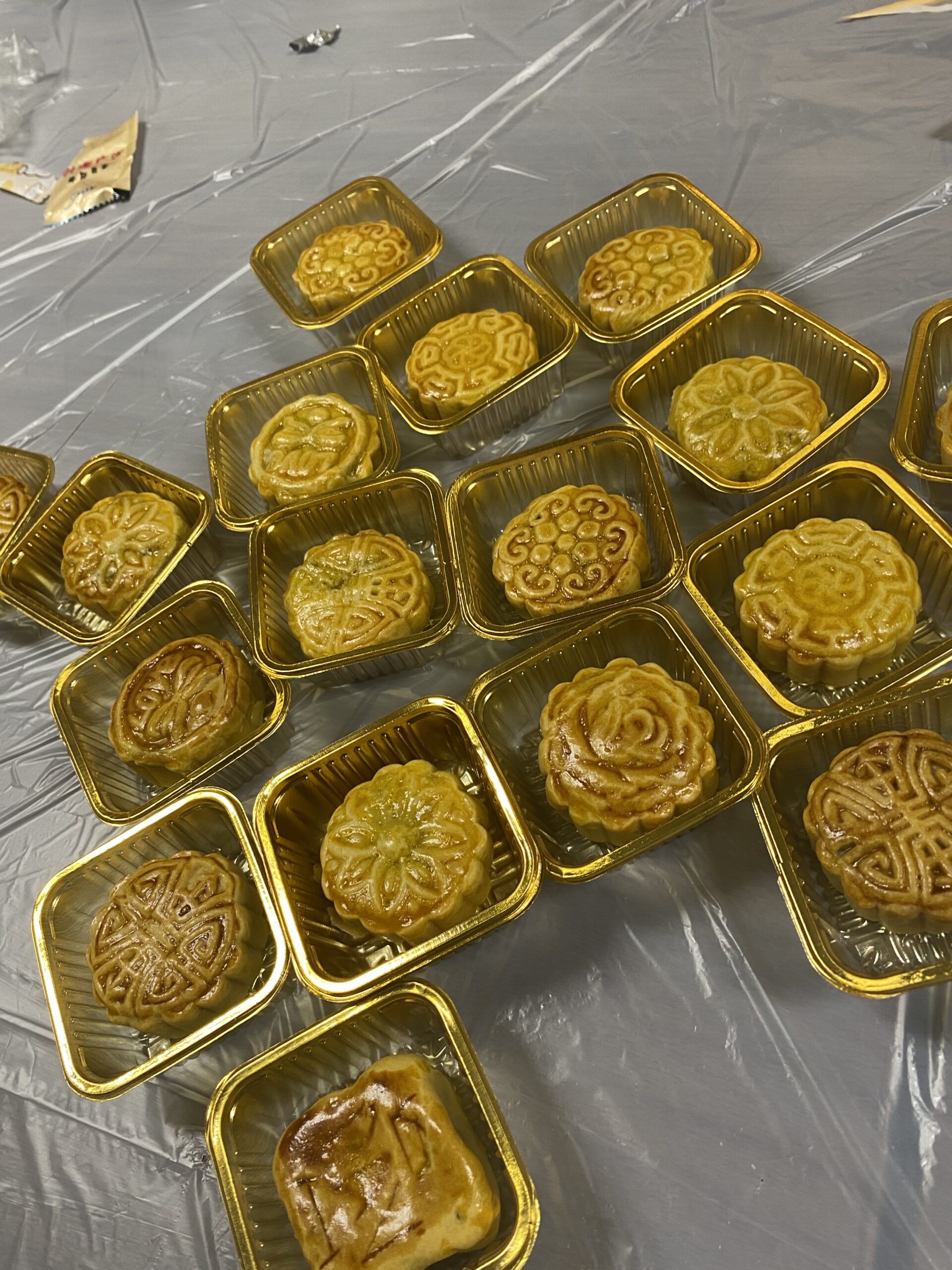
I always wondered how these designs were made and making them myself answered this question. We started by making the dough, which just meant combining flour, water and oil and letting it rest for about half an hour. We then rolled pre-made red bean paste and lotus paste into small balls, and then covered them with thin circles of the dough. These made little balls that we then used a press with a detailed stamp inside to compress the balls and give them the signature shape and designs. We covered the tops with egg wash and baked them until they were golden. I had never had a warm mooncake, and they were so delicious.  

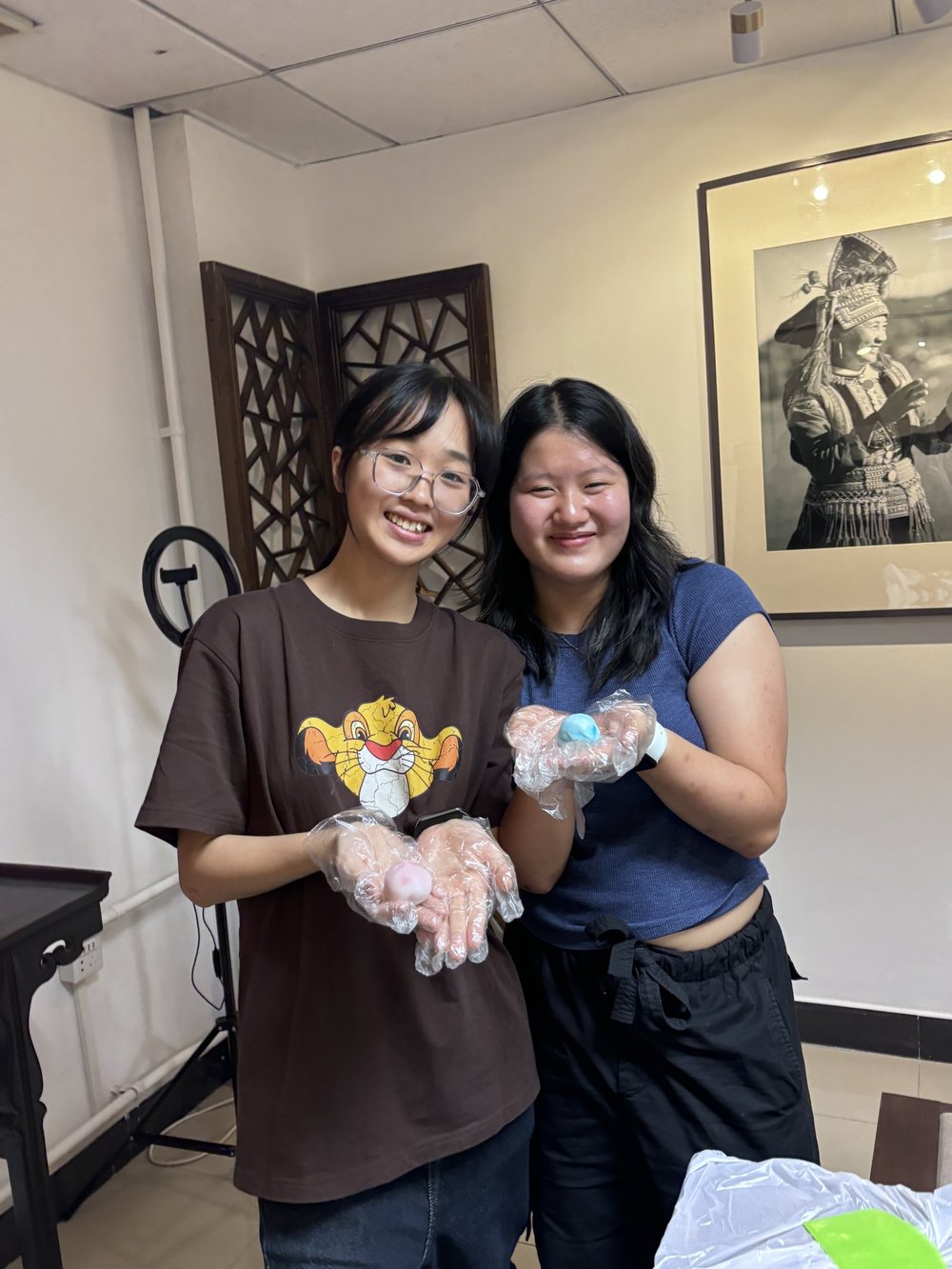
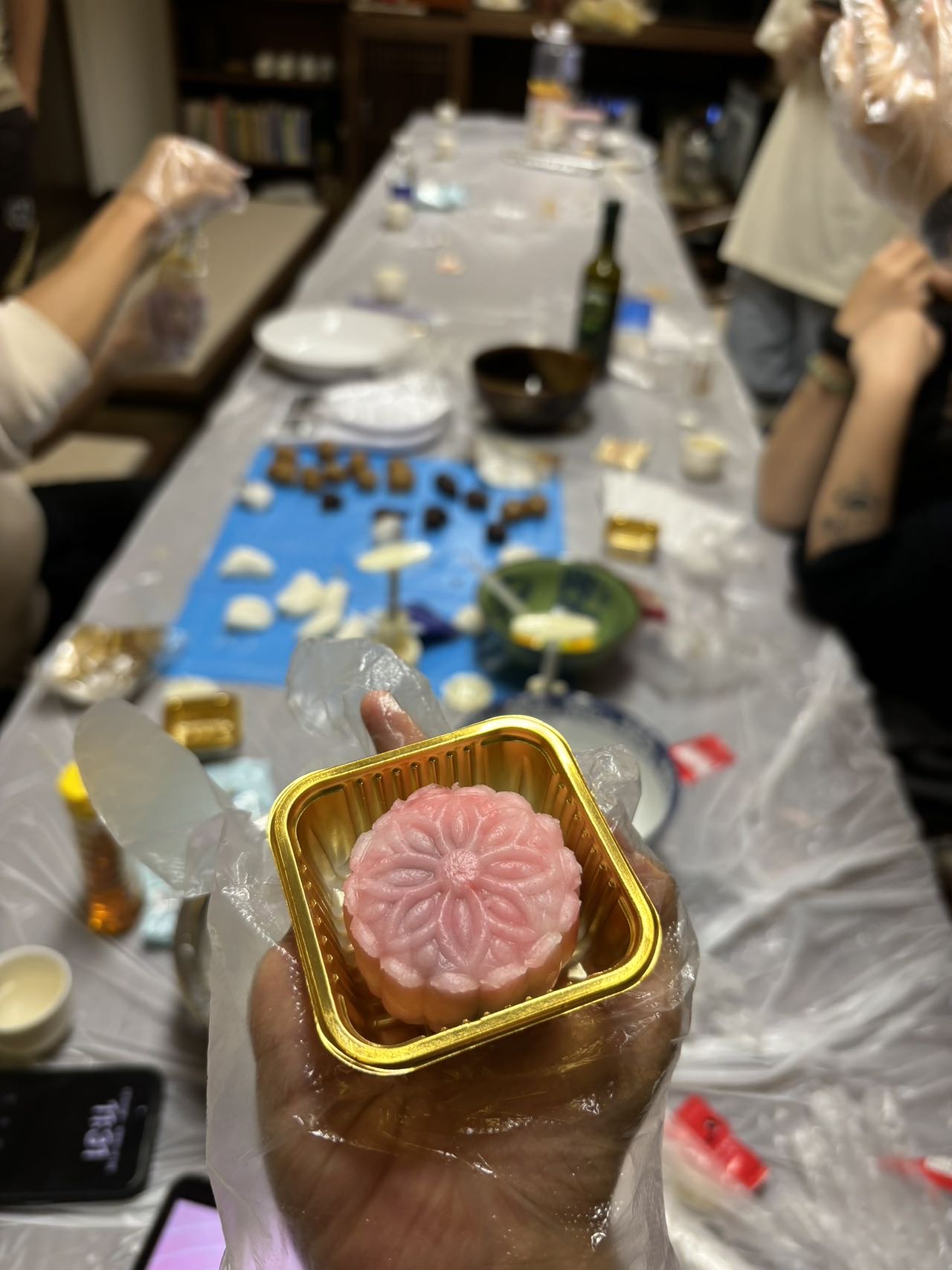
These were traditional Cantonese mooncakes, but we also made snow skin mooncakes, which are much softer and do not require baking. We used glutinous rice flour, oil, and boiling water to create a much bouncier and firm dough. We then mixed in either strawberry and blueberry powder to give the dough more flavor and color, and then squashed them into thin circles. We wrapped these circles around similar filling and then pressed them using the same stamp. These were colorful squishy mooncakes that were delicious, but not quite as good as the traditional style.  

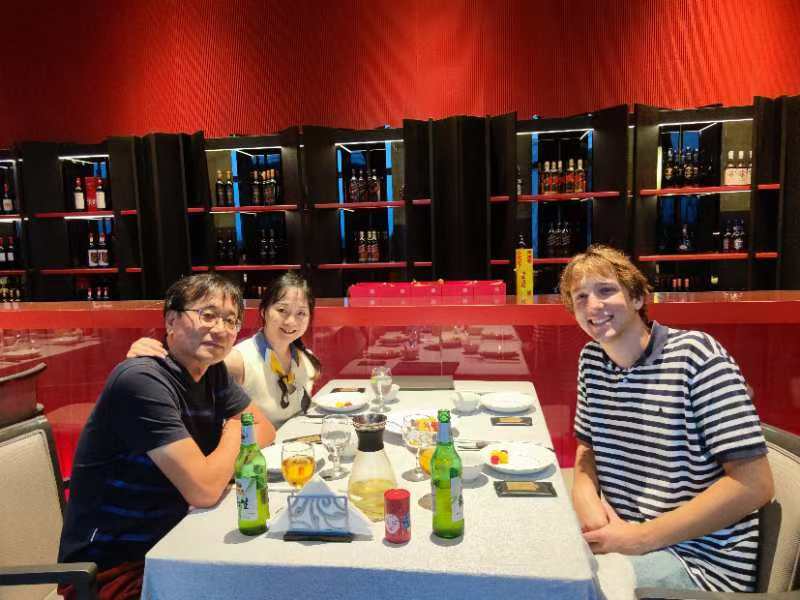
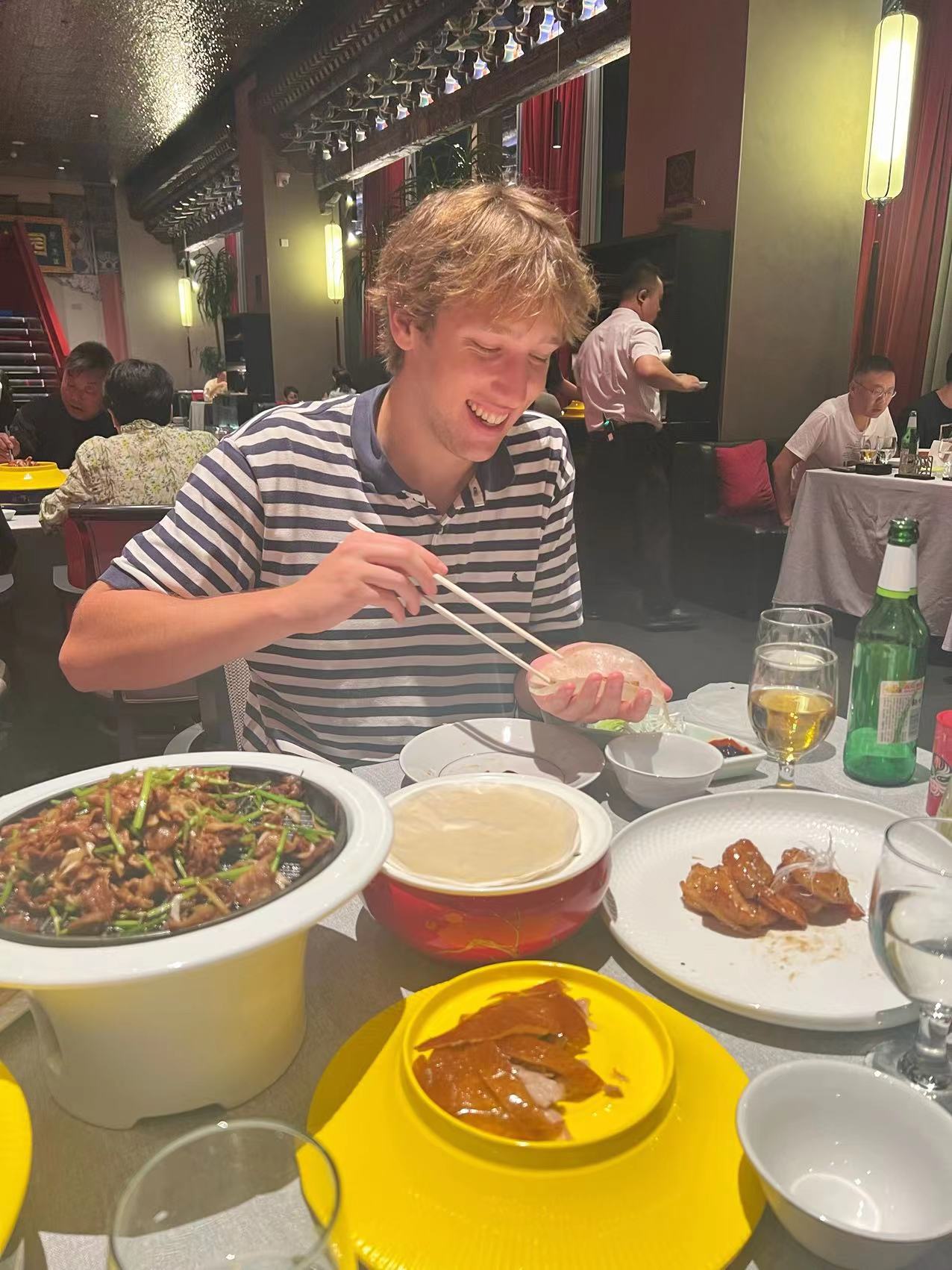
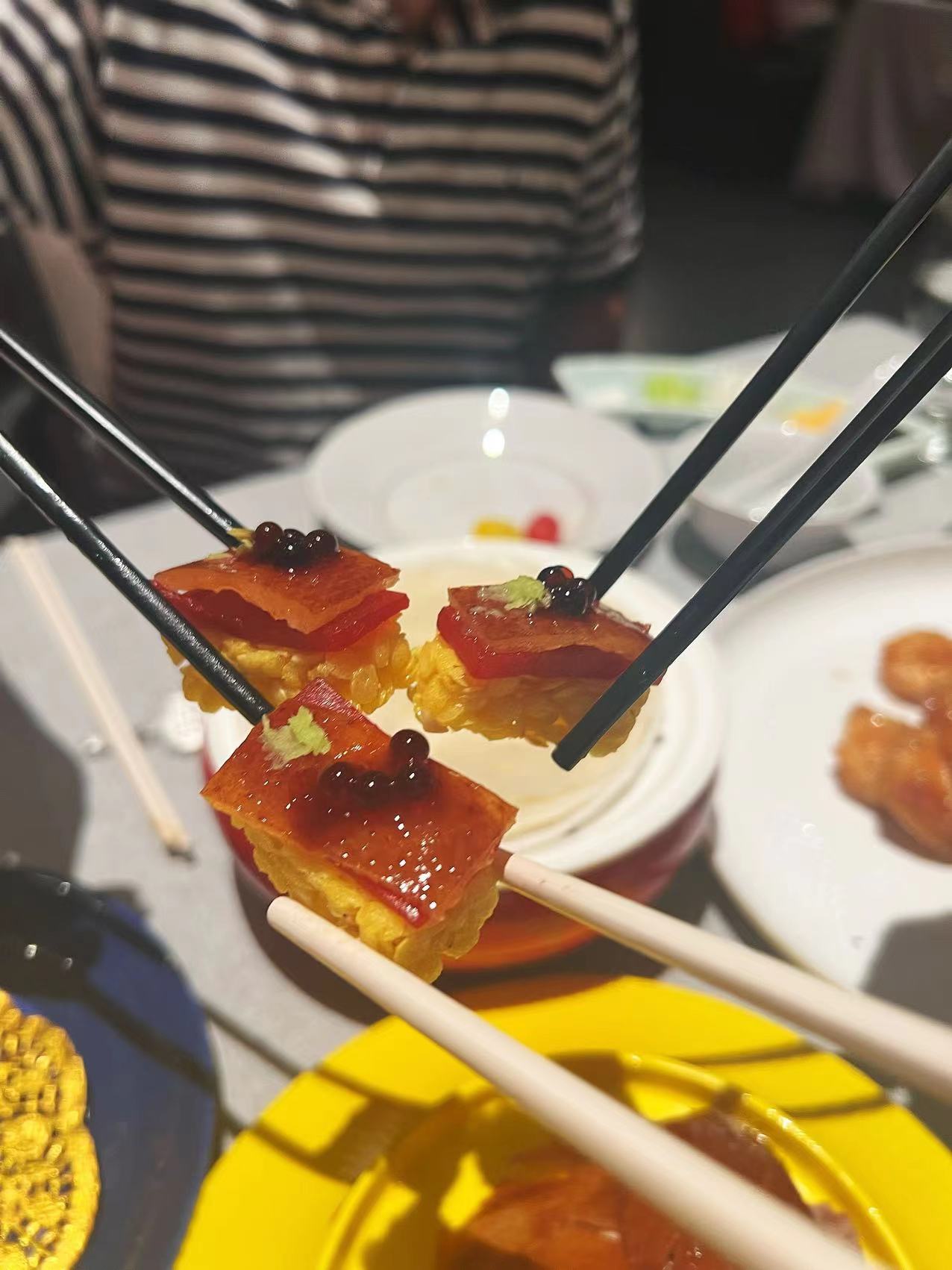
For dinner I met up with my childhood friend’s family friends, the Wangs. My best friend growing up’s twin sister has a friend from Beijing, so my they put me in contact with their family in Beijing. A bit of a complicated connection I know, but I felt lucky to have any sort of connection in Beijing, plus they were super nice and invited me to dinner. They live just outside of Beijing’s main city area, and they were super welcoming to me. I got a chance to visit their home and see their dogs, which was very nice as I have been missing my own dog. They took me out to dinner at Hua’s Restaurant (花家怡) where I finally had a chance to try some Peking duck. I can’t believe I’ve been here so long without trying it! It was delicious, and I somehow never realized that it is served with thin pancakes, vegetables and sauce to make a small burrito-like wrap. We had many other traditional Beijing style dishes and other delicious foods like rojiamo (a Chinese hamburger of sorts), and since it was Mid-Autumn Festival, the food was all very sweet. To end the meal, we had even more mooncakes. They were very sweet to welcome me in on such an important day and having a family meal made the festival feel that much more special.  


By Fall 2024 student Thomas Helm

More To Explore

Global Connections

Heaven in Beijing: TBC’s Visit to the Temple of Heaven

Beijing’s Temple of Heaven may be one of, if not, the most iconic tourist sites in Beijing. Constructed starting back in 1406, around the same time as the Forbidden City and the other respective temples of the Sun, Earth and Moon.

Global Connections

Cultural Exchange, Chinese University Style

Another one of the more irreplaceable experiences we have in China as students is the amount of cultural exchange we get to participate in. While The Beijing Center organizes plenty of culture-based events, from tourist activities to arts workshops, there’s something about engaging with other people our own age in cultural exchange that’s really special.

Global Connections

Gubei: An Excursion to China’s Newest Old Water Town

Over this past weekend, some of our students enrolled at Minzu University of China took their annual Spring Outing – this year, to Gubei Water Town. Situated about a 2-hour drive northeast of Beijing, the April weather made it absolutely perfect to explore for a spring outing. It surrounds various canals and offshoots of Yuanyang lake.

Global Connections

Beijing’s Hutongs: From Snuff Bottles to Exploration with a View

If you ever want to get a taste of Old Beijing, by far one of the best ways is to visit the hutongs. They’ve conceptually been around all the way since the 1200s, and in their most modern forms exist as protected alleyways and streets surrounded by old traditional houses and neighborhoods in the heart of Beijing and are recognized in China to be an important part of cultural heritage in the city.