The Beijing Center

Interview with Yenching Scholars: TBC as an East-West Cultural Bridge

Share This Post

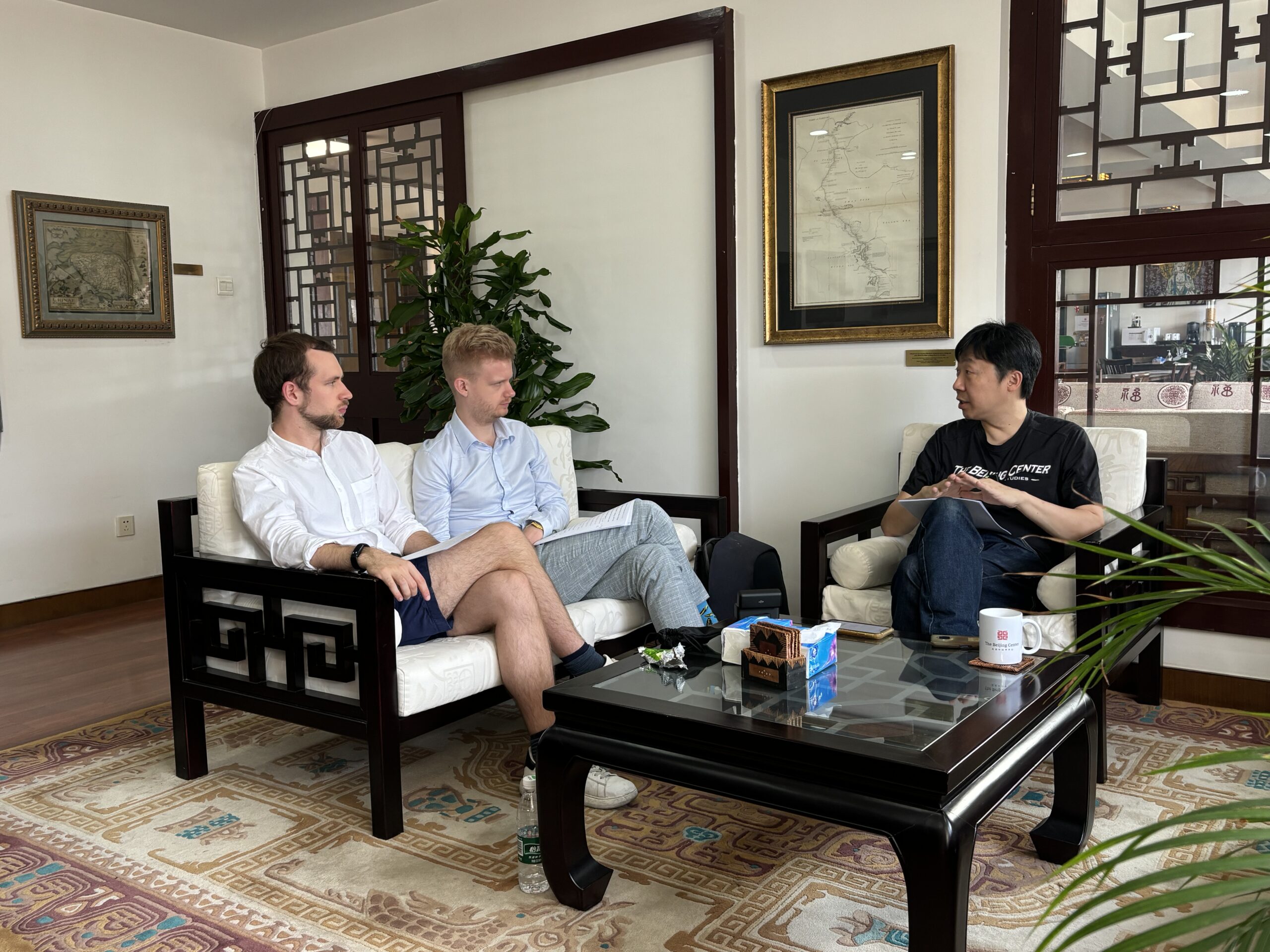
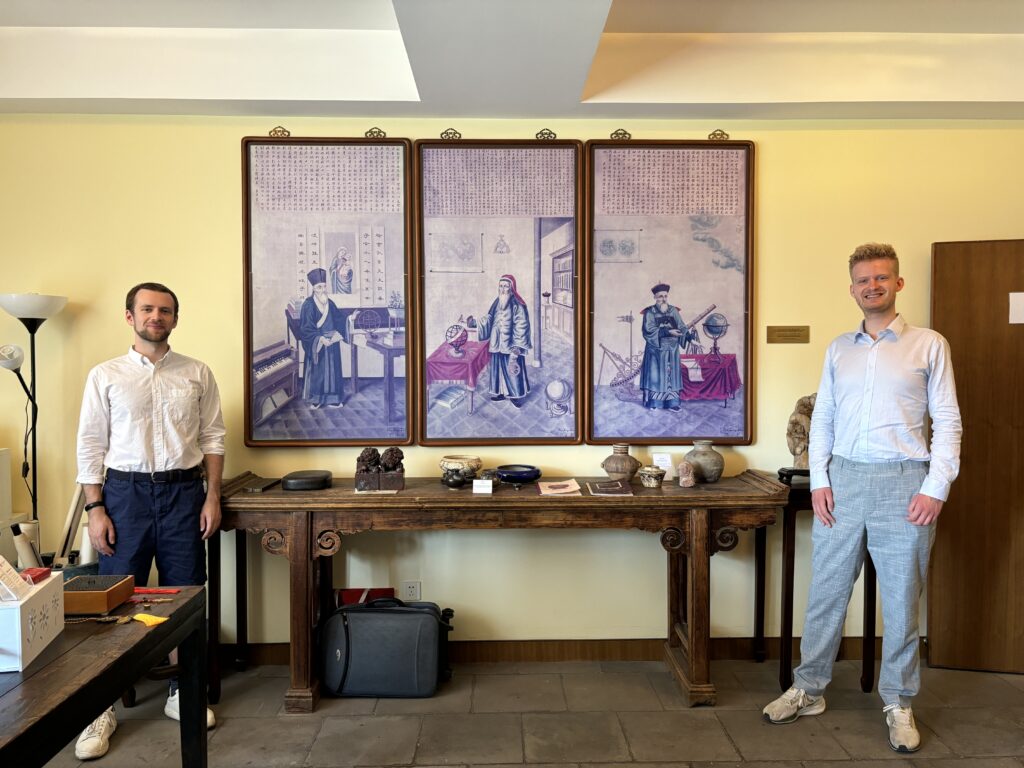
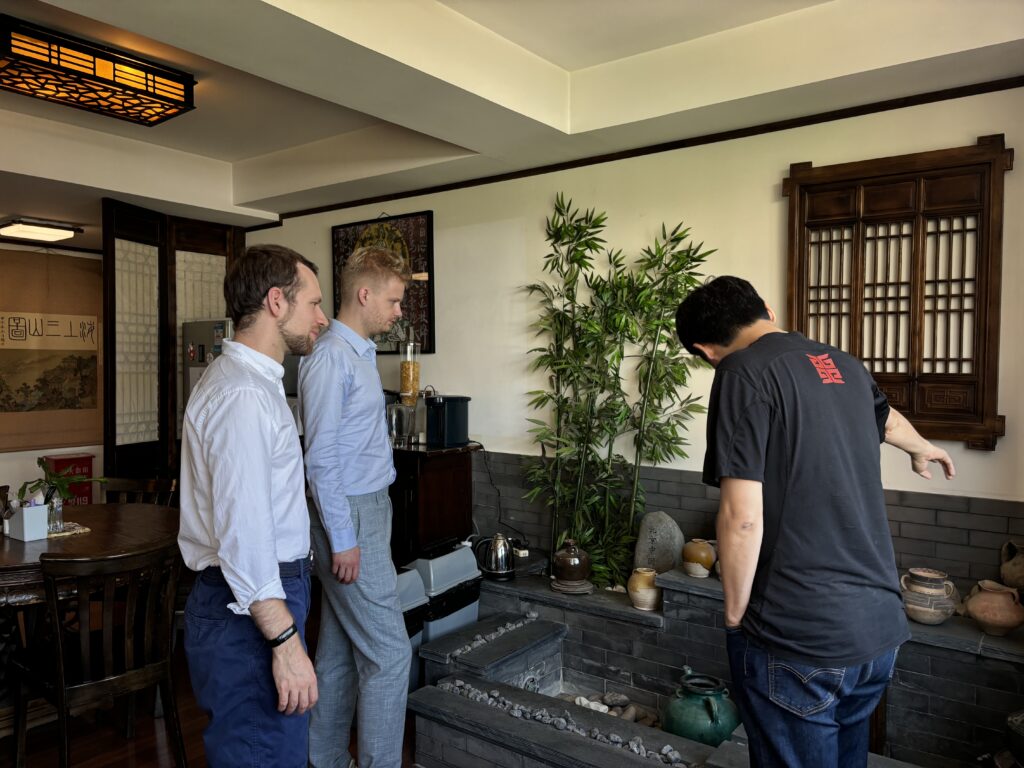
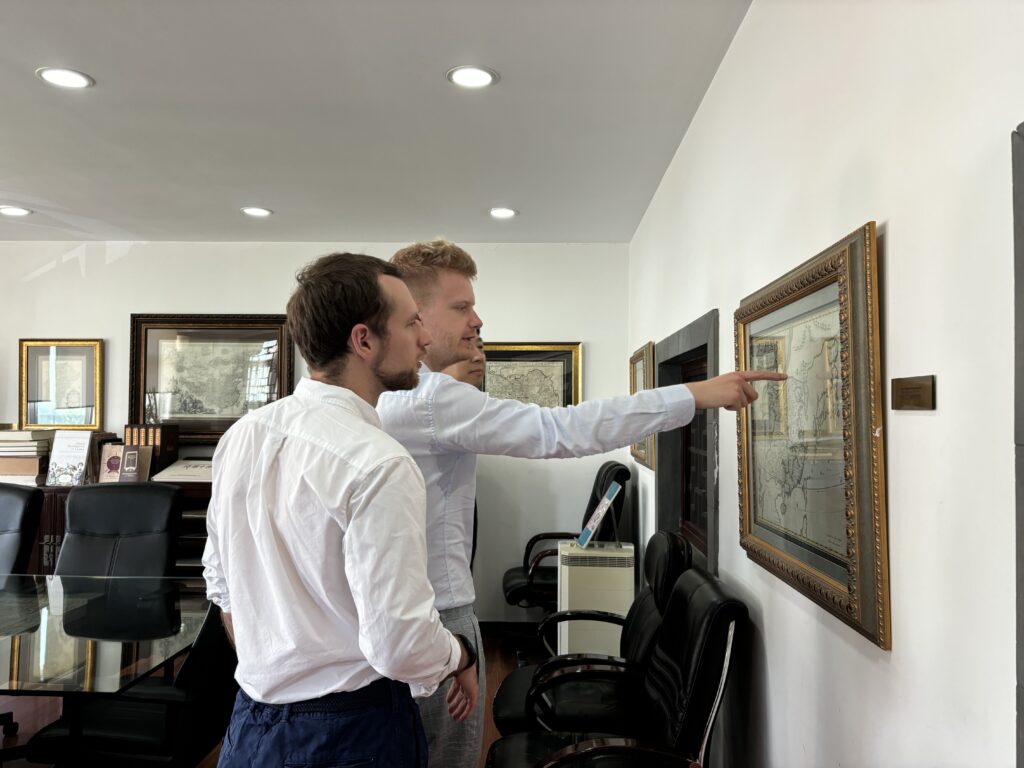
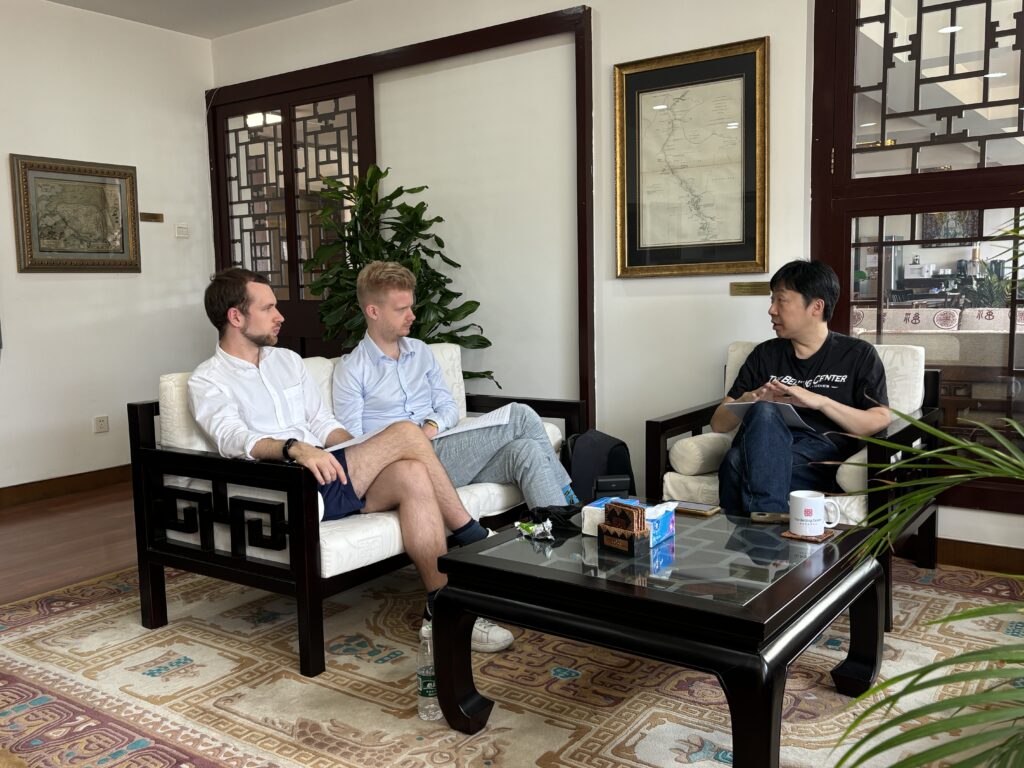
Koen Smeets and Dario Cowdery, scholars from the Yenching Academy of Peking University, lead a team of over 20 students from top universities in China, the United States, and the United Kingdom. They run a podcast that analyzes and showcases the rebuilding and current state of Sino-American relations, with a focus on preserving the oral history of academic relations between China and the United States. During their visit to TBC, they interviewed Executive Director Simon Koo to learn more about TBC’s history, responsibilities, and mission.

Q: The Beijing Center was founded in 1998. You joined as a professor and Academic Director in August 2017 and became Executive Director in 2018. Could you provide a brief overview of the center’s history before your involvement and elaborate on its role and purpose?

A: The Beijing Center for Chinese Studies was established in 1998 by Fr. Ron Anton, then Dean of Business at Loyola University Maryland. That same year, he founded TBC alongside the Beijing International MBA (BiMBA) program at Peking University. His vision was for BiMBA to act as a gateway for Chinese students to engage with the rest of the world, while TBC served as a gateway for people outside Beijing to come and learn about China.

Initially, TBC welcomed business students coming to learn about China, but as the program evolved, Fr. Anton realized it could facilitate broader cultural dialogue, including interfaith dialogue, thanks to China’s unique setting. Students from the US, Europe, and more recently, South America, have come to engage in this cultural exchange with China. That was the beginning of TBC. After the BiMBA program was absorbed by Peking University, TBC took on a more bidirectional role, becoming both an inbound and outbound program. Now, it allows Chinese students to learn about other cultures and enables others to learn about China.


Q: Since 2017, you’ve held the roles of Academic Director and Executive Director at TBC. Could you describe your responsibilities in each role and what a typical day looks like for you?

A: As Academic Director, and now also Executive Director, my primary focus is organizing academic activities such as coursework, academic excursions, and research projects. For students studying at TBC for a semester, ensuring that their courses transfer back to their home universities is key. I’m proud to say that all students have successfully transferred their credits, with no delays in graduation due to studying at TBC.

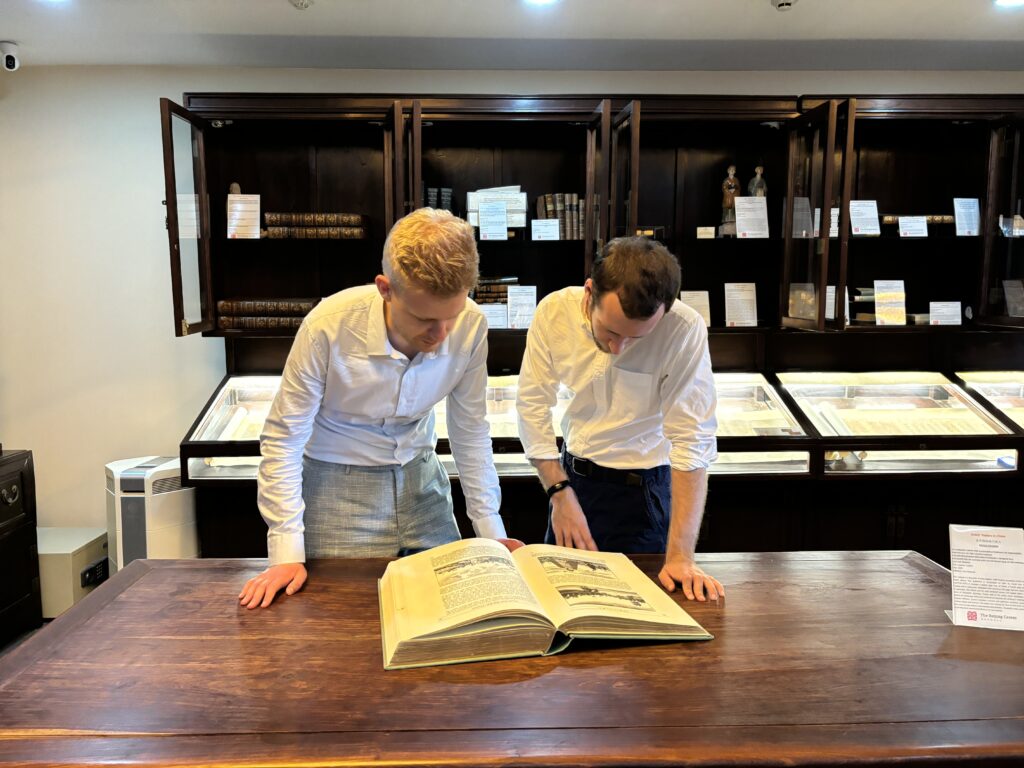
Additionally, as Academic Director, I manage research activities, academic seminars, and workshops, and coordinate scholar exchanges. Our library, with over 27,000 volumes of English-language books about China, including rare collections and maps, serves as a valuable research platform that I oversee.


Q: The Anton Library has grown from 70 books in 1998 to over 27,000 volumes related to Chinese culture and society. Could you tell us more about how this collection was established?

A: The collection was largely acquired by Fr. Anton and his team in the early days of TBC, with some donations from patrons who believed the artifacts would be better served by us. This has been a gradual process, much like how our library has grown over the years. Scholars and students often leave their books with us, contributing to the ongoing development of our collection. It’s been a continuous effort for over 25 years—Rome wasn’t built in a day, and neither was Anton Library.

 
Q: The center’s programs emphasize experiential learning through academic excursions, internships, and trips like those to Yunnan and along the Silk Road. Could you elaborate on why this hands-on approach is so important?

A: TBC is designed as a bridge between Eastern and Western cultures, promoting dialogue and understanding. Our academic excursions, a long-standing tradition, are integral to this mission. In the fall, we take students on the Silk Road journey, while in spring, we travel to Yunnan, the southwest of China.

These trips, set up by Fr. Anton, are not typical sightseeing tours. They’re academic and reflective experiences, designed to provoke deeper thinking about China’s culture and history, and to encourage students to compare it with their own cultures. Many students find these trips transformative, not just in their understanding of China but of the world.

For example, the Silk Road trip covers regions where the landscape and culture shift dramatically, especially as you approach Xinjiang. The diversity in religious practices, food, and customs leaves a lasting impression. Our Yunnan trip, on the other hand, explores China’s most ethnically diverse province, where students engage in homestays with ethnic minority groups. These excursions offer a unique, anthropological experience that goes beyond sightseeing.


Q: Given the Jesuit background of TBC, was it challenging to navigate government relations in China?

A: There’s always a need for mutual understanding. While TBC has a Jesuit foundation, we don’t engage in evangelical work or function as a religious institution. Instead, we follow the footsteps of figures like Matteo Ricci, serving as cultural ambassadors. Our mission is to foster dialogue and understanding between cultures, which aligns with the government’s emphasis on cultural exchange.


Q: For our last question, we’d like to hear from you and Rachel about your most memorable experiences at TBC that highlight the value of cross-cultural exchange.

Rachel: Recently, I spoke with an American student who told me that after two weeks in China, she realized that as an American, she didn’t feel like she had a distinct culture. She was struck by China’s deep history and its cultural artifacts, which made her reflect on her own heritage in a new way. I think that’s one of the most powerful aspects of exchange—learning about a new culture often makes you appreciate and question your own.

Simon: For me, the most impactful moments are when I witness real transformation in our students. One example that stands out is a student who was initially disengaged, just taking classes for credit. After participating in a service-learning opportunity at a blind orphanage, he underwent a profound change. He became more involved and later started a foundation for children with disabilities. Moments like these remind me why the challenges of this work are always worth it.


After the interview, both Koen and Dario expressed their gratitude for TBC’s hospitality and Simon’s insightful responses. They plan to promote TBC at the Yenching Academy, hoping to encourage more scholars to engage with TBC. Simon, in turn, appreciated their thoughtful questions, noting how deep and thought-provoking the conversation had been.

TBC continues to serve as a bridge between Eastern and Western cultures, fostering dialogue and mutual understanding. We look forward to welcoming more scholars to engage and learn with us in the future!

By Thierry Lee

More To Explore

Global Connections

Gubei: An Excursion to China’s Newest Old Water Town

Over this past weekend, some of our students enrolled at Minzu University of China took their annual Spring Outing – this year, to Gubei Water Town. Situated about a 2-hour drive northeast of Beijing, the April weather made it absolutely perfect to explore for a spring outing. It surrounds various canals and offshoots of Yuanyang lake.

Global Connections

Beijing’s Hutongs: From Snuff Bottles to Exploration with a View

If you ever want to get a taste of Old Beijing, by far one of the best ways is to visit the hutongs. They’ve conceptually been around all the way since the 1200s, and in their most modern forms exist as protected alleyways and streets surrounded by old traditional houses and neighborhoods in the heart of Beijing and are recognized in China to be an important part of cultural heritage in the city.

Global Connections

Yunnan Excursion: A Life-Changing Cultural Experience

My name is Jane Turner, and I’m a student from America- a second-year at Saint Louis University in St. Louis, Missouri. Although I’m studying in the middle of America, I come from the very south, from a state called Louisiana.

Global Connections

A Journey Inward: Culture, Identity, and Encounter in Yunnan

My name is Panatsaya, a third-year student at Xavier Learning Community (XLC) / Saengtham College, Xavier Campus, Chiang Rai (SC-XCC), and I come from the Akha ethnic community. Questions of culture, identity, and belonging have never been abstract to me—they have always been part of my daily life.