
跳到主要内容

The Beijing Center

the beijing center for chinese studies

The Four Treasures of the Study

Scholar’s Objects: Brush holder

information

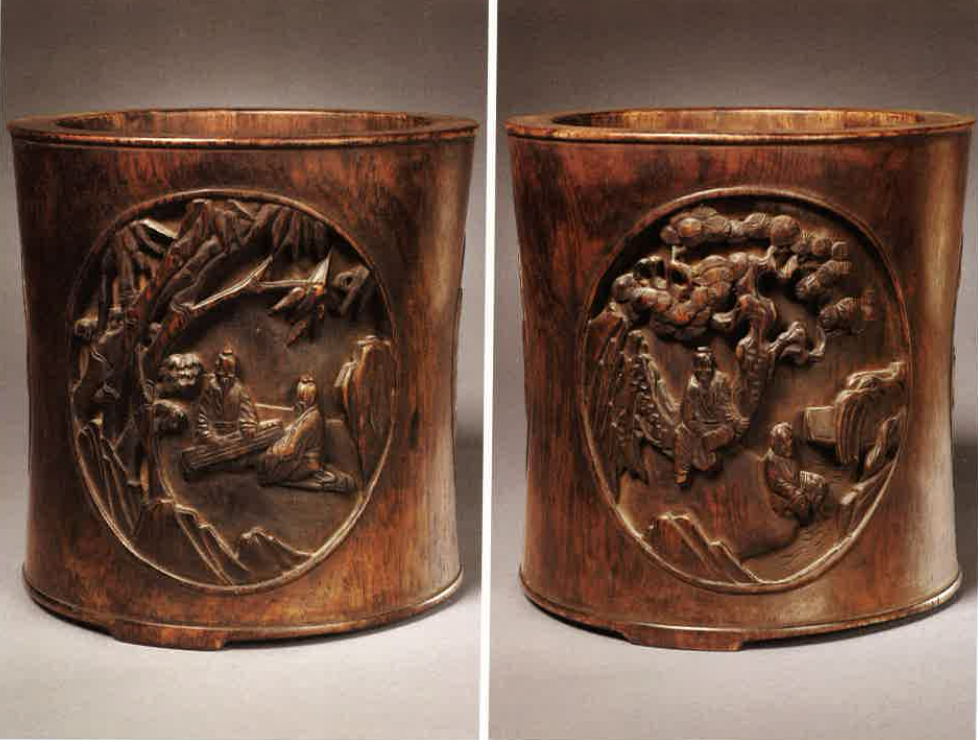
Late Qing dynasty, c. 1900
Diameter: 18.5cm Height: 18.5cm

introduction

This brush holder with a molded base and three low feet is carved in high relief with three scenes of scholars enjoying leisurely pursuits in the outdoors. The dark wood is likely meant to resemble the precious hardwood zitan. A brush pot such as this would have held brushes for writing and painting, while sitting amidst other objects on a scholar’s desk such as those seen on the following page.
Scholar's Objects

information

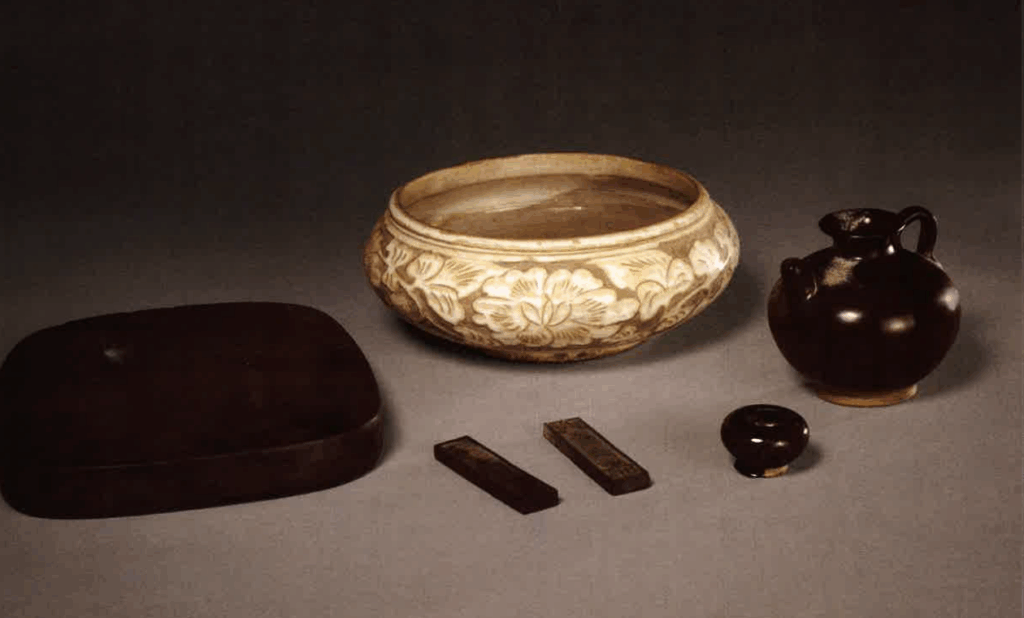
Incised brush washerDark-glazed water dropperDark-glazed brush washerInk stone and ink sticks
Qing dynasty (1644–1911)Late Qing (c. late 19th century)Date unknownLate Qing (c. late 19th century)
Diameter: 20cmHeight: 9cmHeight: 3cmHeight: 8cm
Mouth diameter: 17cmDiameter: 10cmDiameter: 4cmWidth: 10cm

introduction

This fine white washer was first incised with a low-relief pattern of leaves and flowers, and then the raised pattern was carefully glazed in a creamy white glaze. The glaze was allowed to run inside in uncorrected splashes, creating a pleasing contrast between the greyish body and the pale glaze. The tiny brush washer is covered in a thick, dark glaze which pooled at the foot on one side, likely fusing it to the kiln during firing. The simple water dropper is notable for its glaze transmutations which occurred in the kiln, resulting in unpredictable powdery-patterned splashes in tones ranging from creamy white to deep indigo. These brightly-colored patches add great aesthetic value to what is otherwise a very simple piece, perfect for use in a scholarly studio where it could be appreciated without distracting the user. The ink stones are incised with low-relief patterns of lotus leaves and blooms, and female figure. Collecting antique ink sticks was also a scholarly pursuit, but more importantly, ink and ink stone were two of the “four treasures of the scholar’s desk,” the other two being writing brush and paper.

The scholars and officials who would have used this general assortment of objects were likely studios, diligent men who served the Confucian bureaucracy of the state. They would have been well-schooled in the Confucian classics and the official commentaries, using that knowledge to pass some level of the national exams and become an official, thereby bringing honor and wealth to their families. But these officials were also cultured men with literary and artistic pursuits: the same objects used to draft correspondence were also used to paint, write poetry, and practice calligraphy. The contemplative and refined environment of the scholar’s desk was emphasized by the placement of objects such as these on the desk, which would have likely been a table with a large, flat surface ideal for painting and writing. Other scholar’s objects often seen include brush rests, small table screens with inset panels, a wide variety of brushes all stored upright, and perhaps a cylindrical scroll pot such as that seen on the preceding page.