Amphora with loop handles
information
Qing dynasty, c. mid-19th century
Diameter: 126cm Height: 87cm
introduction
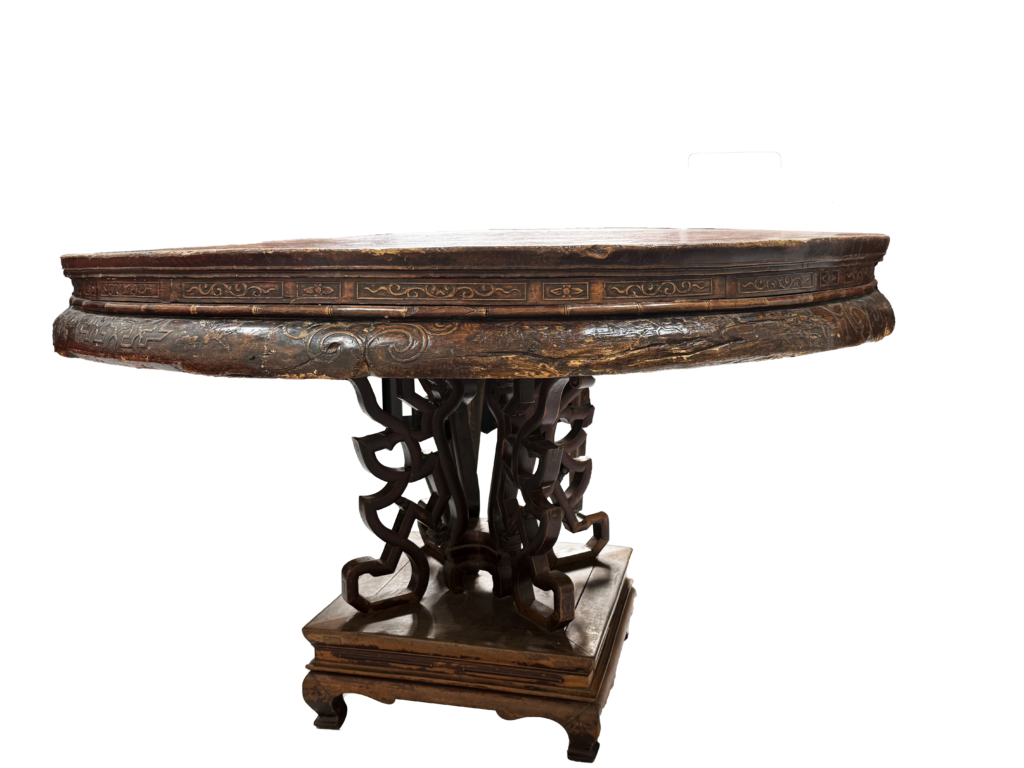
This table was created in three parts: the top round panel, the central decorative support structure, and the bottom base table. The top panel of the table is a large single piece of wood, cut vertically with the grain of the tree. The circumference of the tabletop is banded with three rows of design.
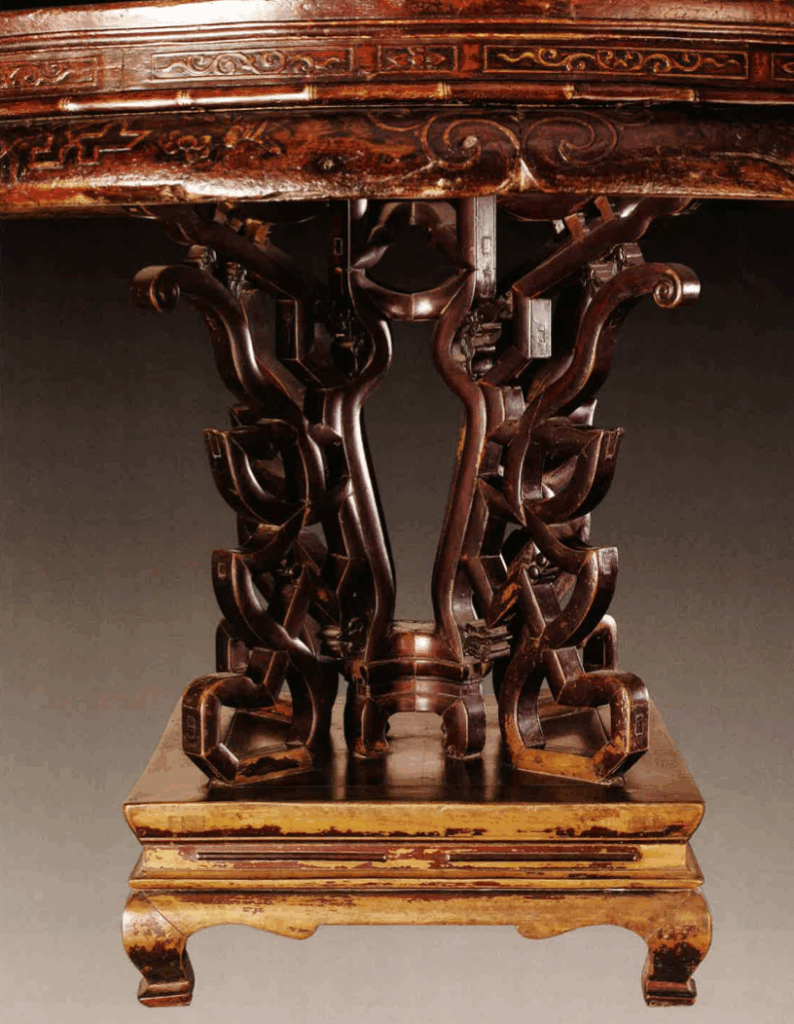
The topmost row is carved with a repeating five-segment pattern of interspersed scrolls and flowers inside rectangles. This band of design is separated from the bottom band by carving imitating the angles and joints of bamboo, running uninterrupted around the entire circumference of the table. The bottom band of design, carved onto an outward-curving apron, intersperses auspicious cloudheads and a geometric pattern of stylized florals with small carved motifs depicting flowers and foliage, as well as scenes depicting a deer under a tree and a cricket in a flowering branch. The table top is cleverly kept locked into place on its base with four small blocks of wood that fit into the transverse stretchers fitted below the top.
The central support structure is an openwork pattern of abstract pointed shapes, reminiscent of the stylized floral pattern set around the table top, and then all mortise-and-tenoned together. These pieces were formed into two flat panels with the shape of a vase in the center, and were then joined crosswise to create a square supportive perimeter. Blended into the openwork pattern are carved pieces depicting bats (symbolic of good luck and happiness) and floral motifs.
The lowermost part of the table is a classic kang table, a small, low table used on a daybed or traditional Chinese platform bed. The contrast of its square shape and utter simplicity with the elaborate, curvilinear forms of the rest of the table emphasizes the three different structures which make up the table. The kang table top is made of a floating framed panel supported by transverse stretchers underneath with exposed tenons on the four sides. The top has an ice-plate edge that leads down to the recessed waist. The waist is subtly decorated with two inset, raised, thin strips of wood on each side before flaring out again. The outward-curving apron curves into low cabriole legs which end in flattened feet. The underside of the table has good remains of the original deep reddish-brown varnish originally applied to the piece.