跳到主要内容

The Beijing Center

the beijing center for chinese studies

Bronzes

Bronze Jue

information

Late Shang to Early Western Zhou dynasty (1250–977 BCE)
Height: 20cm Mouth Diameter: 7cm

introduction

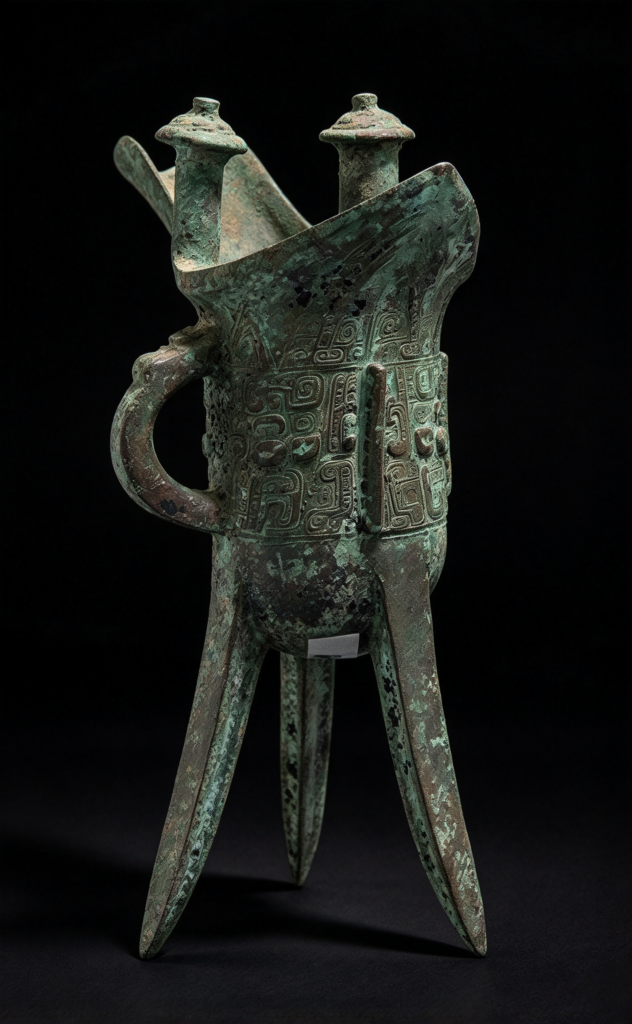
The jue is one of the most important ritual wine vessels of the Shang dynasty, and also among the earliest Chinese bronze ritual bronzes. It was used for warming and pouring wine during sacrificial ceremonies and feasts. This example follows the classic late Shang form: it has a long spout, a pointed tail, two umbrella-shaped posts on the rim, an animal-shaped handle on one side, and three outward-splaying blade legs. The body is densely decorated with taotie (animal-mask) patterns, the iconic Shang ornament with winding, imposing lines. Its surface is covered with naturally formed patina, the greenish corrosion built up over millennia, lending it an ancient, solemn presence. In Shang ritual hierarchy, possession of jue vessels signified aristocratic status.
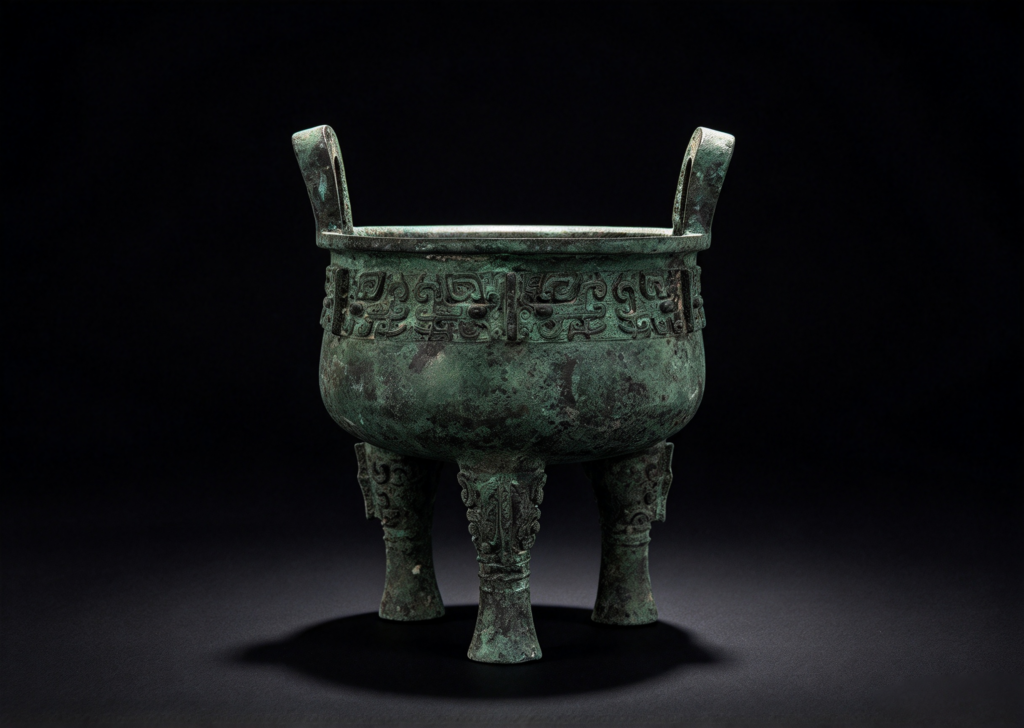
Bronze Ding (a ritual tripod cauldron)

information

Middle Western Zhou dynasty (976–878 BCE)
Height: 18cm Mouth Diameter: 14cm

introduction

Ding ranks first among bronze ritual vessels. It served as a cooker for meat and a symbol of power and status for sacrifices and feasts. This round ding has a pair of upright ears on the rim, a deep rounded belly and three mask-decorated columnar legs. A band of regular, dignified animal-mask ornament encircles the upper belly. The ding rank system was well established in Western Zhou, where the number of ding vessels indicated noble hierarchy.

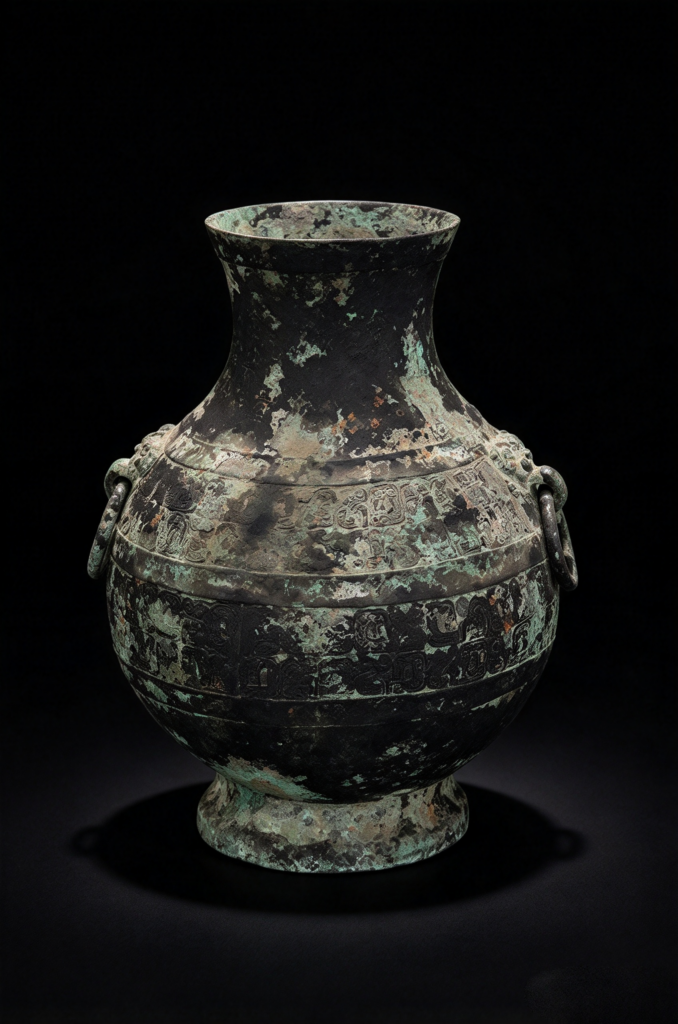
Han dynasty Bronze Zhong

information

Western Han dynasty (206 BCE–9 CE)
Height: 27cm Mouth Diameter: 10.8cm
Diameter: 21cm

introduction

Bronze Zhong was a ritual vessel for storing wine or water in pre-Qin China. This rounded hu has a flared mouth, a tapered neck, a globular belly and a ring foot. Two animal-head ring handles are symmetrically mounted on its shoulders. Horizontal bands divide the body, which is decorated with interlaced chi dragon patterns. Its surface bears mottled patina of dark base mixed with turquoise corrosion, showing a solemn antique texture. It was used to hold wine in sacrificial rites and feasts for nobles in the Warring States period, serving as an important storage vessel among bronze ritual sets.

Multi-loop handled He from the Spring and Autumn and Warring States Periods

information

The Spring and Autumn and Warring States period (770–221 BCE)
Height: 24cm Diameter: 20cm Mouth Diameter: 10.5cm

introduction

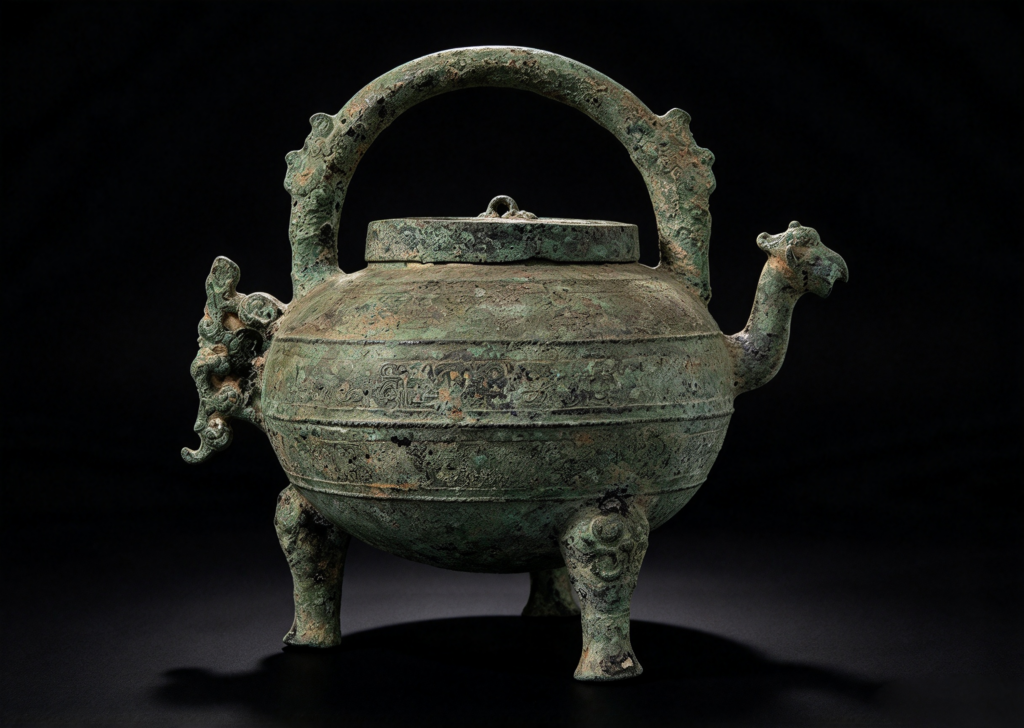
He is a ritual vessel for mixing wine with water and heating liquid. This lidded he has a globular body, an arched dragon-shaped bail handle, a phoenix-head spout, a dragon ornament on the opposite side, and three beast-hoof feet. Its surface is divided by horizontal bands and decorated with fine interlaced chi-dragon patterns. Integrating auspicious dragon and phoenix motifs, it is an elegant representative bronze ritual vessel of the Spring and Autumn period, used in noble feasts and sacrificial ceremonies.

Western Zhou long-necked bronze vase

information

Mid-Western Zhou dynasty (1046–771 BCE)
Height: 28cm Mouth Diameter: 7.9cm Diameter: 17cm

introduction

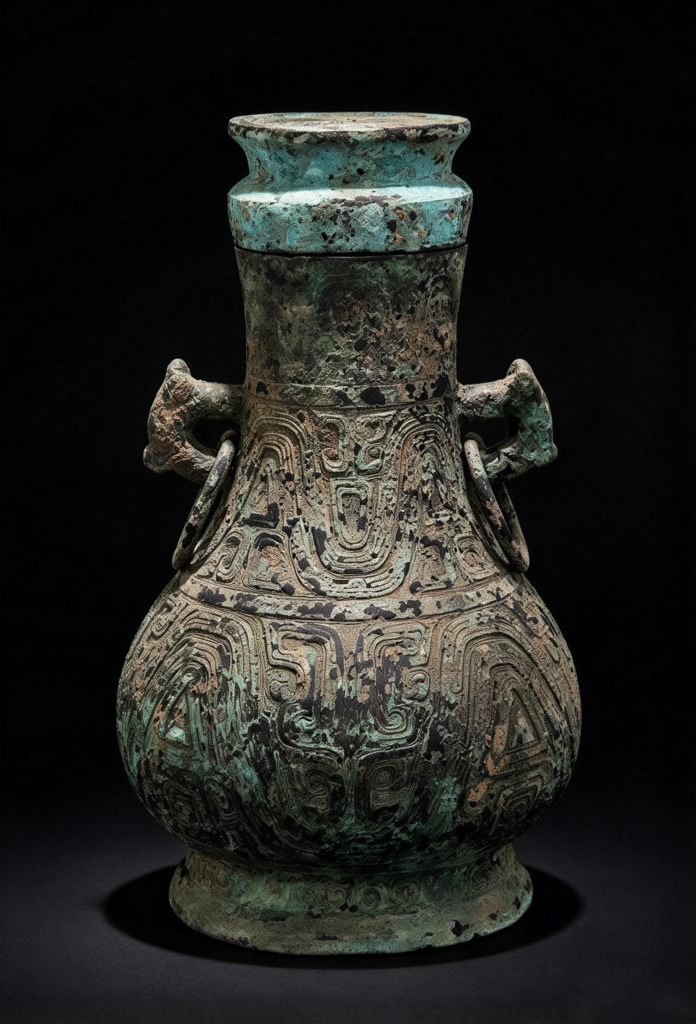
Bronze hu served as a wine-storing ritual vessel in the Western Zhou dynasty. This hu is fitted with a lid. A pair of beast-head ring handles are attached to its neck. The vessel is fully decorated with elegant, flowing hanging-scale patterns. It has a full, dignified silhouette and soft, steady contours, covered in mottled ancient patina. It is a fine example of the refined bronze wine vessels used for noble sacrifices and feasts in the Western Zhou dynasty.

Bronze Yi

information

Late Western Zhou dynasty (877–771 BCE)
Height: 12cm Diameter: 15cm Length: 24cm

introduction

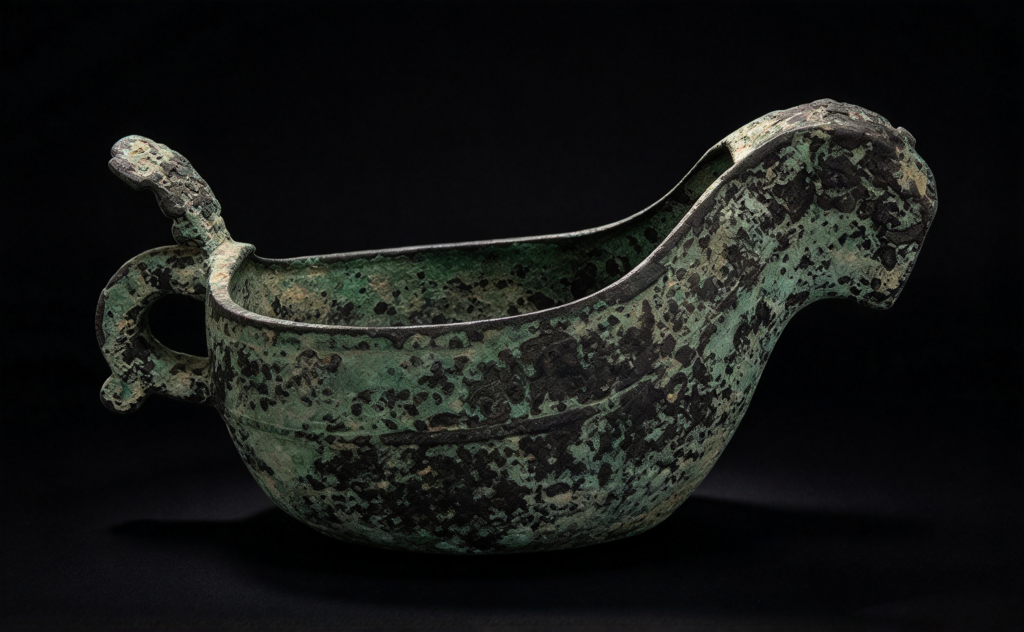
Yi is a ritual water-pouring vessel for the ancient woguan hand-washing ceremony in pre-Qin China. Shaped like a gourd ladle, it has an upward spout at the front and a coiled dragon-shaped handle at the rear. The surface bears shallow engraved ornaments and mottled verdigris patina. Before noble sacrifices and banquets, attendants poured water from the yi while a basin caught the runoff, performing the purification rite to show reverence.