The Beijing Center

The Great Wall of China: The Most Iconic Tourist Experience

Share This Post

If there’s any historical landmark related to China someone remembers learning about as a young child, odds are it’s the Great Wall of China. I have distinct memories of sitting in my third-grade social studies class, learning about this ancient marvel of engineering that was large it could be seen from space. It absolutely fascinated me at that age, especially knowing that my own ancestors hadn’t been building anything nearly as interesting or coordinated in western Europe at the time. It was a nerdy little kid’s dream to see it, or to get to hike on it, and I’m very proud to say I finally accomplished that dream for the sake of my nerdy little third-grade self.

The Great Wall, or 万里长城(长城 for short!), has been around since all the way back in the 7th century. Contrary to what I thought back in that third-grade age, it’s not actually visible from space, and it’s also a collection of smaller fortifications and walls around the historical borders (or just strategic points) of modern-day China. They were also built over very long periods of time—like I said, the earliest portions date back to the 7th century, but over 25,000 watchtowers and sections were constructed by the Ming dynasty, but by the time the Qing dynasty was in power, the Great Wall was already defunct since Qing borders were far beyond the area the sections protected. In total, it contains well over 10,000 sections, almost 30,000 individual buildings, and many more, smaller portions or defensive structures. It totals around 21,200 kilometers (13,000 miles long, for my Americans out there) depending on which sections you consider to be “part of” the Great Wall, which is pretty heavily debated. Like many of the other historical sites we visit here in China, the Great Wall is of course a UNESCO World Heritage Site but uniquely is one of the “Seven Wonders of the World” as well.

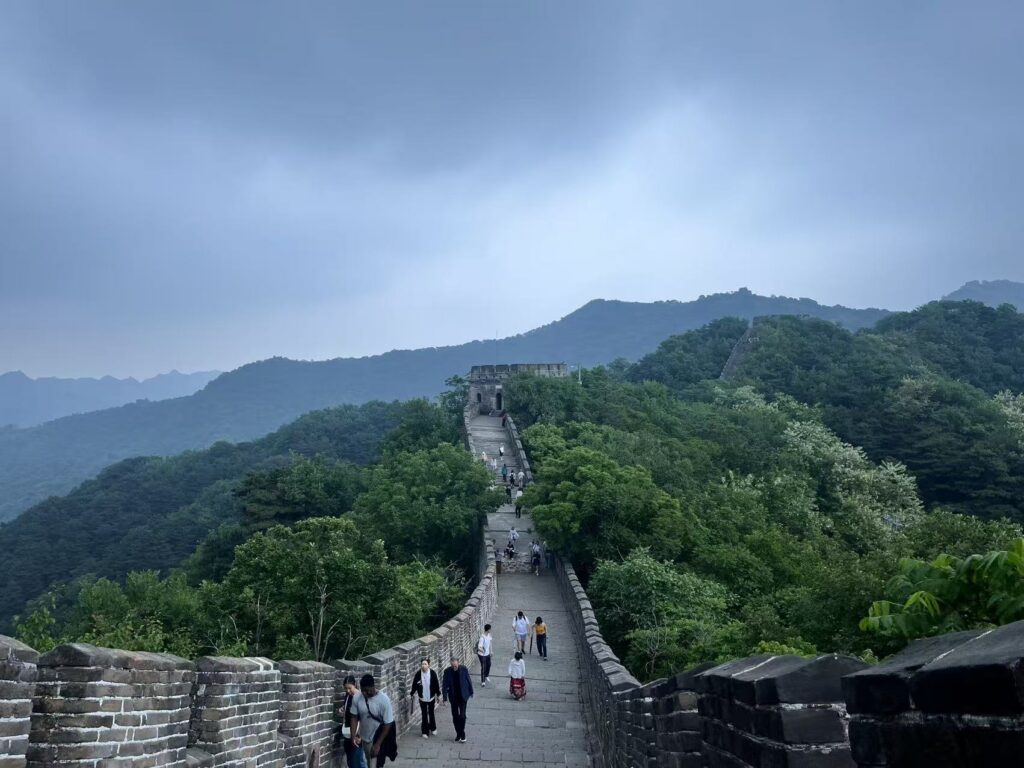
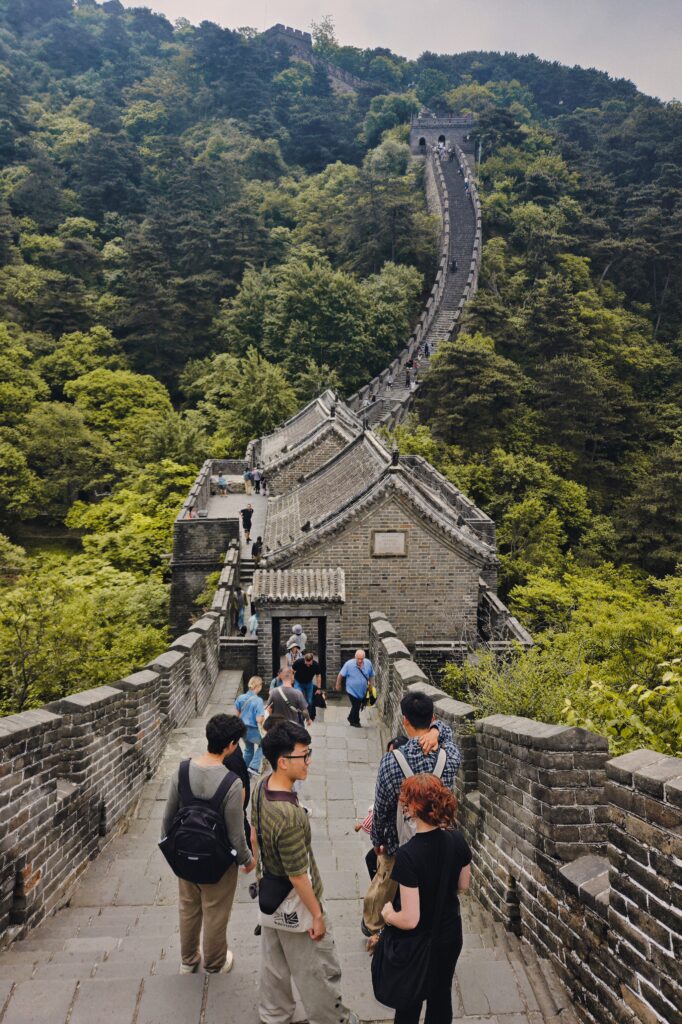
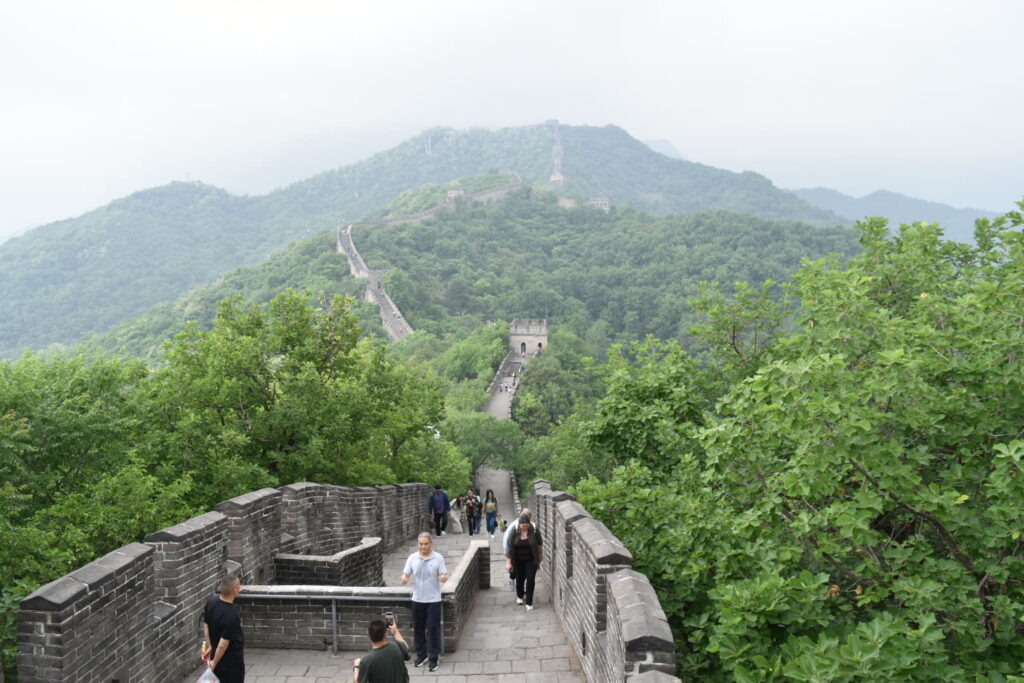
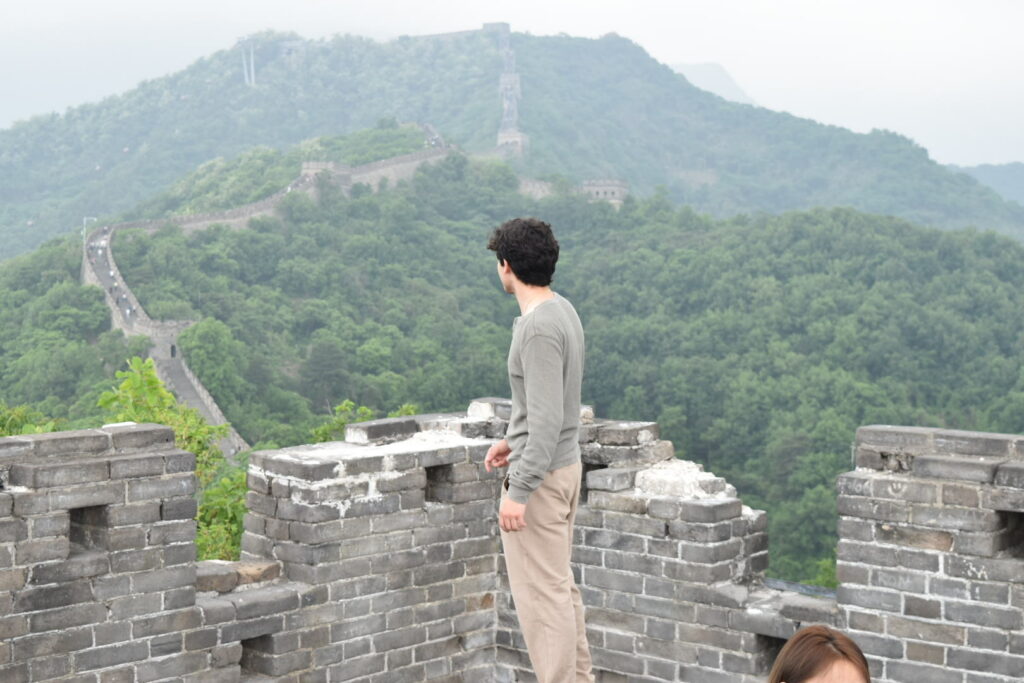
The section we visited was the Mutianyu section, about 70 kilometers (43 miles, still for you Americans) from Beijing, and is exceptionally well preserved—and therefore a tourist hotspot. It’s popular partly for its proximity to Beijing, its level of preservation/restoration, how forested the area is and its architecture. Compared to the other sections of the wall, it not only contains many more watchtowers than usual but also a few fairly unique structures we got to see, like three famous connected watchtowers in Mutianyu Pass, and structures called “merlons” built for archers to fire out of. Construction on it started all the way back in the 6th century but the modern wall section was largely completed in 1569 and restored in 1983.

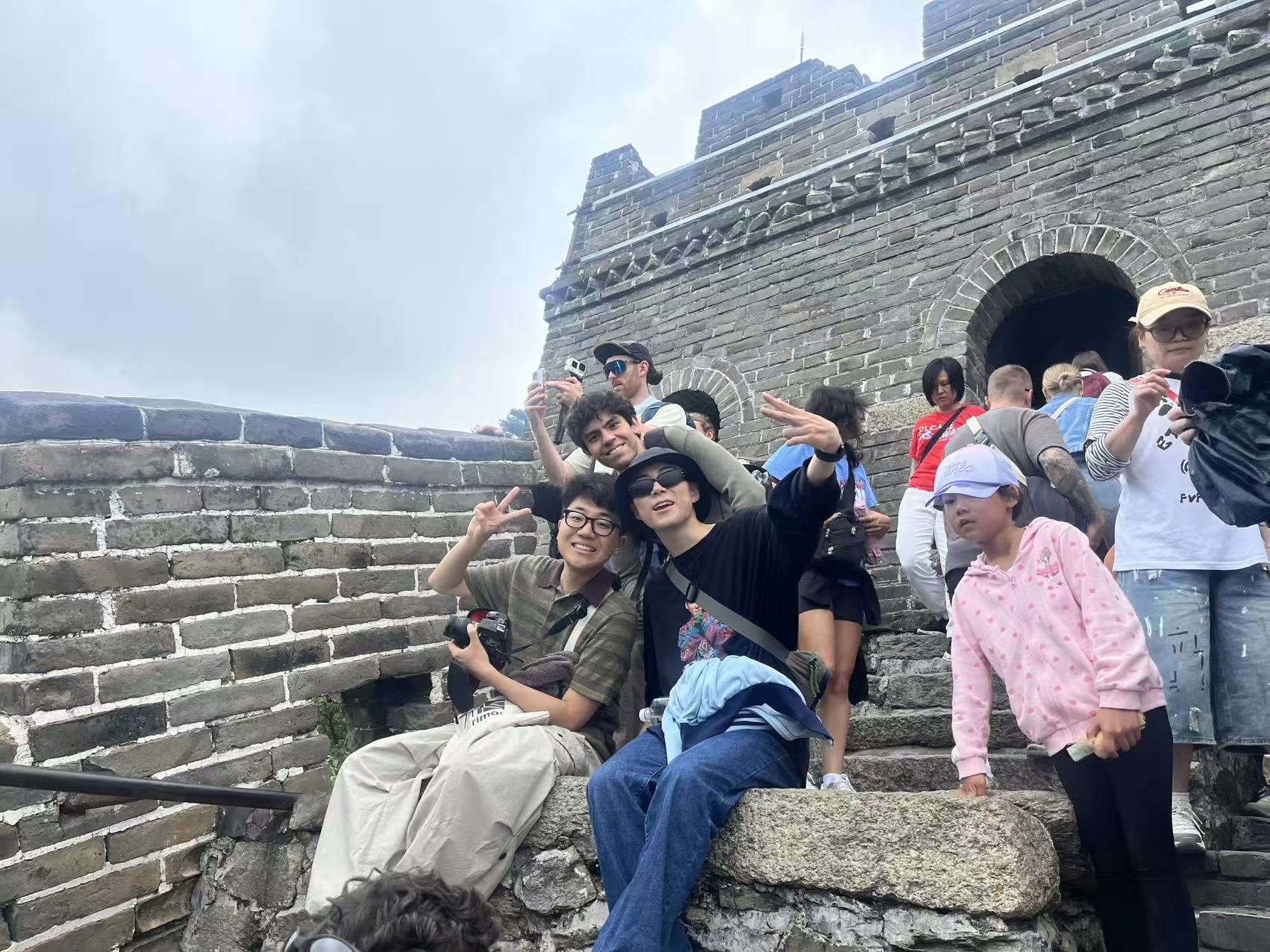
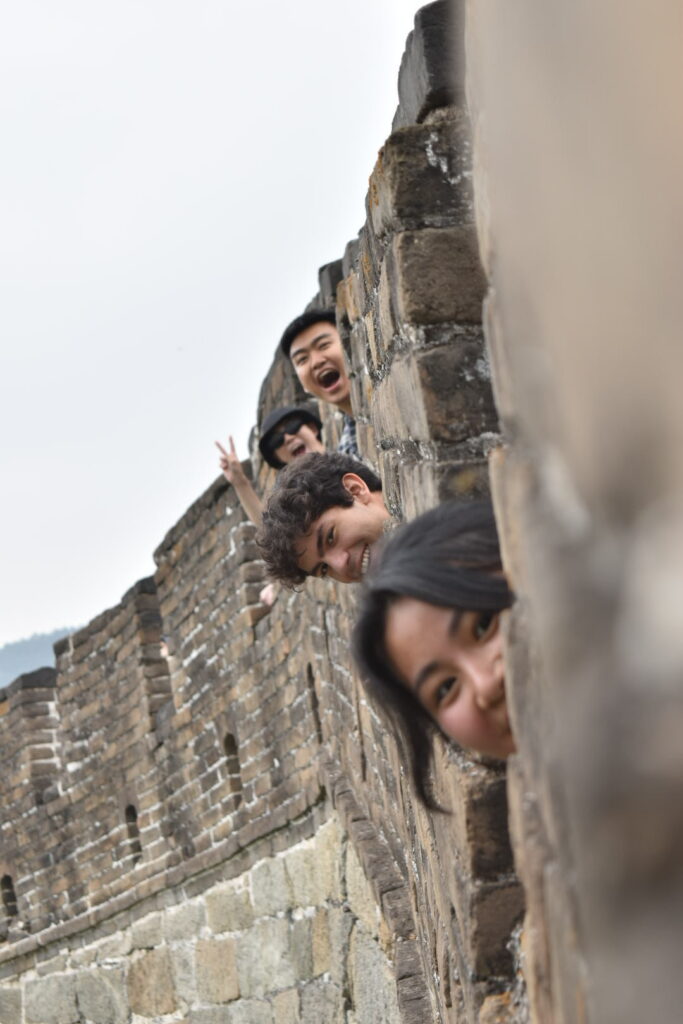
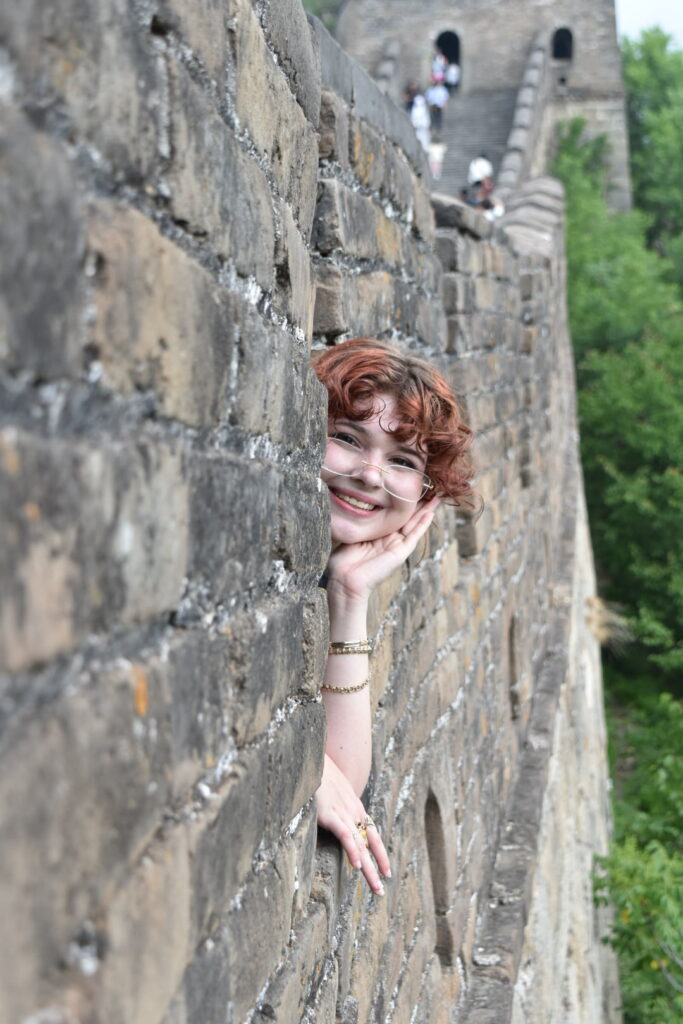
In climbing the Great Wall (or at least the Mutianyu section), you have two options to get up: cable car or hiking. The cable car has some gorgeous views of the wall, but not only is it expensive, it’s also far less rewarding than dragging yourself up the wall as I imagine many tired soldiers and officials throughout history have. It was hot, it was sweaty, I could not breathe, it felt like my legs were going to fall off, we had to take multiple breaks—but it was more than worth it. I doubt neither I nor the other TBC students and staff on this expedition would have felt nearly as accomplished as if we’d just taken the cable car. It also doubled as an amazing leg workout, since I logged well over 150 floors worth of stair climbing in the process. Seeing the wall itself coming into view was also well worth the hike. There’s very few things in life that match the thrill of your childhood expectations, but seeing the Great Wall for the first time up close, hiking up to it, putting a hand and then a foot on it for the first time: all of these felt as special as I’d imagined, and other students who hadn’t been to the wall before wholeheartedly agreed. Hiking on the wall was the same—everything we’d ever imagined, it lived up to in experience and views. It’s an amazing piece of history to stand on, but also a gorgeous one.

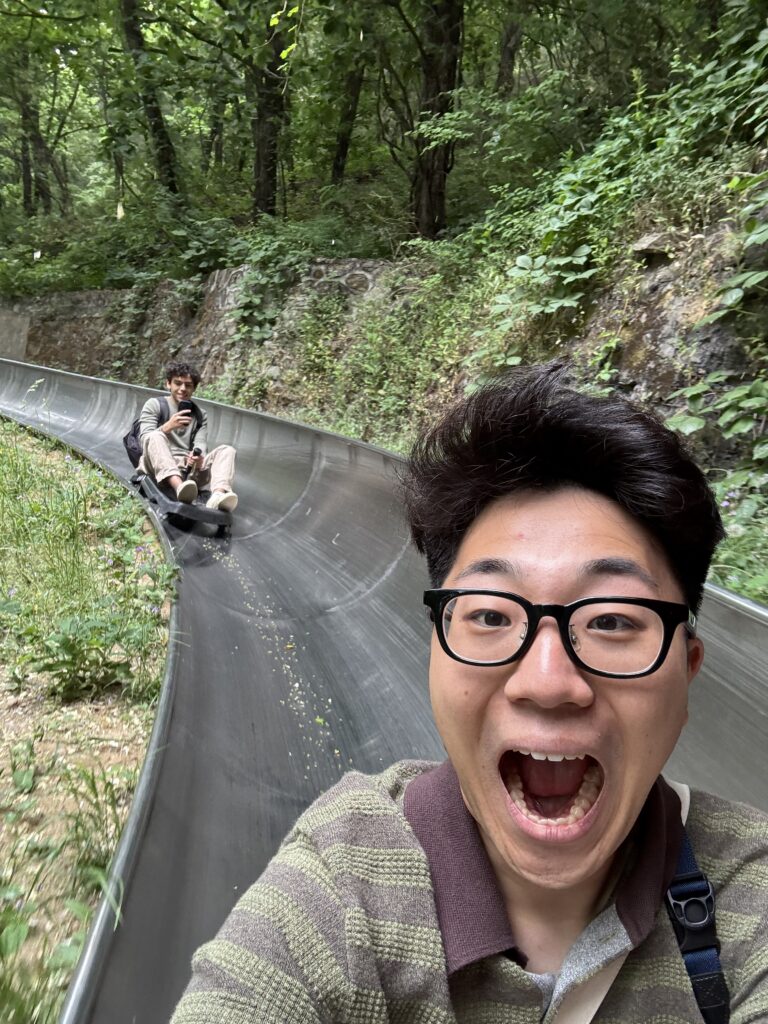
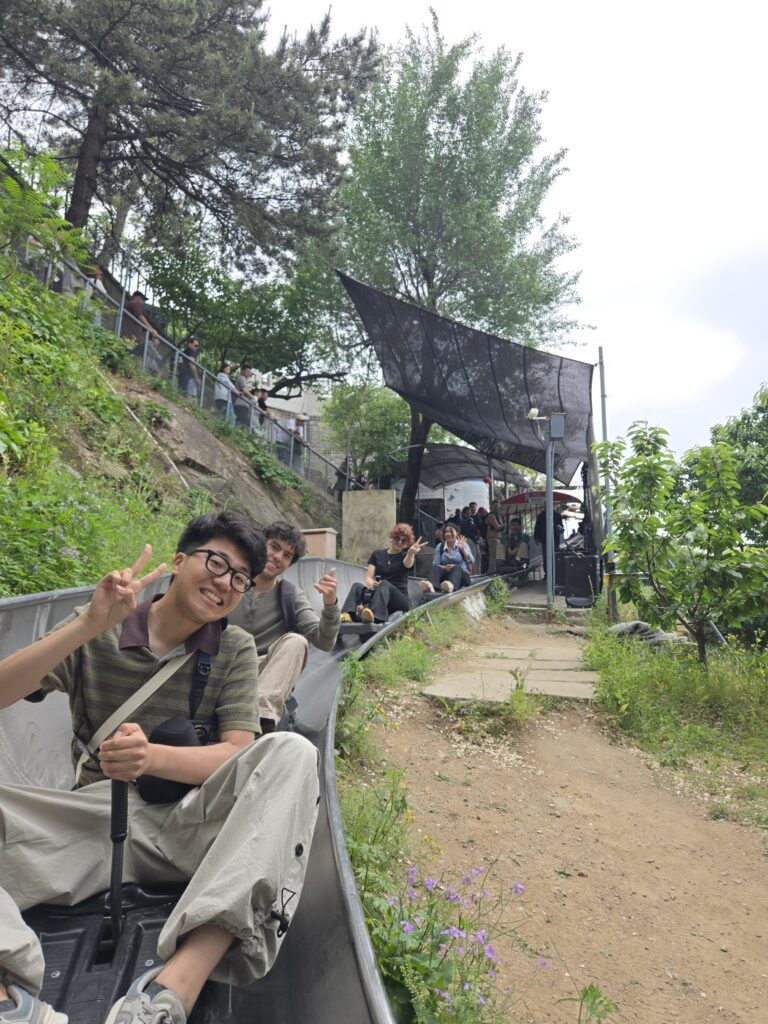
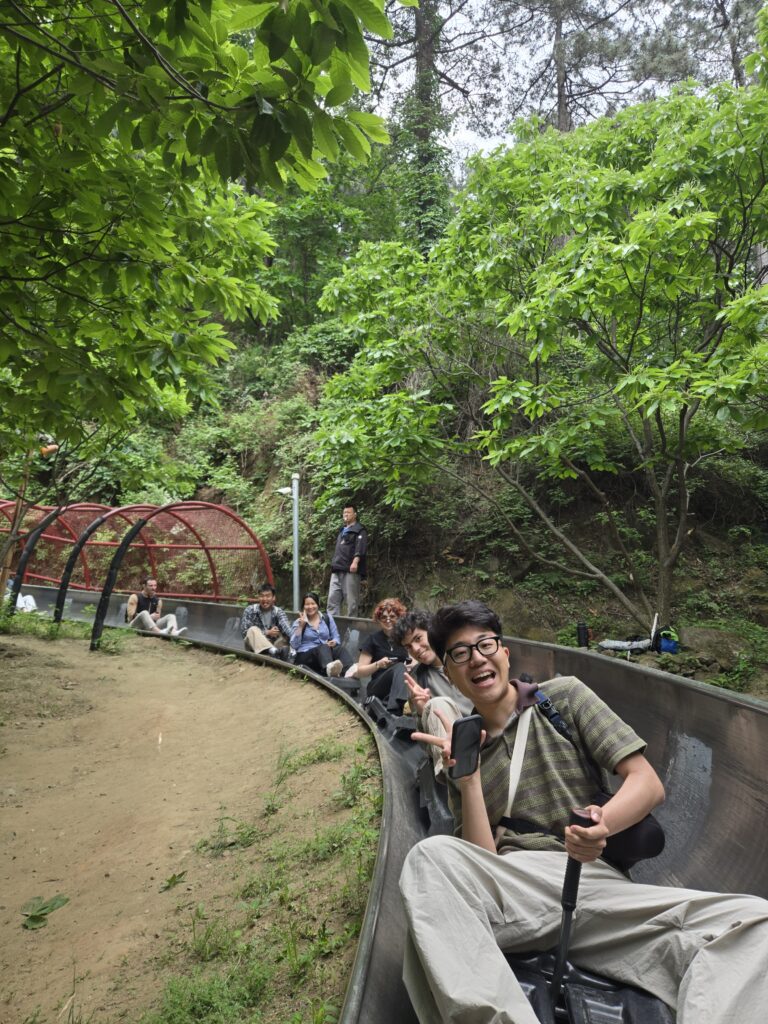
Descending the wall was just as fun and almost as anticipated as ascending it, but for different reasons. While as children many Americans learned about the Great Wall in class, as adults many of us have seen the toboggan slide videos descending from the Great Wall. The line was well over 30 minutes but similarly to the effort put into hiking up the wall, it was well worth it for the experience. You grab a sled and slide down a massive metal slide down into the forests you can see from the wall, and eventually back to the Mutianyu village; it’s exactly as fun as it sounds and looks. We polished off the trip with a properly touristy Burger King visit before heading back into Beijing, and now I feel like our China experience is truly complete. There’s an uncountable number of amazing, unique experiences to have here in China, but for many of us visiting, nothing will ever quite match the majesty and excitement of walking on the Great Wall of China.

By Jane Turner, Spring 2026

More To Explore

Global Connections

The Great Wall of China: The Most Iconic Tourist Experience

If there’s any historical landmark related to China someone remembers learning about as a young child, odds are it’s the Great Wall of China. I have distinct memories of sitting in my third-grade social studies class, learning about this ancient marvel of engineering that was large it could be seen from space.

Global Connections

Heaven in Beijing: TBC’s Visit to the Temple of Heaven

Beijing’s Temple of Heaven may be one of, if not, the most iconic tourist sites in Beijing. Constructed starting back in 1406, around the same time as the Forbidden City and the other respective temples of the Sun, Earth and Moon.

Global Connections

Cultural Exchange, Chinese University Style

Another one of the more irreplaceable experiences we have in China as students is the amount of cultural exchange we get to participate in. While The Beijing Center organizes plenty of culture-based events, from tourist activities to arts workshops, there’s something about engaging with other people our own age in cultural exchange that’s really special.

Global Connections

Gubei: An Excursion to China’s Newest Old Water Town

Over this past weekend, some of our students enrolled at Minzu University of China took their annual Spring Outing – this year, to Gubei Water Town. Situated about a 2-hour drive northeast of Beijing, the April weather made it absolutely perfect to explore for a spring outing. It surrounds various canals and offshoots of Yuanyang lake.