
the beijing center for chinese studies
TBC Press: All Publications
FEATURED PUBLICATION

Exploring Jesuit Heritage in Beijing: Traces of East-West Cultural Encounters (2026). Beijing is often seen through the lens of empire—its red walls, golden roofs, and dynastic grandeur. Yet embedded within the city’s streets, churches, observatories, and forgotten ruins lies another, lesser-known history: centuries of encounters between China and the West that quietly shaped global knowledge, culture, and belief.
Exploring Jesuit Heritage in Beijing: Traces of East-West Cultural Encounters guides readers through sixteen historically significant sites associated with Jesuit activity during the Ming and Qing dynasties. Blending historical narrative, cultural analysis, and on-the-ground urban exploration, the book reveals how missionaries, emperors, and Chinese scholars engaged one another in sustained dialogue—across languages, worldviews, and civilizations.
Readers encounter landmark locations such as the South, North, and East Churches, where Western architectural forms were reinterpreted through Chinese aesthetics; the tombs of Jesuits including Matteo Ricci, embodying a legacy of intellectual exchange; and the astronomical instruments of the Ancient Observatory, enduring symbols of cross-cultural scientific collaboration. Other sites—the ruins of the Old Summer Palace, the Confucian Temple, the Lama Temple, the National Library of China, the Zhoukoudian Peking Man Site, and the now-forgotten Chabanel Hall—trace moments of dialogue, tension, adaptation, and mutual influence.
Together, these places tell a larger story: encounters across distance and difference have long shaped the course of human civilization.
Part walking guide and part historical reflection, this book invites readers to see Beijing not only as an imperial capital, but as a global crossroads. It will appeal to readers interested in Chinese history, Jesuit studies, cross-cultural exchange, and anyone seeking to understand how China and the West have been connected through shared spaces and lived experience.
- By: Rachel Yuqing Liu (Author), Simon G. M. Koo (Author), James B. Haybyrne (Author)
- Paperback: 214 pages
- Language: English, Traditional Chinese
- ISBN-13: 978-1733789967
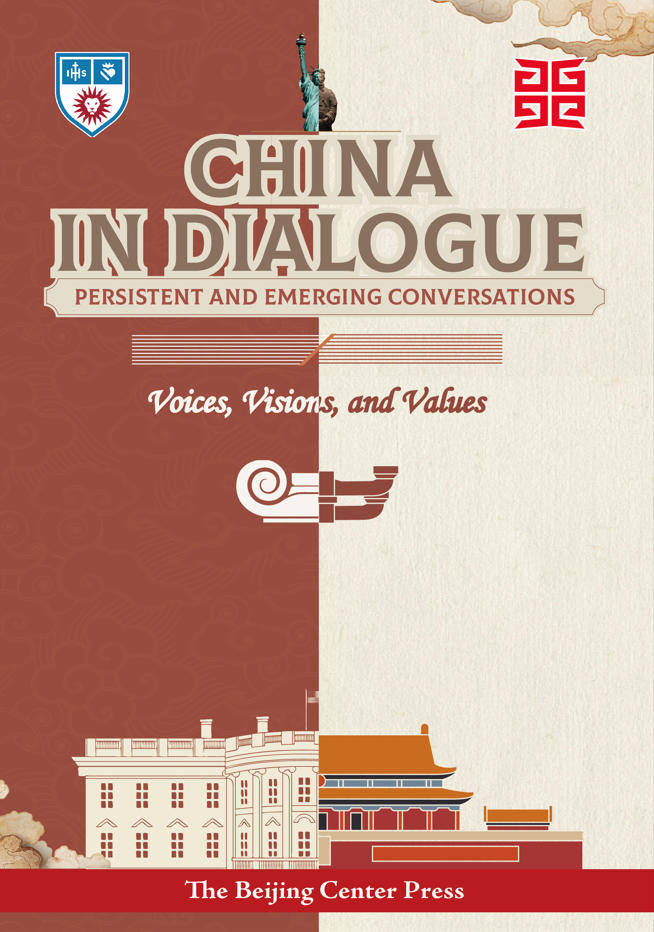
China in Dialogue: Persistent and Emerging Conversations (2026) presents the proceedings of an in-person, interdisciplinary symposium that brought together twelve scholars from the United States and China for sustained intellectual exchange in Beijing. Convened by The Beijing Center (TBC) in partnership with Loyola Marymount University (LMU), the symposium reflects a shared commitment to intercultural dialogue grounded in the Jesuit tradition of education, scholarship, and engagement with the world.
Rooted in a Jesuit understanding of dialogue as a disciplined practice rather than a mere exchange of views, this volume approaches East-West engagement as an ongoing process of encounter, discernment, and mutual learning. The Jesuit intellectual tradition—marked by attentiveness to context, respect for cultural difference, and the pursuit of knowledge in service of the common good—provides the conceptual and ethical framework for the conversations represented here. Dialogue, in this sense, is not aimed at consensus or simplification, but at deeper understanding shaped by history, lived experience, and intellectual humility.
The symposium was intentionally designed as more than a conventional academic conference. By convening scholars in Beijing, the program emphasized presence and place as essential dimensions of intercultural understanding. Participants engaged one another through sustained discussion across disciplinary, cultural, and institutional boundaries, embodying a model of scholarship that privileges encounter over abstraction. This approach reflects The Beijing Center’s long-standing mission to serve as a bridge between China and the global academic community, and Loyola Marymount University’s commitment to global education informed by Jesuit values.
The essays collected in this volume span a wide range of fields, including geopolitics and energy systems, artificial intelligence and technology ethics, medicine and health humanities, philosophy, language and translation, education, and cultural history. While diverse in subject matter and methodology, the contributions are united by a shared concern with how ideas, values, and practices travel across cultures, and how historical and contemporary encounters between China and the West continue to shape global realities.
In a time of heightened geopolitical tension and cultural misunderstanding, China in Dialogue: Persistent and Emerging Conversations offers a model of academic collaboration rooted in trust, presence, and sustained dialogue. It stands as a testament to the enduring relevance of Jesuit educational ideals and to the possibilities that emerge when institutions commit themselves to learning across difference.
Available now on Amazon.com here.
- By: Simon G. M. Koo (Editor), Yu Li (Editor), Katherine Liu (Editor)
- Paperback: 172 pages
- Language: English
- ISBN-13: 978-1733789929
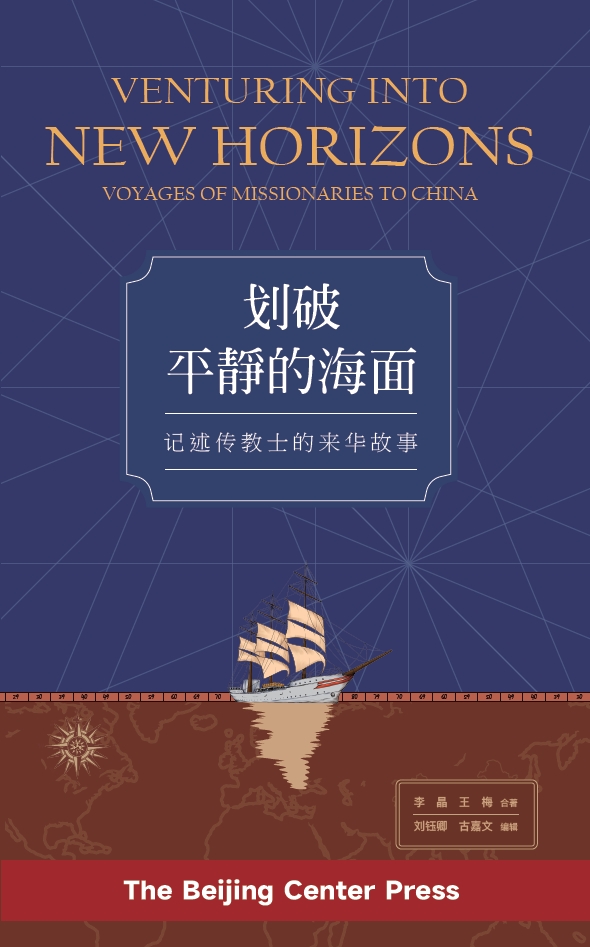
Venturing into New Horizons: Voyages of Missionaries to China (2024). This book explores the transformative role of key Jesuit missionaries—Michele Ruggieri, Matteo Ricci, Johann Adam Schall von Bell, and Ferdinand Verbiest—during the late Ming and early Qing periods in China. These cultural ambassadors not only introduced Christianity but also acted as mediators, fostering a rich exchange of knowledge between East and West. Through their efforts, they initiated a dialogue that went beyond religion, bringing Western advancements in science, astronomy, mathematics, and philosophy to China, while simultaneously learning and sharing Chinese culture, language, and thought with the West.
The missionaries also played a significant role in laying the foundations for modern institutions in China, particularly in the realms of healthcare and higher education. Their establishment of hospitals and universities helped modernize China by introducing new scientific and educational practices, contributing to the country’s long-term development and cross-cultural integration. Their efforts had a lasting impact on both China’s modernization and global intellectual exchange.
- By: Jing Li, Mei Wang, Rachel Yuqing Liu (Editor), Simon G. M. Koo (Editor)
- Paperback: 108 pages
- Language: Simplified Chinese (printed) and Traditional Chinese (Kindle)
- ISBN-13: 978-1733789943

To Define Sea Change and Explore Strategy (2020), by author Yinhong Shi, comprises eighteen articles and essays. Written in Chinese, this collection demands a lingual dexterity from its readers to delve into the assessment of China in terms of its politics, economy, society, ideology, and culture, and foreign affairs. This collection discusses the strategies China should consider and undertake – in an ever-changing world – that would significantly impact its global role in the future. Furthermore, this collection’s insight focuses on the national priorities of China and how the country’s strategic thinking can contribute to its domestic and international presence and power.
Available now on Barnes & Noble here.
- By: Yinhong Shi; edited by Simon G. M. Koo and Jialan Xiong
- Paperback: 272 pages
- Language: Simplified Chinese
- ISBN-13: 978-1733789912

Matteo Ricci: Letters from China (2019), new and expanded in English translation, presents a selection of Ricci’s letters and original essays by leading experts who examine the significance of Ricci’s thought for our time. The letters of Matteo Ricci (1552-1610) provide insight into the thinking and experience of this highly regarded Jesuit scholar and missionary. Reading Ricci one marvels how his deep understanding and experience of China can still speak to us today. Ricci’s letters enrich our knowledge about China, cross-cultural dialogue, friendship, and can serve as a guide in meeting the opportunities and challenges of East and West relations today.
Available now on Amazon.com here.
- Edited by: Brendan Gottschall, S.J., Francis T. Hannafey, S.J., Simon G. M. Koo, and Gianni Criveller.
- Paperback: 172 pages
- Language: English
- ISBN-10: 1733789901
- ISBN-13: 978-1733789905