The Beijing Center

THE BEIJING CENTER RECEIVES BOOK AND ARTIFACT DONATION

Share This Post

The Beijing Center (TBC) has recently been honored with a donation of Sinology books and Han Dynasty artifacts from Mr. Mok. TBC spoke with him to learn a little more about him and his motivations for this generous donation. 

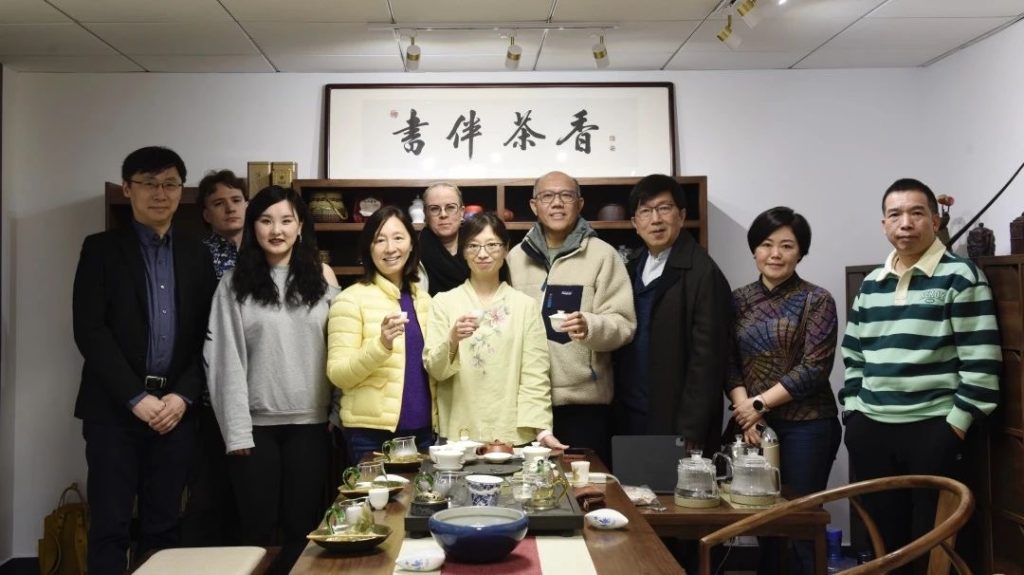
(Mr. Mok at TBC’s tea culture and etiquette class, third from right)

Mr. Mok was born in Hong Kong, graduated from a Jesuit high school in Hong Kong, and later studied at the Massachusetts Institute of Technology. Over the years, he has lived and worked in Boston, New York, Beijing, Singapore, Seoul, Sydney, and other cities. He shares a special connection with TBC, as TBC’s Executive Director, Simon Koo, graduated from the same high school as Mr. Mok. The Bishop of Hong Kong, Fr. Stephen Chow SJ, is also an alumnus.

Mr. Mok had heard about TBC a long time ago, but only recently visited for the first time to participate in TBC’s tea etiquette event. At the event, all participants were given a tour of TBC. He was impressed with TBC’s books and collections, so he decided to make a donation to support TBC’s growth. 

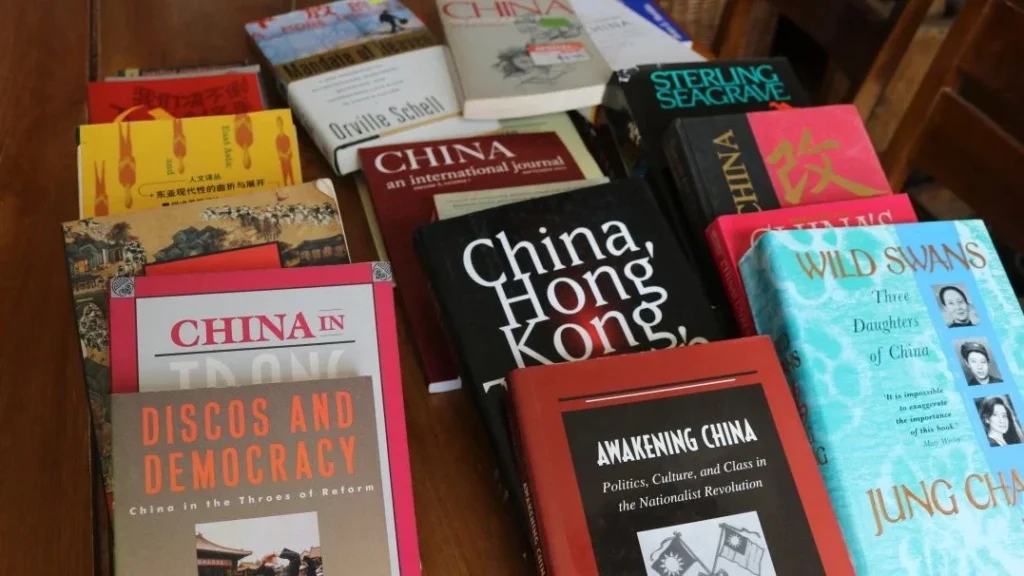
In total, Mr. Mok donated 28 English-language Sinology books, including notable works such as God’s Chinese Son by Jonathan D. Spence and The United States and China (Fourth edition) by John King Fairbank. Mr. Mok has kept these books for years. Some of them were bought in the U.S. in the 1980s, and some were sent from Singapore. As TBC has one of the largest library of English-language Sinology books in mainland China, Mr. Mok believes that donating these books will make them more useful and let more people benefit from them. 

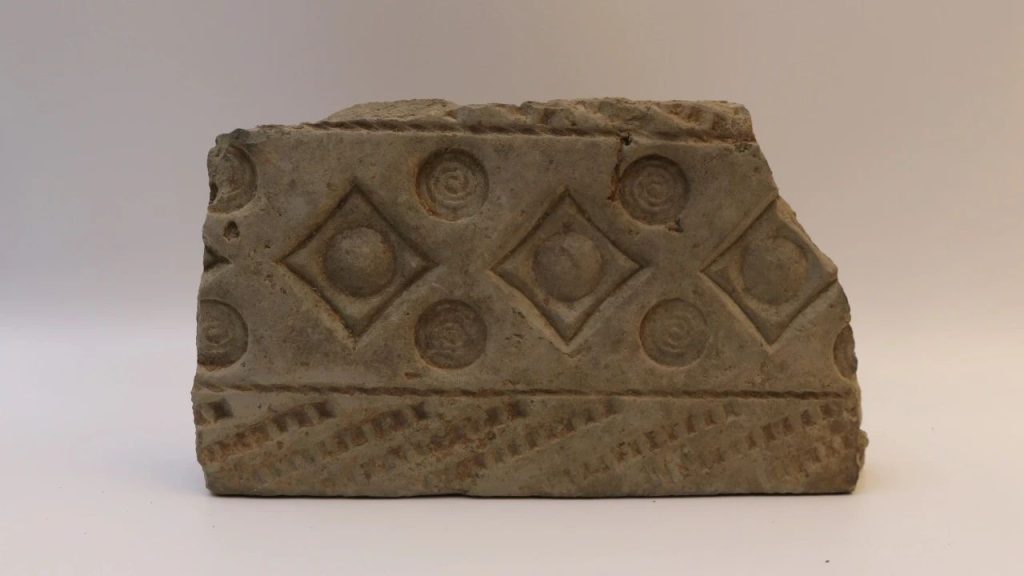
In addition to the books, Mr. Mok also donated four Han Dynasty tiles to TBC. Mr. Mok bought these tiles in an antique market in Zhongshan, Guangdong and these tiles are said to have come from Pingdingshan, Henan. It is worth noting that Pingdingshan, located approximately 150 kilometers from Nanyang, is home to the Nanyang Stone-Carved Art Museum in Han Dynasty, China’s oldest and largest museum of its kind with the largest collection. The tiles donated by Mr. Mok represent Han Dynasty culture and have unique historical value. They join other treasures at TBC in illustrating the past and illuminating the future. 

Mr. Mok said that he was impressed that TBC started to build a bridge between Chinese and Western cultures 25 years ago, which was way ahead of its time and played an important role for the Western world to know about China. He believes that in the current geopolitical climate, it has become even more important for others to learn about China. Mr. Mok looks forward to more students studying at TBC and making a greater impact in cultural exchange. 

As someone who studied abroad before, Mr. Mok shared his advice for students today. TBC not only teaches international students who want to learn about China, but also Chinese students who seek to study abroad. He acknowledges that although it has been a continuous trend for Chinese students studying overseas, he believes parents should not send children abroad too early. Mr. Mok completed his high school education in Hong Kong before studying in the U.S., and he is certain that this benefited him adapting to the life abroad. He also encourages Chinese students to go to schools with fewer Chinese students, so that they can interact and communicate more with local students for an in-depth learning experience. 

Mr. Mok’s donation not only enriches TBC’s collections, but also provides a valuable resource for TBC students. If you are interested in Mr. Mok’s donation, please feel free to visit the TBC library. We look forward to your visit.  

More To Explore

Global Connections

Gubei: An Excursion to China’s Newest Old Water Town

Over this past weekend, some of our students enrolled at Minzu University of China took their annual Spring Outing – this year, to Gubei Water Town. Situated about a 2-hour drive northeast of Beijing, the April weather made it absolutely perfect to explore for a spring outing. It surrounds various canals and offshoots of Yuanyang lake.

Global Connections

Beijing’s Hutongs: From Snuff Bottles to Exploration with a View

If you ever want to get a taste of Old Beijing, by far one of the best ways is to visit the hutongs. They’ve conceptually been around all the way since the 1200s, and in their most modern forms exist as protected alleyways and streets surrounded by old traditional houses and neighborhoods in the heart of Beijing and are recognized in China to be an important part of cultural heritage in the city.