The Beijing Center

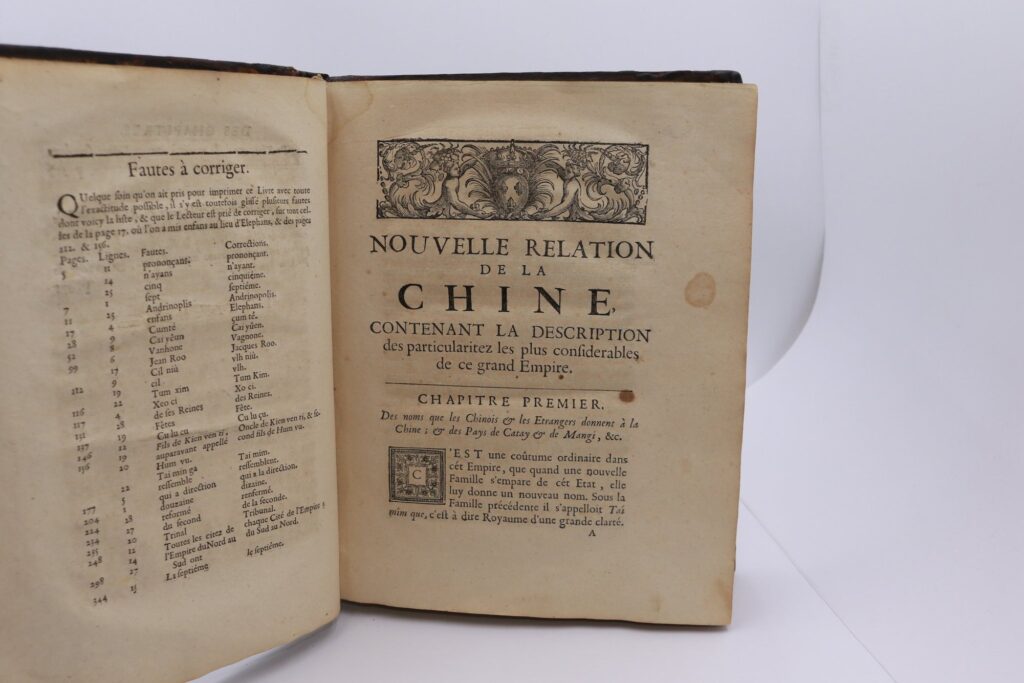
Library Tour: Nouvelle Relation de la Chine

Share This Post

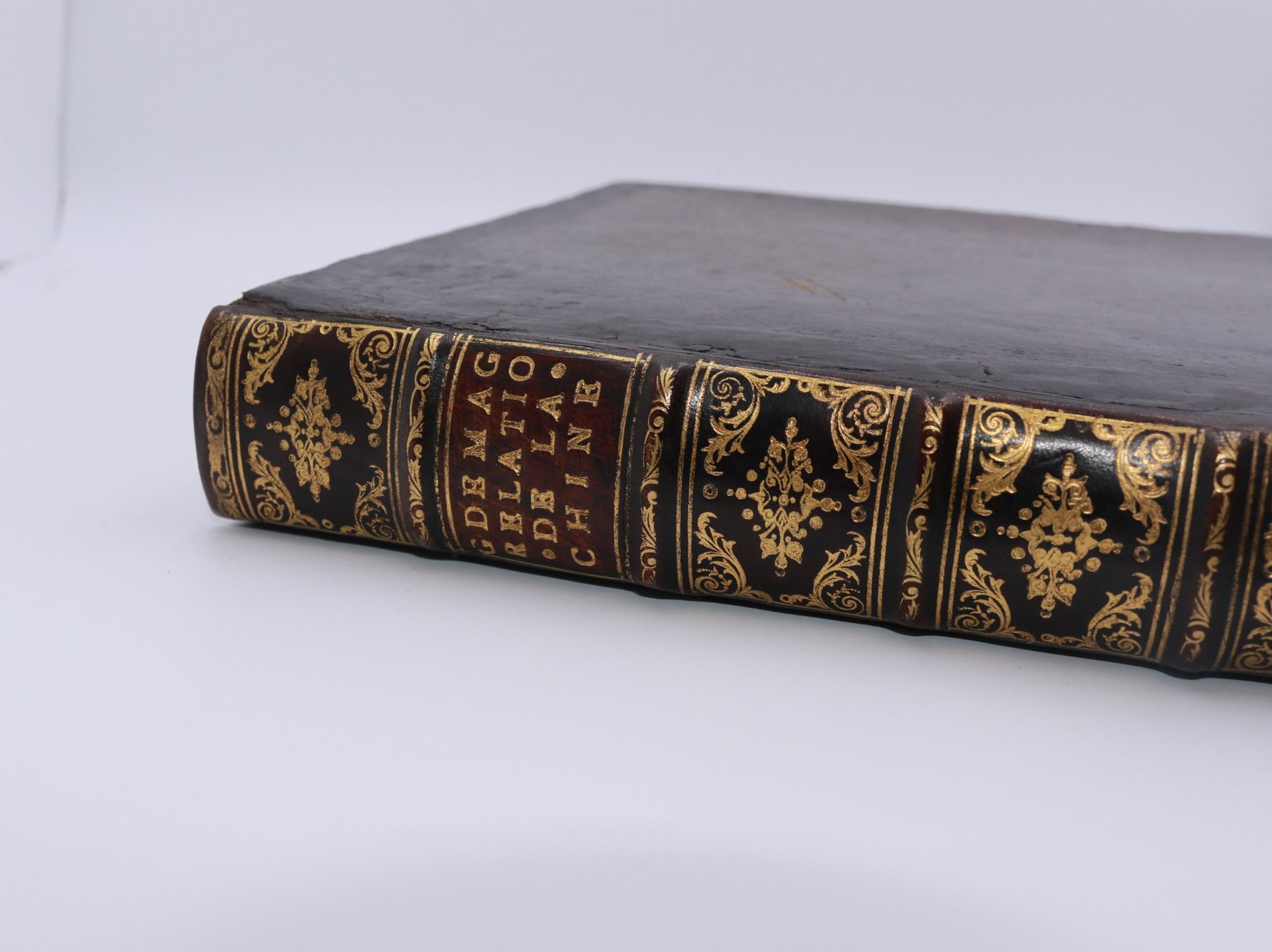
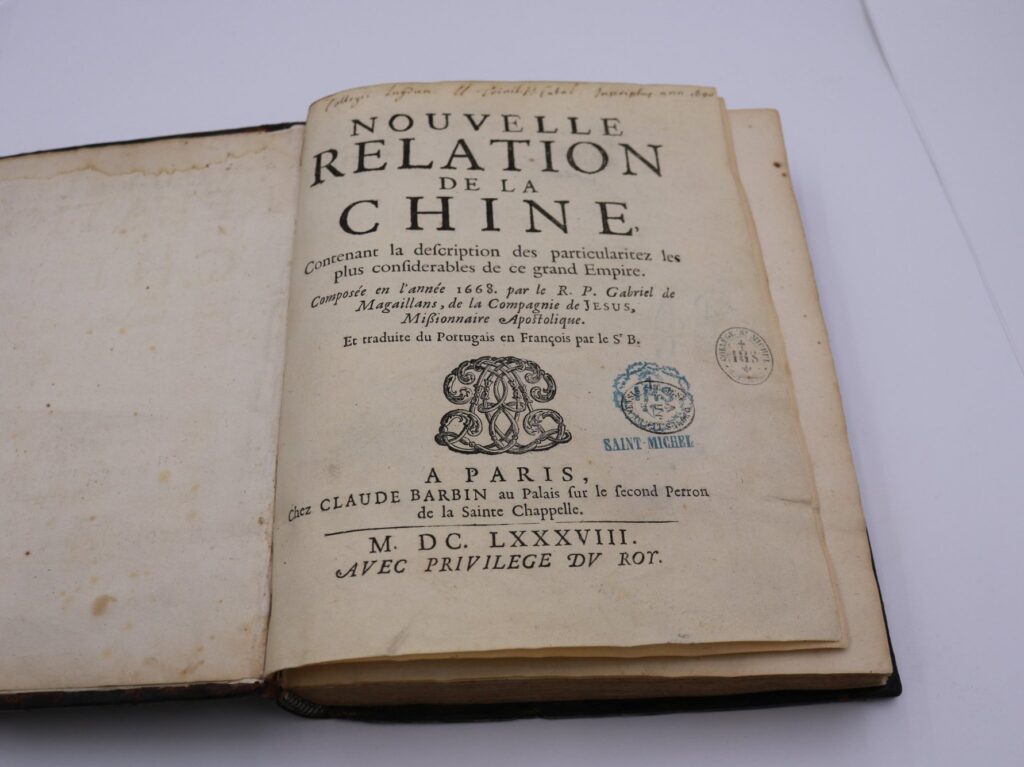
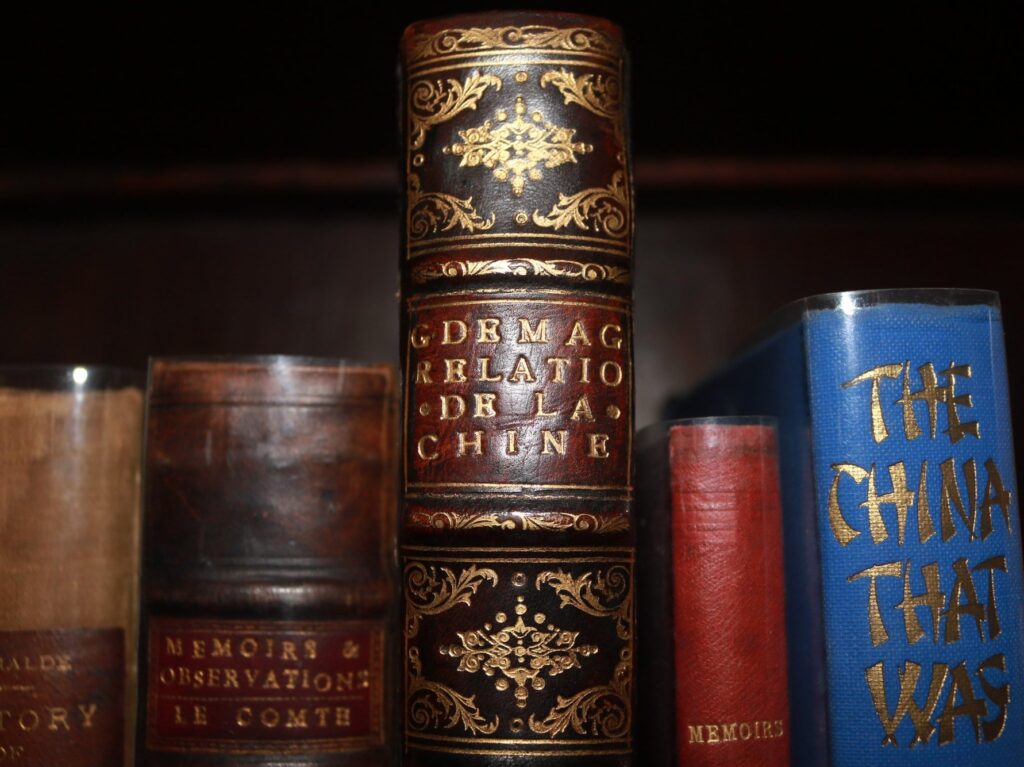
Nouvelle Relation de la Chine, contenant la description des particularités les plus considerables de ce grand empire

Imagine traveling across continents in the 1600s to reach China—a world almost entirely unknown to Europeans at the time. That is exactly the experience of Magalhães, a Portuguese Jesuit missionary who spent over 20 years in China. This historical account was published in 1667 and is a vivid exploration of China through his eyes.

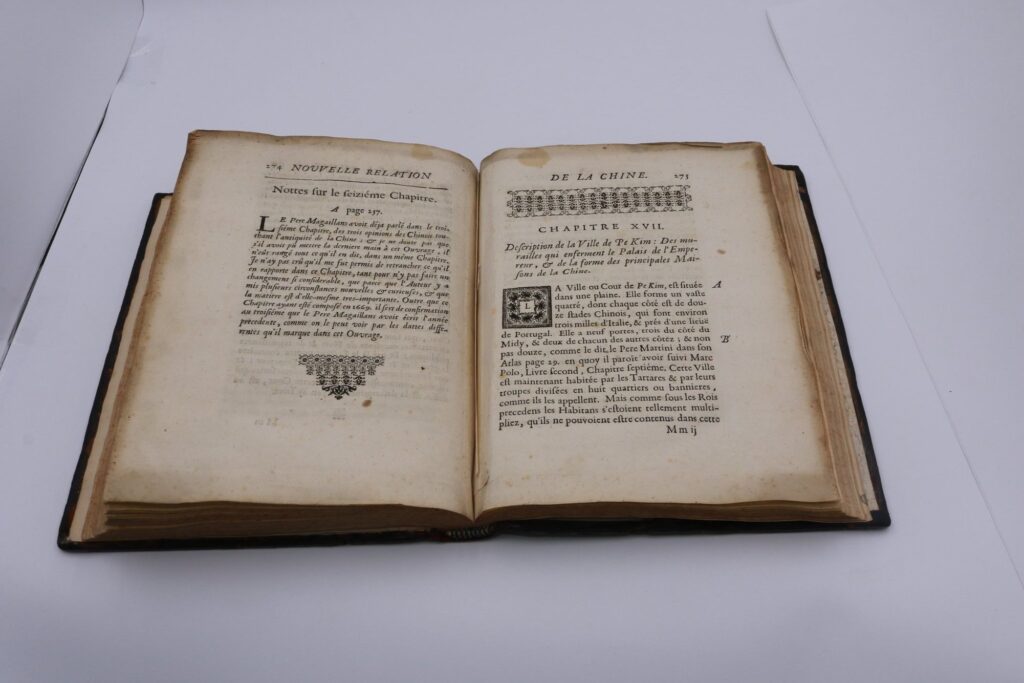
In Nouvelle Relation de la Chine, Gabriel de Magalhães transports readers to 17th-century China with detailed observations of its customs, government, and spiritual beliefs. Unlike typical accounts of the time, Magalhães portrayal of China tends to be more reflective and critical. He doesn’t just chronicle the landmarks, but he also talks about the customs, spiritual practices, and social systems that defined Chinese society at the time. He describes the imperial palaces with their intricate architecture, Confucian values, and the religious diversity of the land, all of which deeply fascinated Europeans seeking knowledge beyond their borders.

He describes how Chinese culture is shown in their maps, where China takes a central, expansive role, symbolizing their belief in their importance in the world, while other nations are considered secondary. Magalhães also shares how the Chinese view their traditions, philosophies, and systems as unmatched, showing a deep connection to their heritage. According to Magalhães, their pride comes from centuries of stability and innovation, building a strong confidence that exists in all levels of society.

For example, scholars at the time often assumed that true knowledge could only come from within their empire, highlighting their respect for their intellectual traditions. Even during moments of cultural exchange, like interactions with European missionaries, they expressed amazement at the thought that anything outside their empire could hold comparable value. While this perspective can seem narrow-minded, it is also a testament to their enduring cultural integrity and self-reliance. Magalhães also noticed how Chinese storytelling traditions reflect this pride.

One of the book’s most unique features is Magalhães’ perspective. As a missionary, he held firm religious beliefs but remained open to understanding Confucianism, Buddhism, and Taoism on their terms. Throughout the book is easy to spot Magalhães’ struggles with both admiration and critical analysis, revealing how early European travelers tried to interpret cultures so different from their own. Despite this criticism, Magalhães combines his observations with an understanding of human nature and China’s unique position. He acknowledges that cultural pride is common but argues that China’s vastness and advancements amplify its sense of greatness. His commentary also sheds light on challenges faced by missionaries, who had to navigate these cultural differences while spreading Christian teachings. He painted a nuanced picture of early cultural exchanges, reflecting both the admiration and frustration that European observers experienced during their time in China.

Through Magalhães’ eyes, Nouvelle Relation de la Chine captures an ancient empire at the height of its cultural and political power. It’s more than a history book; it’s an invitation to experience 17th-century China.

By Laury Castro, TBC Intern

More To Explore

Global Connections

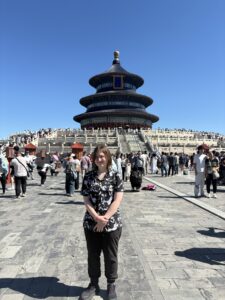
Heaven in Beijing: TBC’s Visit to the Temple of Heaven

Beijing’s Temple of Heaven may be one of, if not, the most iconic tourist sites in Beijing. Constructed starting back in 1406, around the same time as the Forbidden City and the other respective temples of the Sun, Earth and Moon.

Global Connections

Cultural Exchange, Chinese University Style

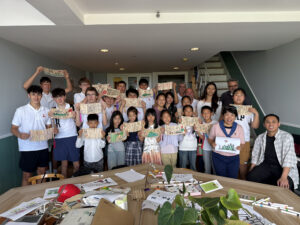
Another one of the more irreplaceable experiences we have in China as students is the amount of cultural exchange we get to participate in. While The Beijing Center organizes plenty of culture-based events, from tourist activities to arts workshops, there’s something about engaging with other people our own age in cultural exchange that’s really special.

Global Connections

Gubei: An Excursion to China’s Newest Old Water Town

Over this past weekend, some of our students enrolled at Minzu University of China took their annual Spring Outing – this year, to Gubei Water Town. Situated about a 2-hour drive northeast of Beijing, the April weather made it absolutely perfect to explore for a spring outing. It surrounds various canals and offshoots of Yuanyang lake.

Global Connections

Beijing’s Hutongs: From Snuff Bottles to Exploration with a View

If you ever want to get a taste of Old Beijing, by far one of the best ways is to visit the hutongs. They’ve conceptually been around all the way since the 1200s, and in their most modern forms exist as protected alleyways and streets surrounded by old traditional houses and neighborhoods in the heart of Beijing and are recognized in China to be an important part of cultural heritage in the city.