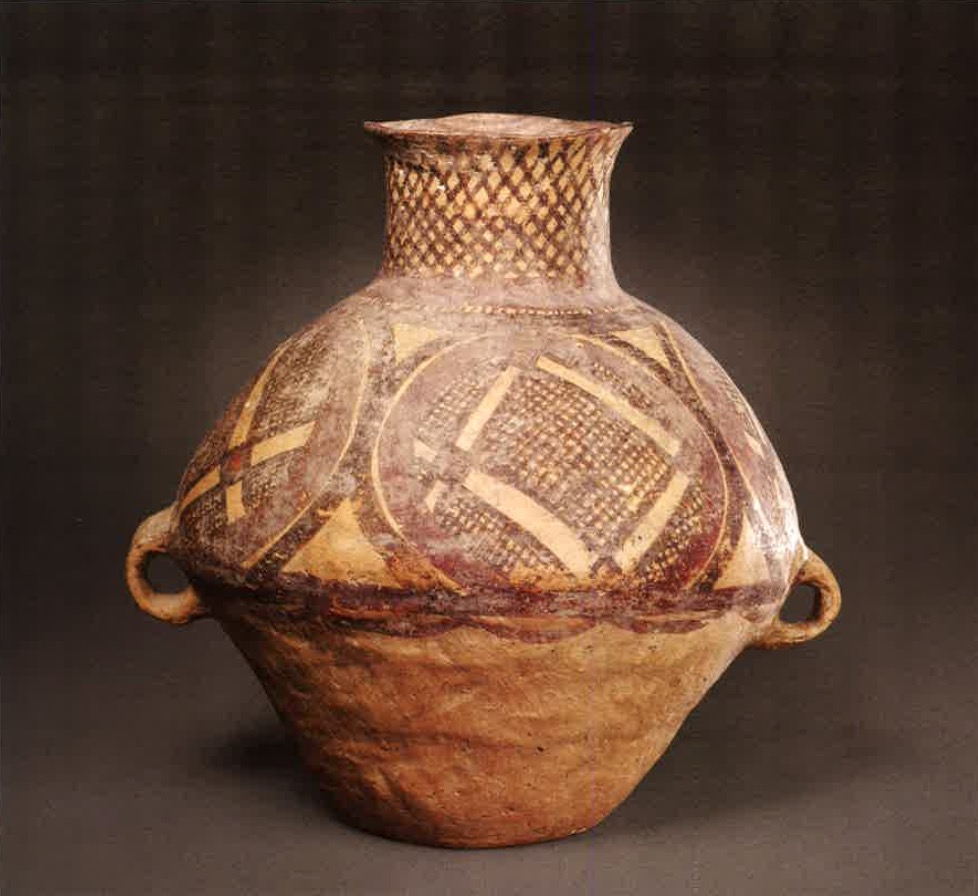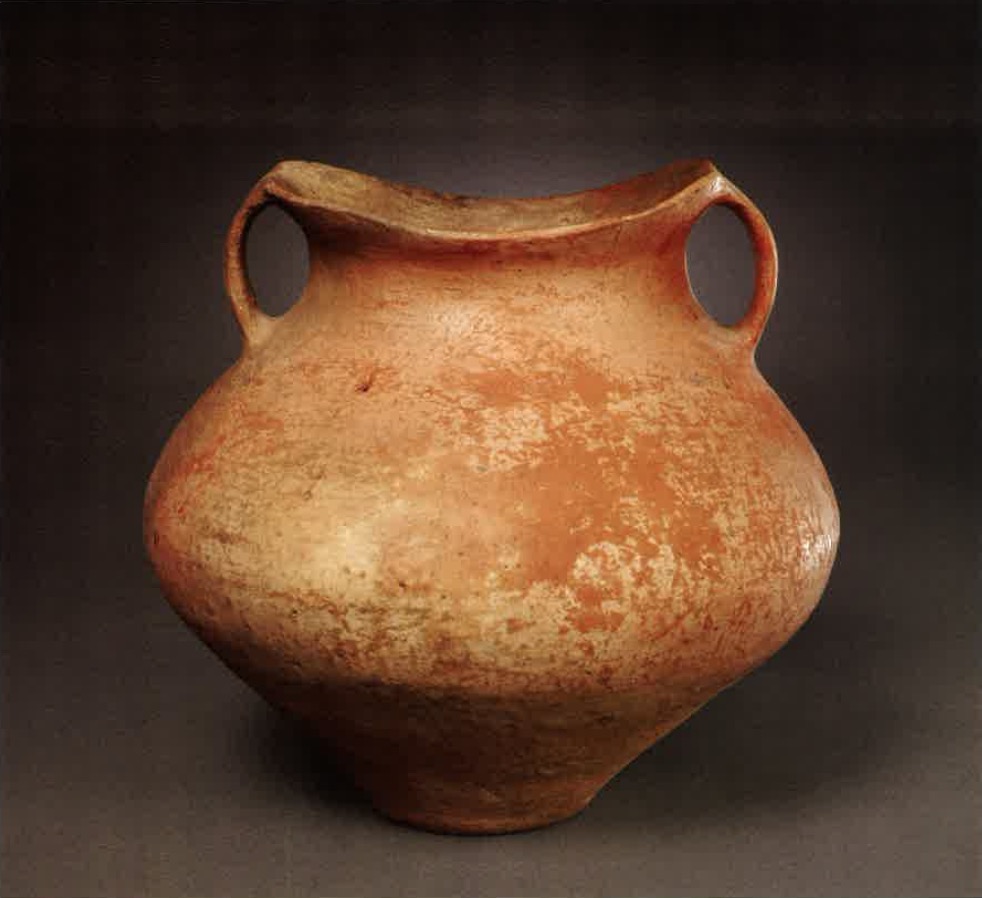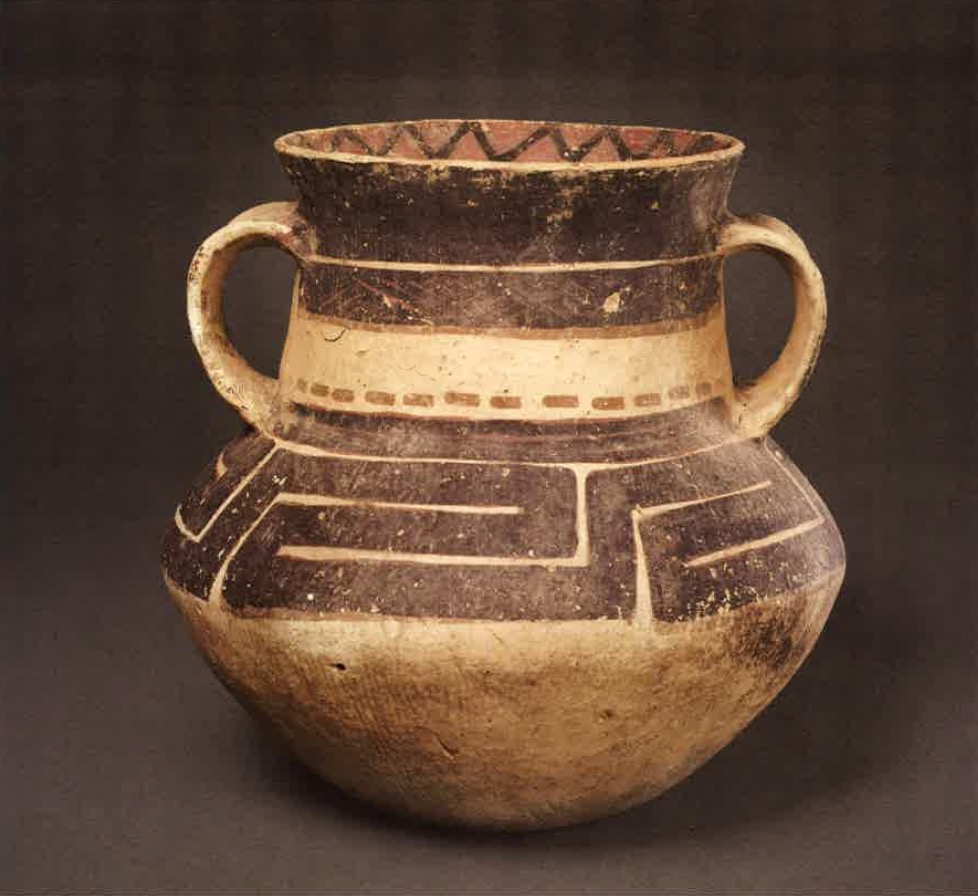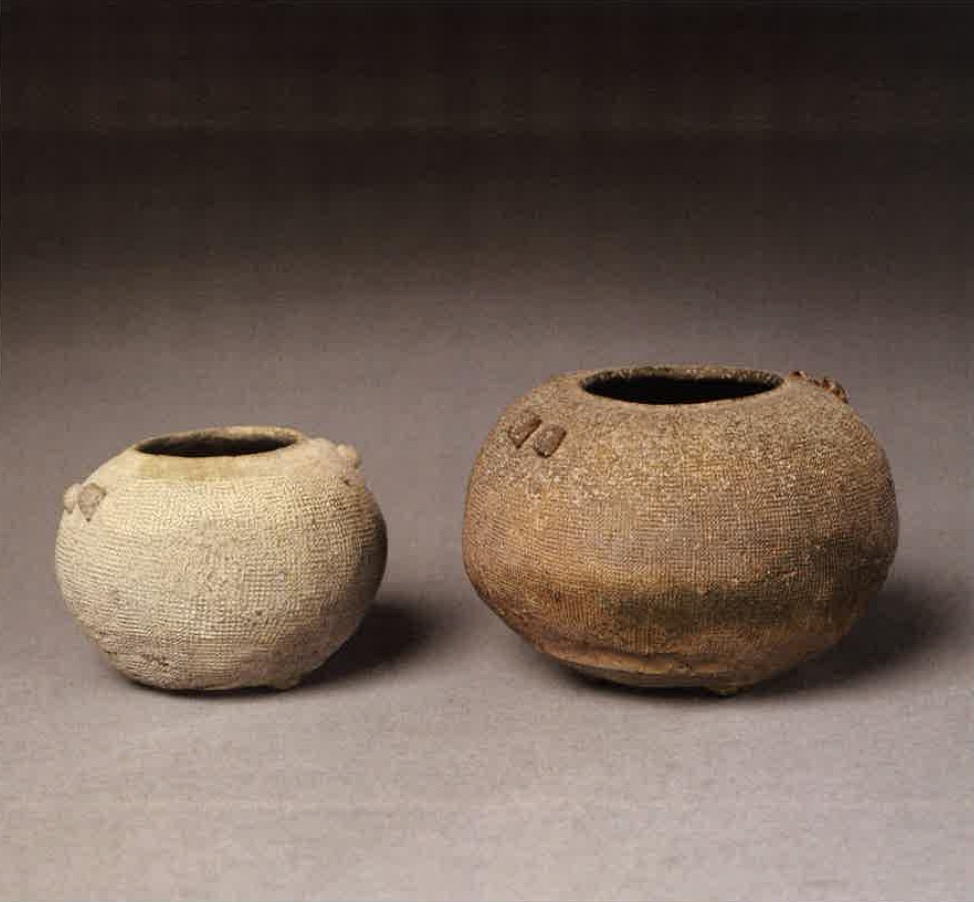
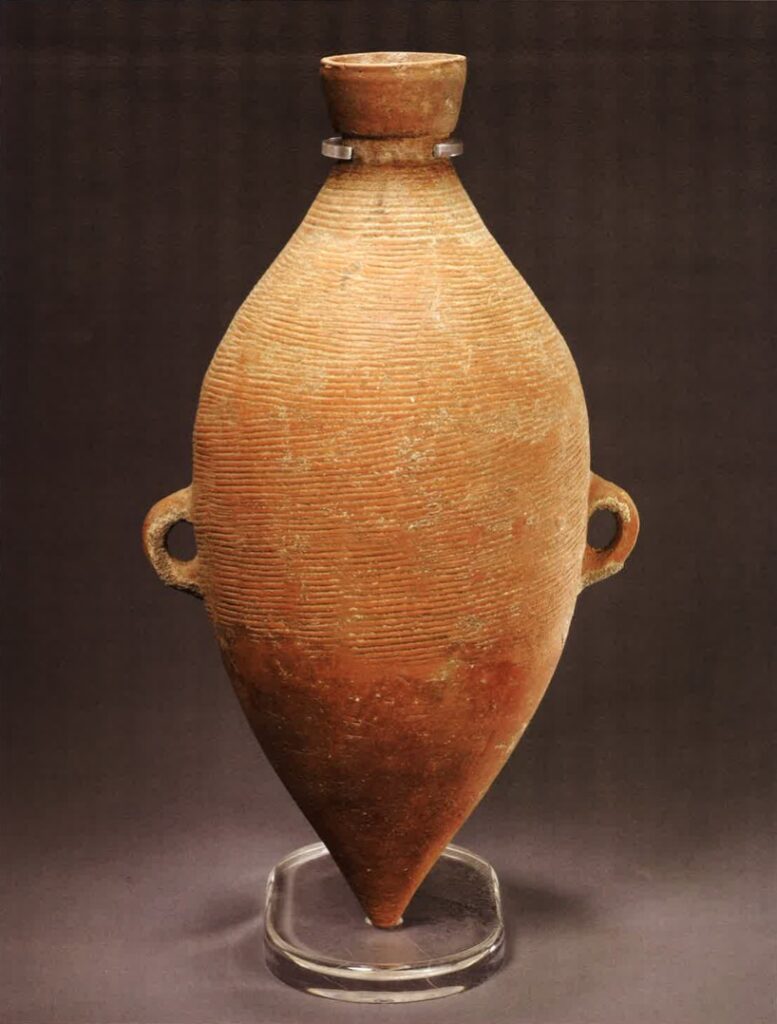
Amphora with loop handles
information
Yangshao culture, Banpo type (4800–4300 BCE)
Central Yellow River Valley in Shaanxi province, near present-day Xi’an
Height: 44.5cm Diameter: 24cm
**Oxford Authentication Laboratories thermoluminescence tested, sample no. C2106s91
introduction
This piece is made from red pottery shaped into an elongated form with a pointed base. Its long neck ends in a cup-shaped mouth. The body is textured with rope marks two-thirds of the way down. Used for collecting water, the shape of this vessel is ideally suited for that purpose: the amphora would have been held on a piece of string tied to both handles and then tossed onto the body of water, where it would gradually tilt upright as it filled, allowing for easy removal and carrying. The almond-shaped body, cup-shaped mouth, and textured body mark it as a typical Banpo piece.
Co-evolving regional Neolithic cultures existed in this early period, most of which produced ceramics. Different ceramic ‘types’ are indicative of different ‘phases’ of development among the regional cultures. Yangshao culture covers the period of 5th and 4th millennia BCE, and the area from Gansu to Hebei. The ceramics of the Neolithic Yangshao culture of China’s central plains region is typified by those produced at the village of Banpo near Xi’an. One of the most notable styles produced by Banpo are textured amphorae with pointed bottoms similar to this one. The kilns unearthed at Banpo reveal relatively advanced kiln-making technology (throughdraft and updraft kilns) with separate fireboxes for fuel away from the firing chamber, separated by flues. Banpo is arguably the most famous Neolithic site in China, typifying the phase flourishing between 4800 and 4300 BCE.