The Beijing Center

INTERNSHIP SHOWCASE – SUMMER 2018

Share This Post

UIBE Quizhen Building

The Beijing Internship Showcase – Summer 2018

by Lenny Chen, TBC Chinese Roommate & Marketing Communications Intern

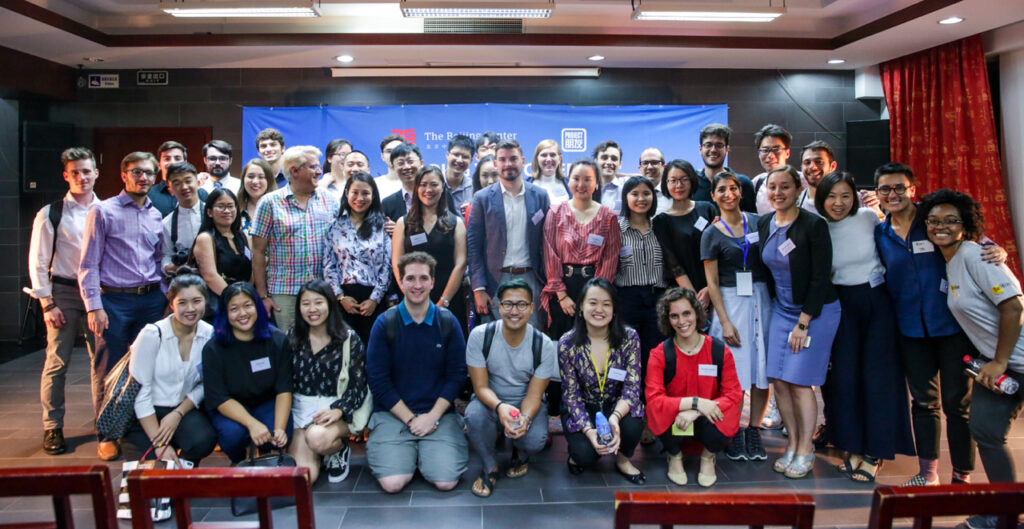
It has been almost two months since the students of TBC’s Global Leaders Internship Program arrived in Beijing. As their time in China comes to a close, TBC, along with Project Pengyou on July 19th, organized and hosted The Beijing Summer Internship Showcase as a platform for students to highlight the great work they’ve been doing, brought together friends and professionals from the expats and returnees community and held a panel discussion to talk about career building in the China market.

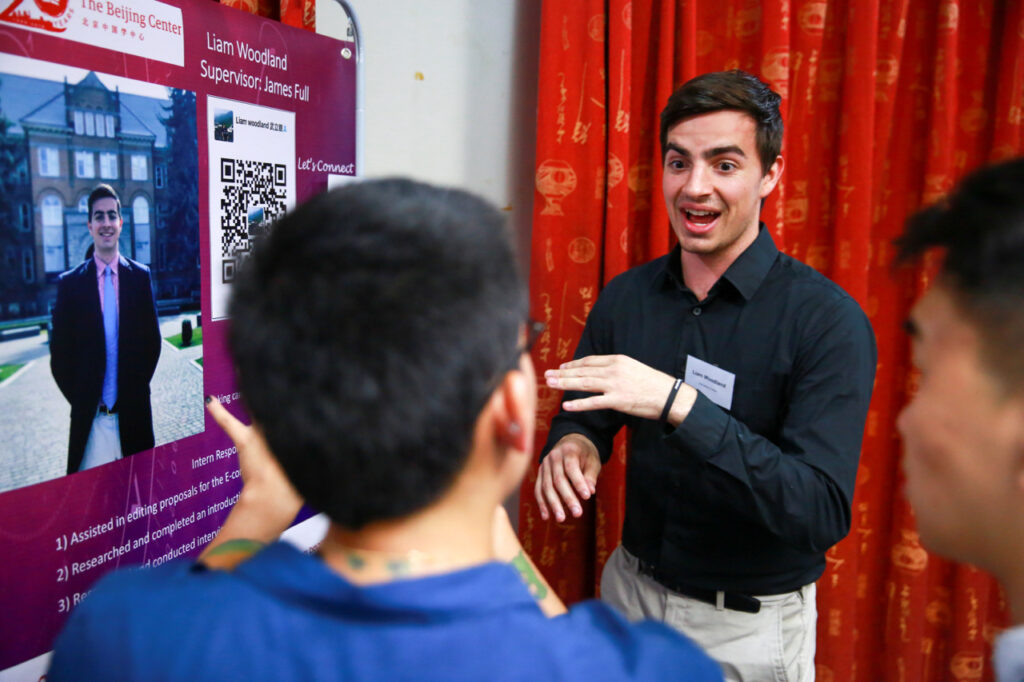
The evening started with the internship showcase, where each student stood next to a poster display of their own design and talked to fellow professionals and peers about their experience at their host company. TBC has partnered with companies across industries in Beijing, including the US Embassy, United Family Hospital, Edelman, Carnegie Tsinghua Center, etc. to provide TBC students with a plethora of opportunities to build up their professional experience. As students shared their experience working at their respective host companies, they also made connections with their fellow professionals while tasting delicious tacos prepared by Palms LA.

Following the internship showcase, our four wonderful panelists shared their experience and insight on how to build up one’s career in the China market as an expat or returnee in a panel discussion moderated by TBC’s Executive Director, Dr. Simon Koo. Mr. Peter Zysk, who is a TBC alumnus and now director at the startup consulting firm Brunswick Insight, noted that the one of reasons it has become more challenging for expats to build their careers in China is government policy changes that mandate a two-year work experience threshold, another is the stronger push for businesses to hire local talent as the local population who have a better understanding of the local market are becoming better educated and more competitive. Demi Meng, co-founder of the virtual reality startup IVReal, said that the reason so many foreign companies are interested in coming to China is because of the size of China’s market, which is perfect for firms with cutting-edge technologies to “test the water” with their products and services. On the topic of how foreign firms usually operate in China, Dr. Koo mentioned the importance of localization, which is the process in which international companies position themselves in a local market and asked the panelists how they think localization helps foreign firms.  Mr. James LaLonde, CEO and co-founder of Yoli and author of The Tao of Startups, emphasized the importance of developing skills that are in demand in one’s target market, a point which Mrs. Fu, senior client relations manager at Beijing United concurred with. Mrs. Fu also stressed the importance of language and communication skills, noting that they are vital for foreign talents to succeed in China.

As the event drew to a close, Dr. Koo wrapped up the discussion by concluding the points that speakers made and asking them to share some funny anecdotes in their careers, and the evening ended in friendly chatters and laughter. Take look at our students’ wonderful posters and some memorable moments from the event below:

More To Explore

Global Connections

Gubei: An Excursion to China’s Newest Old Water Town

Over this past weekend, some of our students enrolled at Minzu University of China took their annual Spring Outing – this year, to Gubei Water Town. Situated about a 2-hour drive northeast of Beijing, the April weather made it absolutely perfect to explore for a spring outing. It surrounds various canals and offshoots of Yuanyang lake.

Global Connections

Beijing’s Hutongs: From Snuff Bottles to Exploration with a View

If you ever want to get a taste of Old Beijing, by far one of the best ways is to visit the hutongs. They’ve conceptually been around all the way since the 1200s, and in their most modern forms exist as protected alleyways and streets surrounded by old traditional houses and neighborhoods in the heart of Beijing and are recognized in China to be an important part of cultural heritage in the city.